



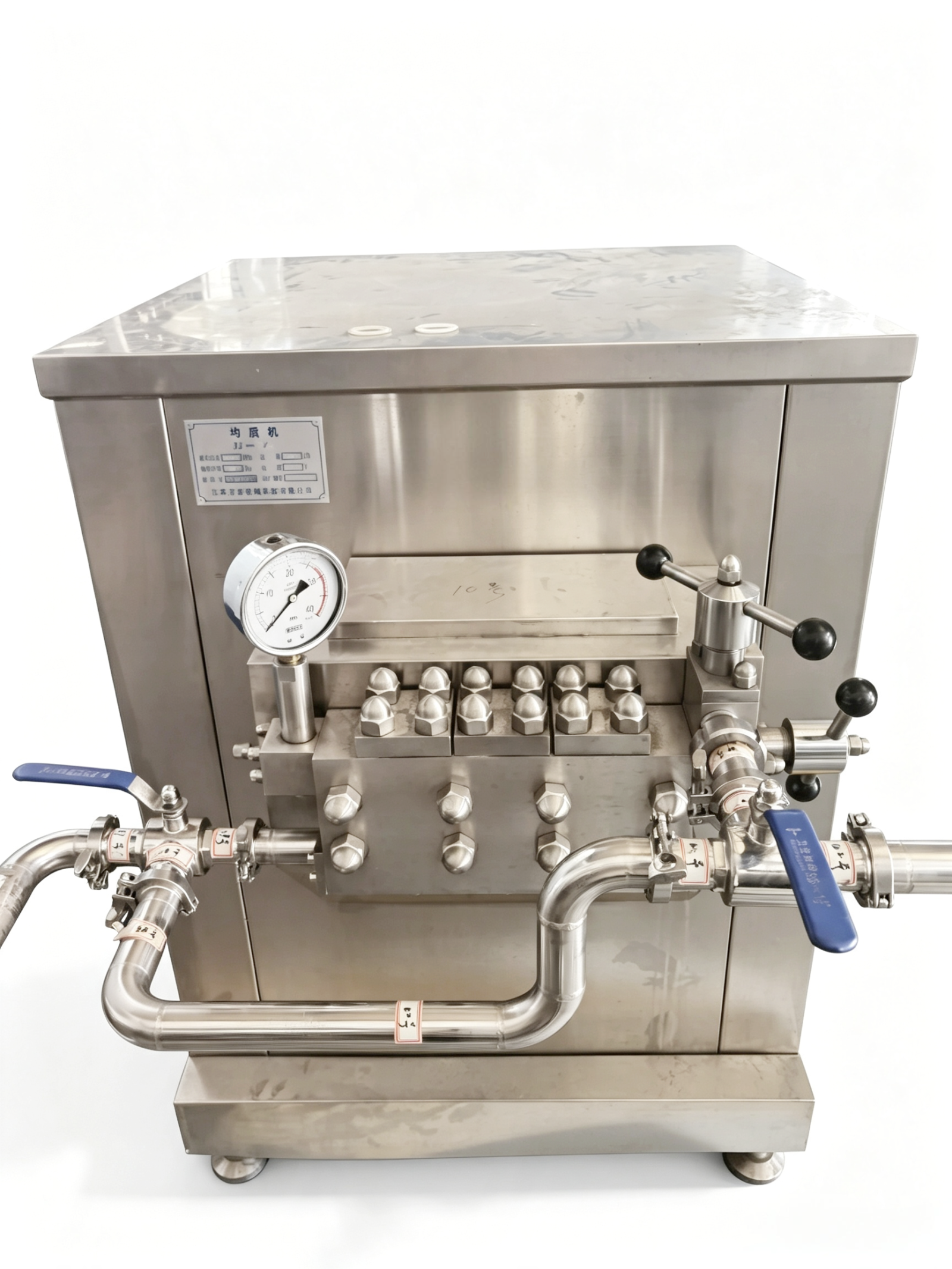
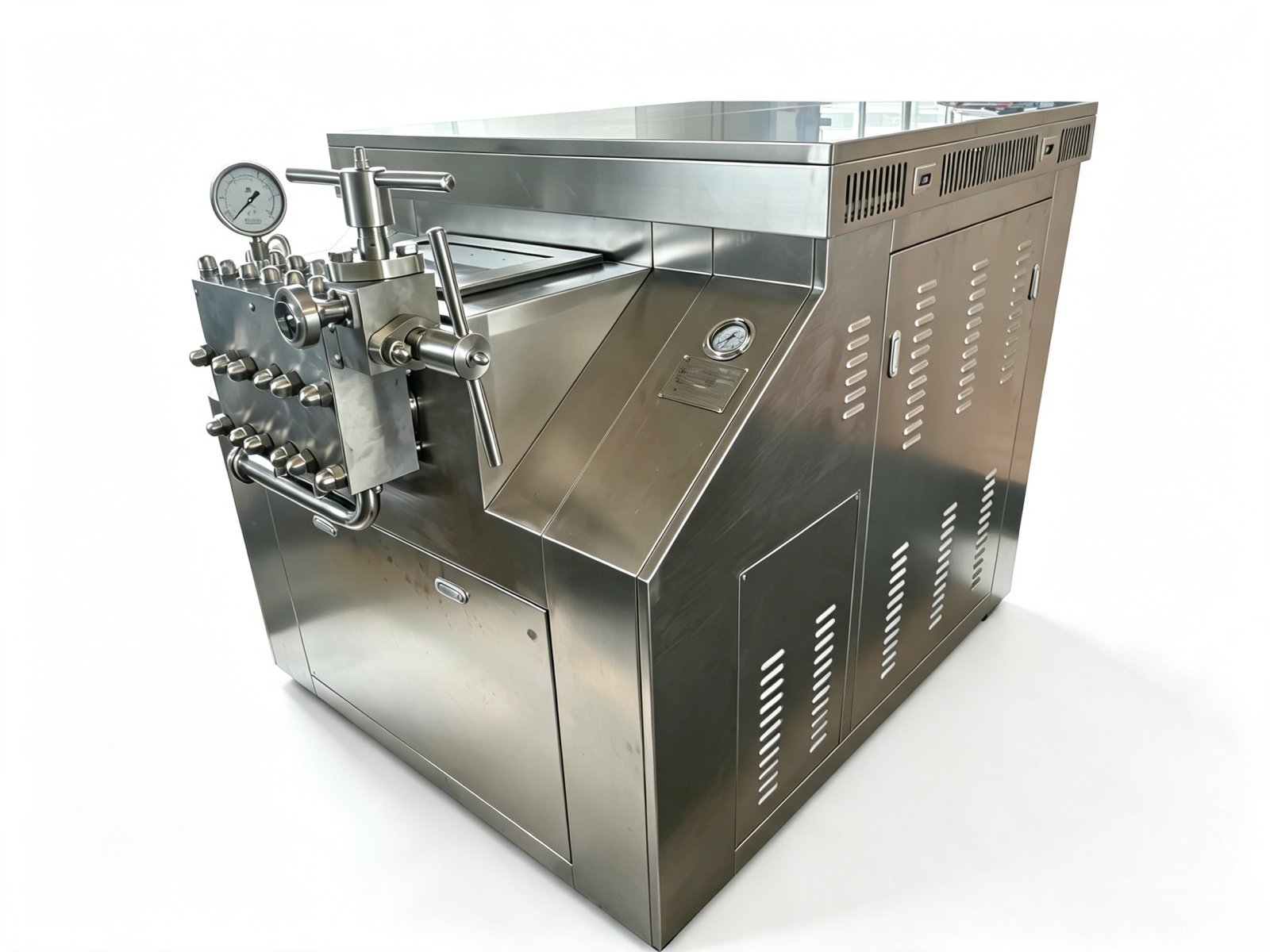
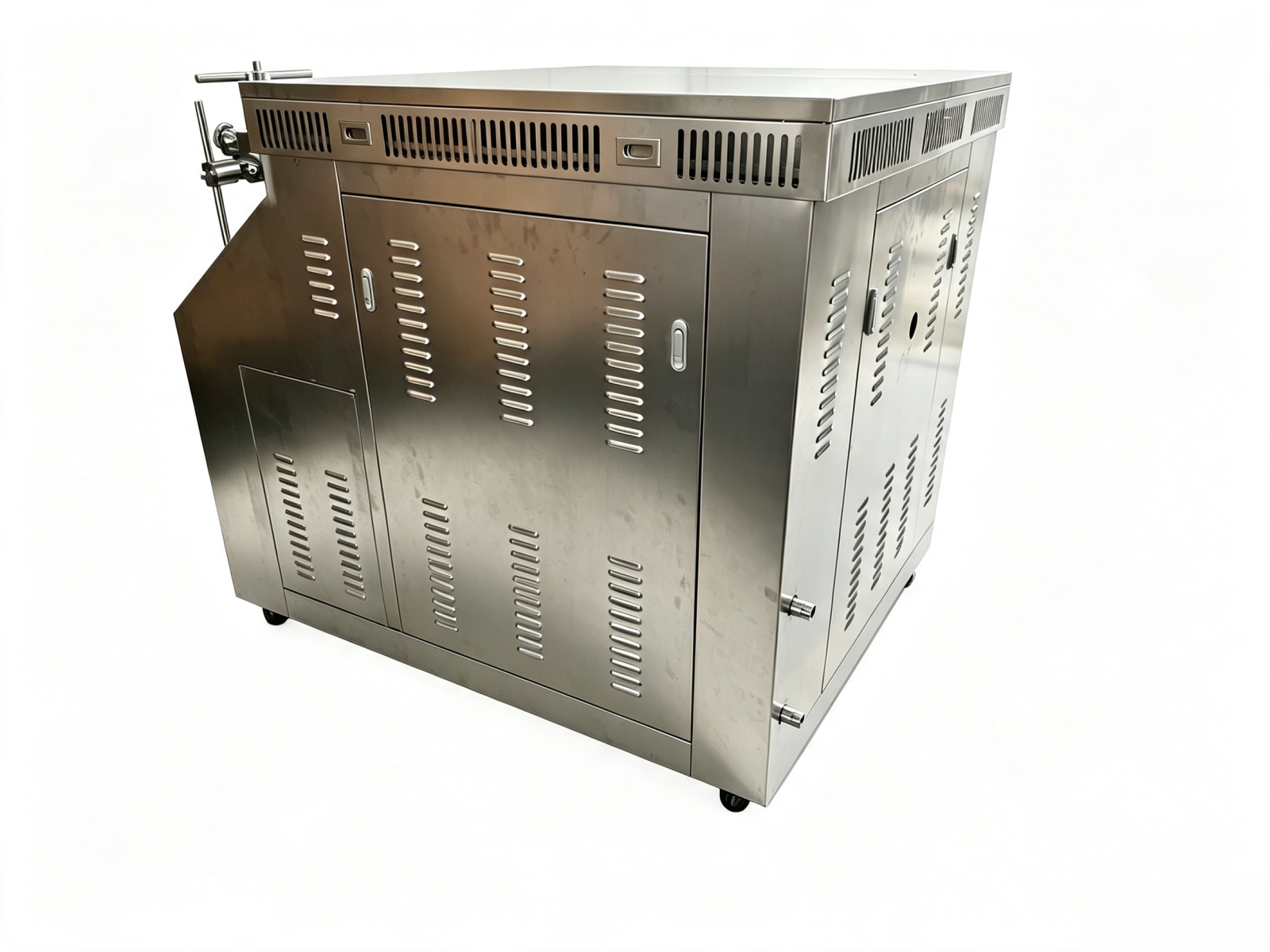
Homogenizer

Product Value
01
Refines fat globules and fruit pulp particles by breaking down large fat globules and pulp fibers; prevents beverage separation and sedimentation, thereby enhancing product shelf stability.
02
Improves mouthfeel and sensory quality, resulting in a finer, smoother texture; enhances color uniformity in fruit juices, soy milk, and dairy-based beverages.
03
Enhances emulsification, ensuring thorough emulsification of oil-water systems; reduces creaming and separation, while lowering emulsifier usage.
04
Aids in microbial control and cell disruption; high-pressure processing disrupts the cellular structure of certain microorganisms, thereby reducing the load on downstream sterilization processes.
Applicability boundaries

Materials
Pumpable liquid materials such as milk, soy milk, plant-based protein drinks, juices with fine pulp, dairy-based beverages, sauces, etc.

Operating Conditions
Continuous production for beverage and dairy pre-processing; requires emulsification, particle size reduction, and anti-separation capabilities; supports CIP (Clean-in-Place) cleaning.
Working Principle
Under high pressure, the material passes through the narrow gap of a homogenization valve
generating high-speed shear, impact, and cavitation effects
material particles are broken down and refined, achieving homogenization and emulsification.
Core components
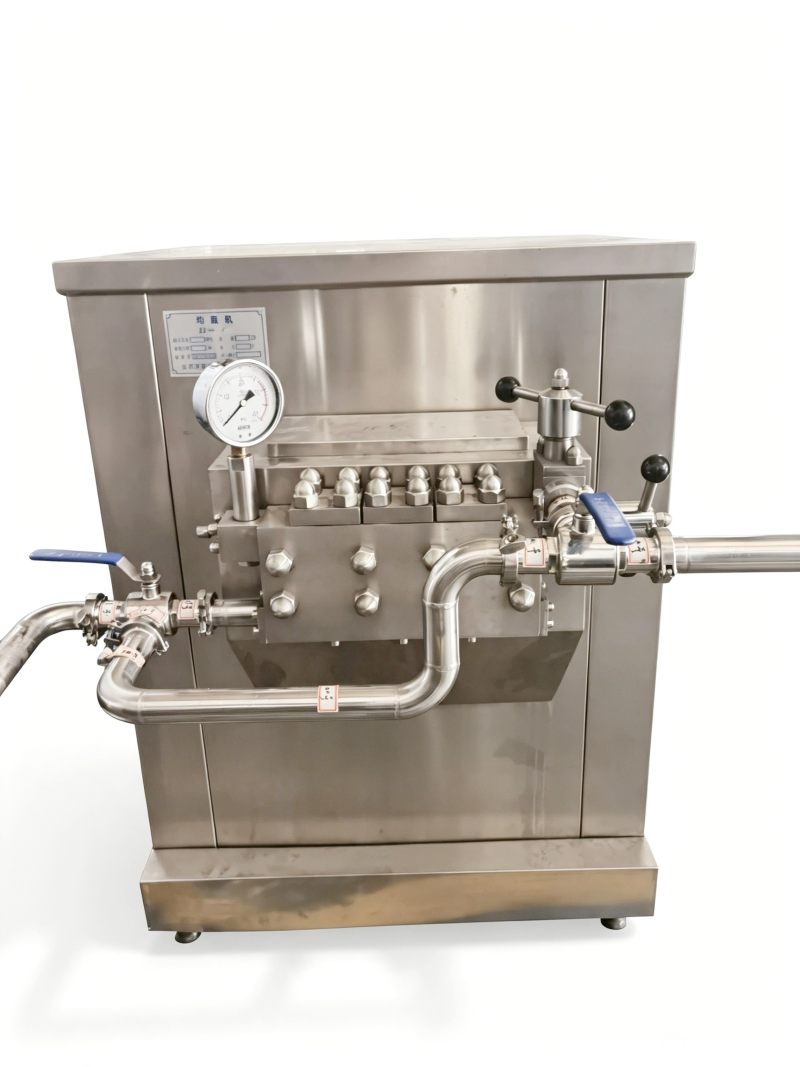
High-pressure plunger pump main body
Generates high pressure; includes the plunger and sealing assembly; the core pressure-bearing component of the equipment
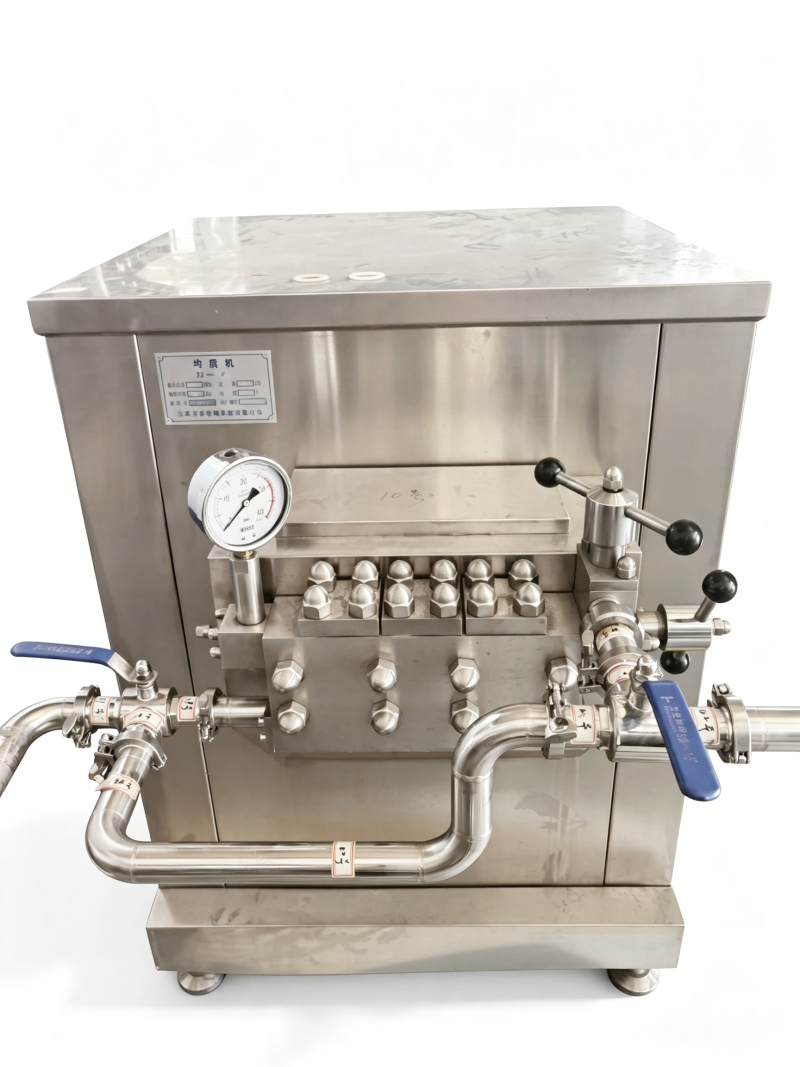
Primary &secondary homogenization valve assembly
Achieves shear-based disintegration; components subject to wear
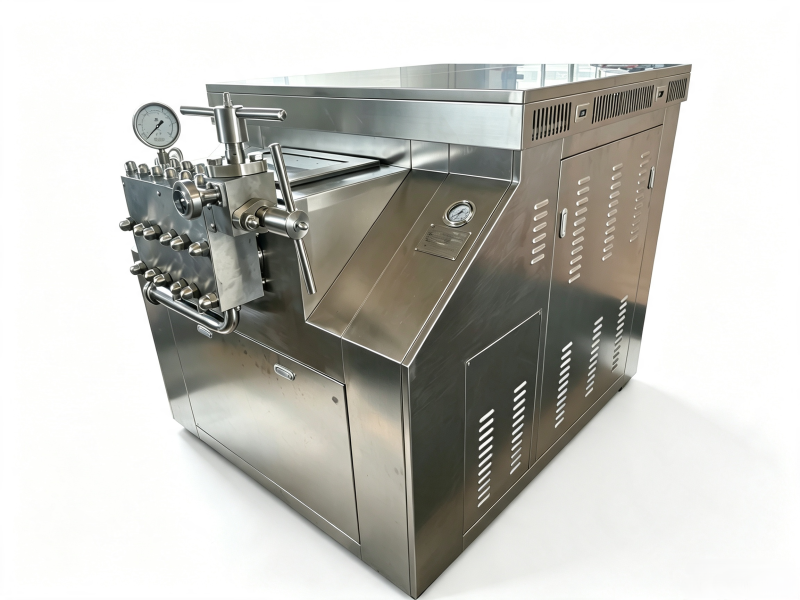
Drive motor, gear reducer, crankcase
Drives the reciprocating motion of the plunger
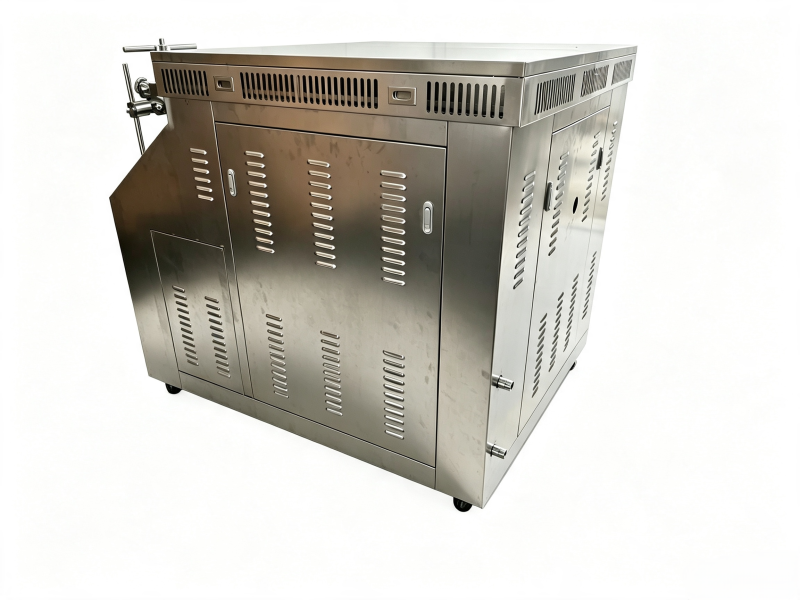
Pressure gauge, pressure regulating valve,safety relief valve
Pressure regulation and overpressure protection
Optional
01
Upgraded product-contact parts made of 316L stainless steel (suitable for acidic juices and dairy products)
02
Enhanced two-stage homogenization valve for superior homogenization performance
03
Explosion-proof motor and electrical components
04
Online pressure recording and data traceability system
Changeover/Cleaning/Maintenance
Maintenance
Daily checks: Operating pressure stability, abnormal equipment noise, product leakage, and cooling system status.
Weekly checks: Inspect plunger seals for leakage, clean filter elements, and check the safety valve.
Monthly checks: Inspect homogenizing valve wear, calibrate the pressure gauge, and check the crankcase lubricating oil level.
Stocked spare parts
Plunger seals, homogenizing valve seats, impact rings, and filter elements.
Cleaning
Perform CIP (Clean-in-Place) after production; dry running is strictly prohibited, and the high-pressure system must not be started without product in the line.
Do not spray high-pressure water directly onto the motor or electrical control cabinet; periodically disassemble the homogenizing valve assembly to check for residue.
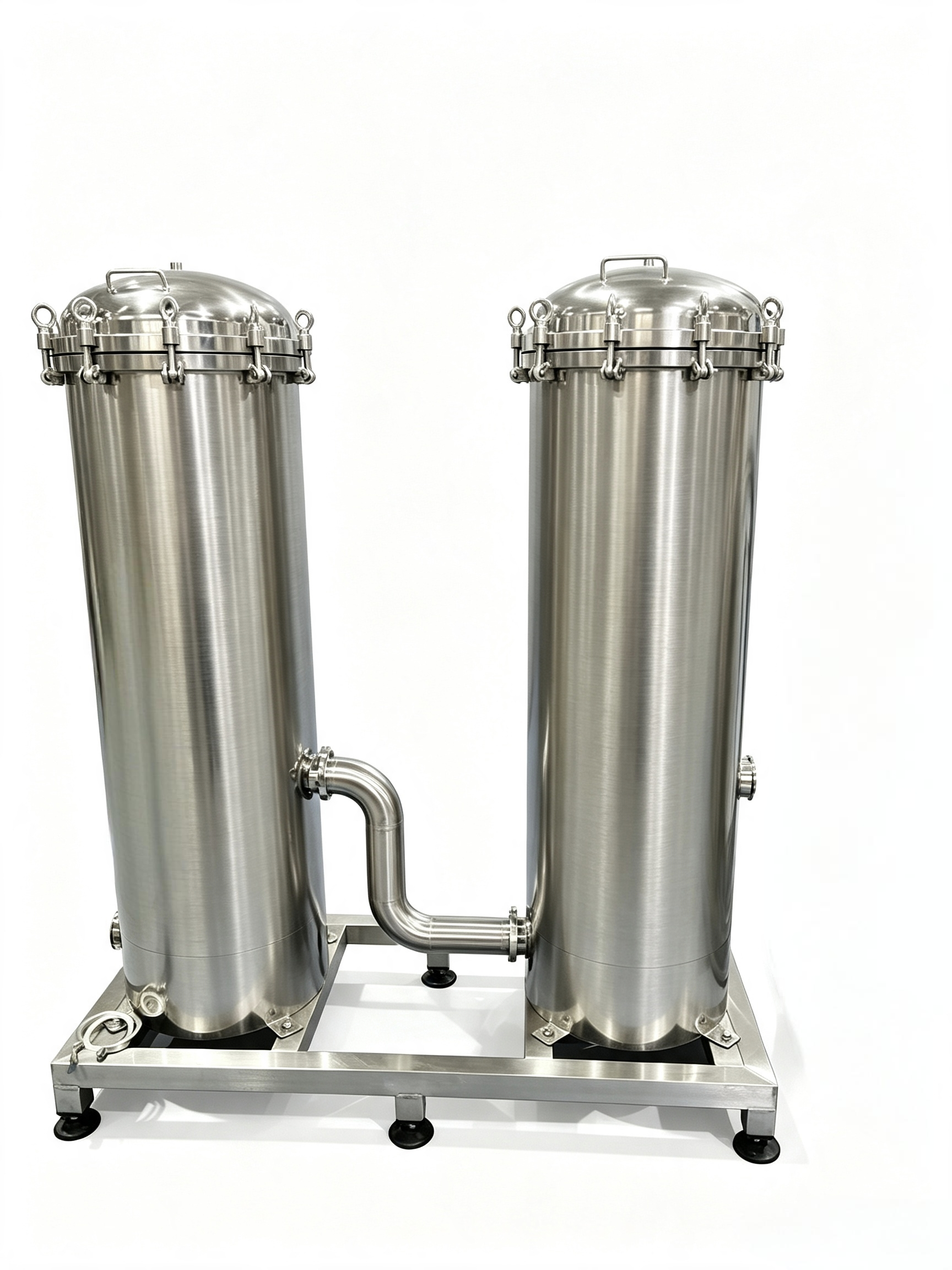
Regularly clean the pre-filter to prevent hard particles from entering the high-pressure chamber.
Where is the high-pressure homogenizer positioned in the production line?
The typical sequence is: blending tank → vacuum degasser → high-pressure homogenizer → UHT sterilizer; homogenization (particle size reduction) occurs before sterilization.
Can the material be homogenized if it contains fruit pulp?
Pulp with fine, soft fibers is acceptable; however, hard fruit chunks and seeds must be removed via pre-filtration to prevent rapid wear on the homogenizing valve seals.
Does higher pressure always yield better results?
No; pressure should be set according to the specific product process. Excessive pressure accelerates equipment wear, increases energy consumption, and can cause overheating in certain materials.
Will the beverage still separate after homogenization?
Homogenization significantly reduces the risk of separation; however, formulation and sterilization processes also affect stability, as homogenization is just one step in the overall production process.
Contact Us
Complete 2 easy steps below to get your factory matrix and a complimentary factory layout design within 24 hours.
Request Factory Price & Factory Layout Within 24h
Request Factory Price & Factory Layout Within 24h