


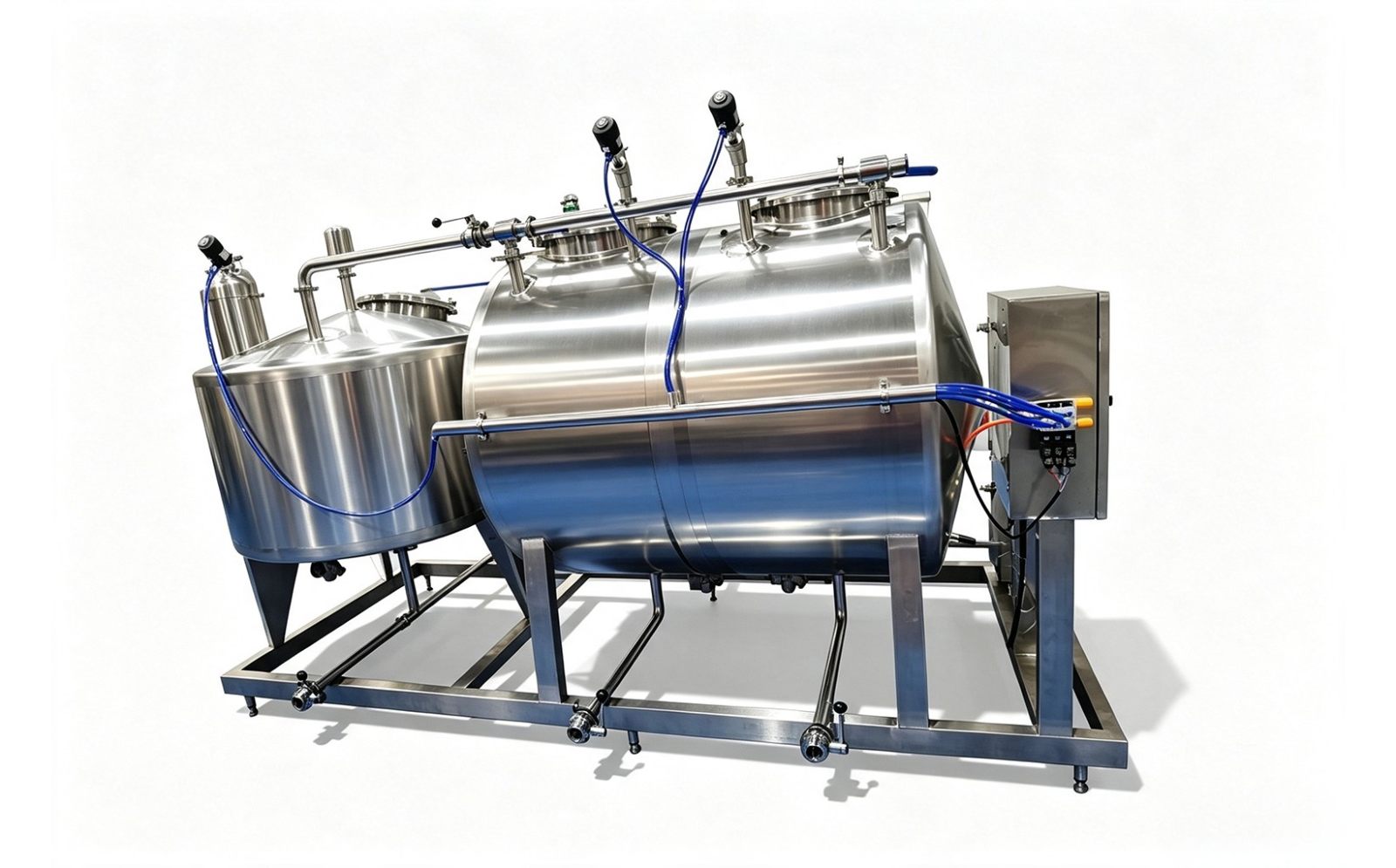
CIP

Product Value
01
Fully automated cleaning without equipment disassembly; eliminates the need to dismantle tanks, valves, or piping, thereby significantly reducing downtime during batch or product changes and increasing equipment utilization.
02
Delivers consistent and reproducible cleaning results through standardized parameters—temperature, concentration, duration, and flow rate—eliminating the hygiene inconsistencies associated with manual cleaning.
03
Ensures food safety and hygiene by removing product residues, proteins, sugars, and pulp deposits; inhibits microbial growth and reduces the risk of finished product spoilage.
04
Conserves cleaning agents, water, and steam; cleaning solutions can be recycled and reused, resulting in lower water and chemical consumption compared to manual rinsing.
Applicability boundaries

Equipment
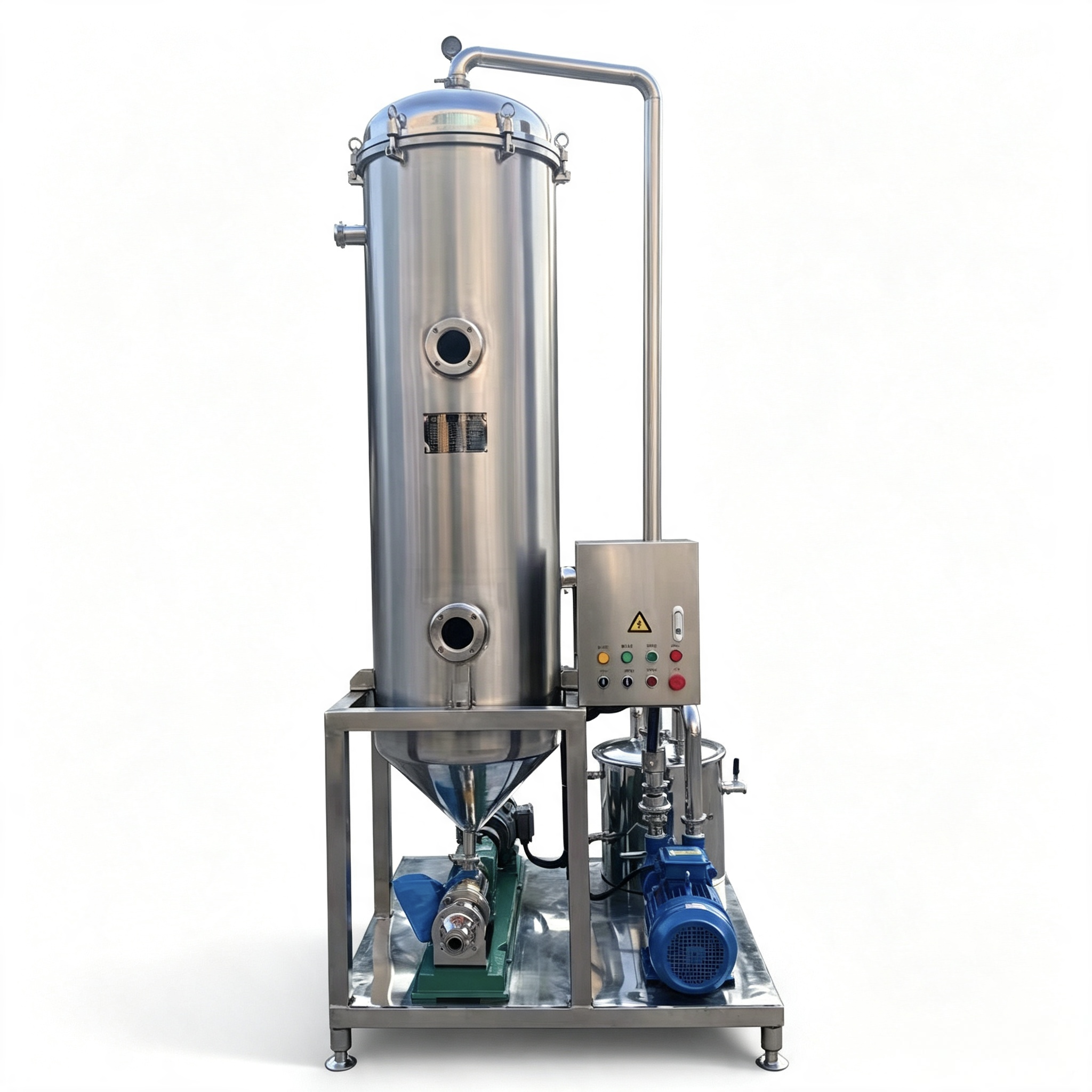
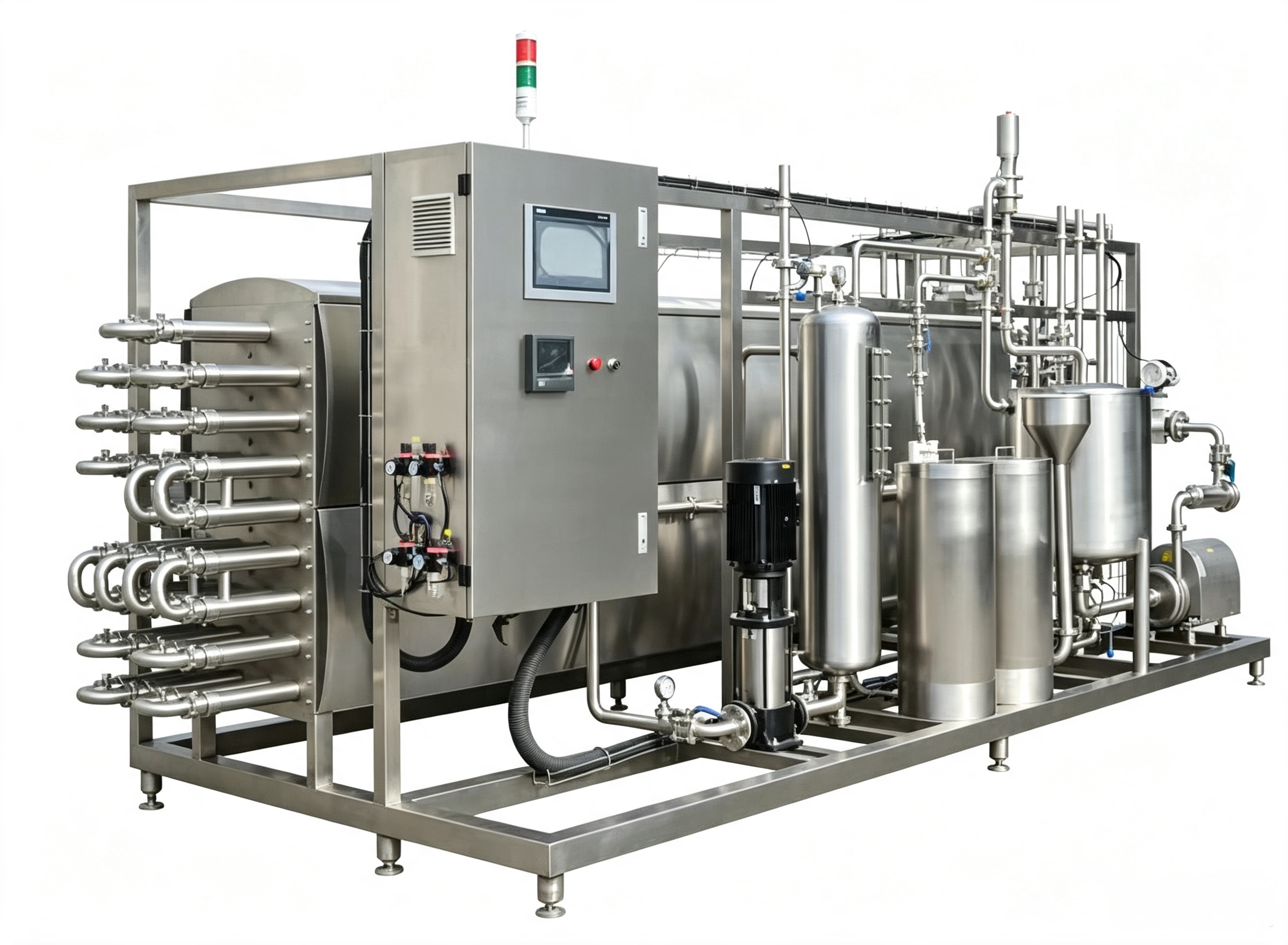
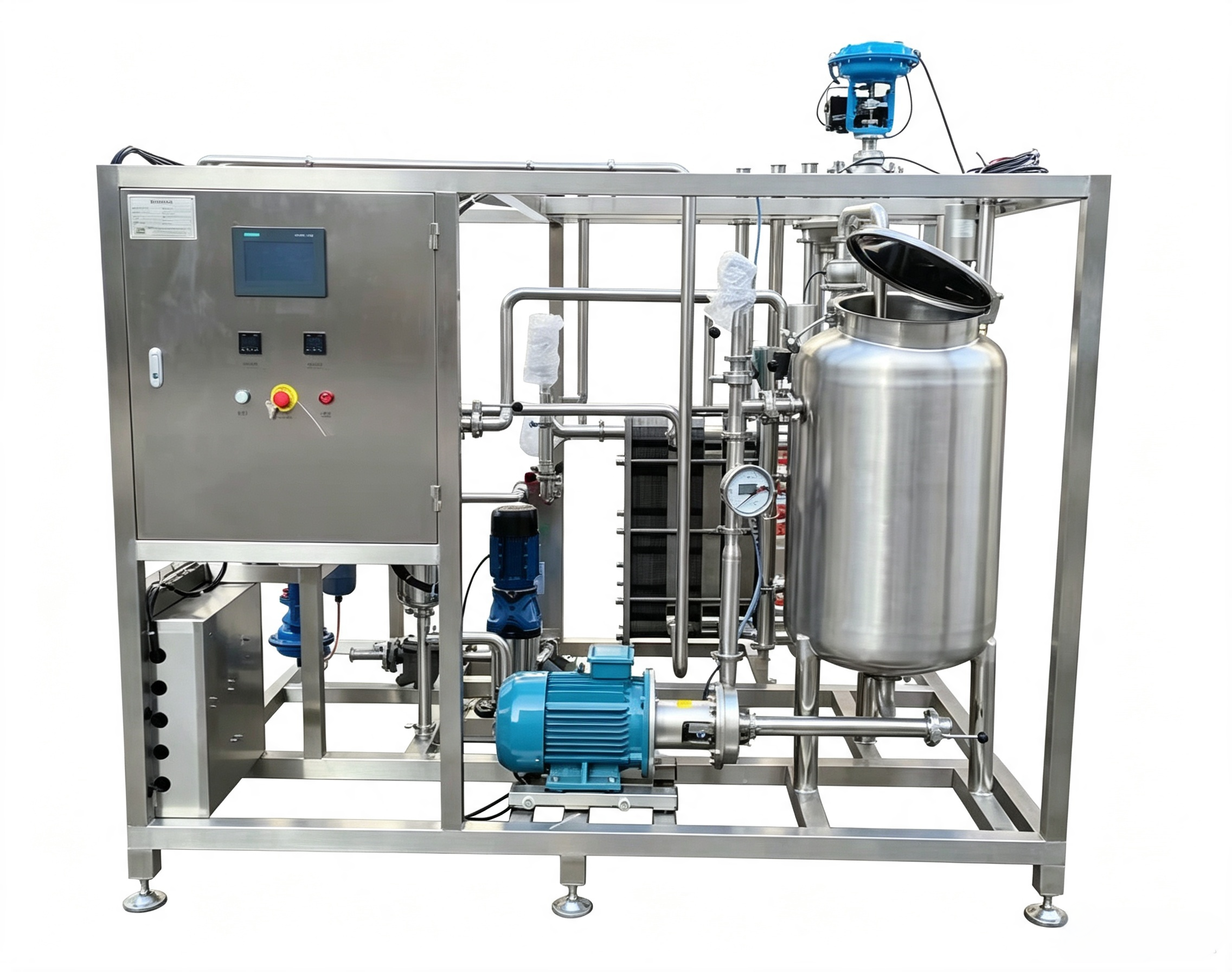
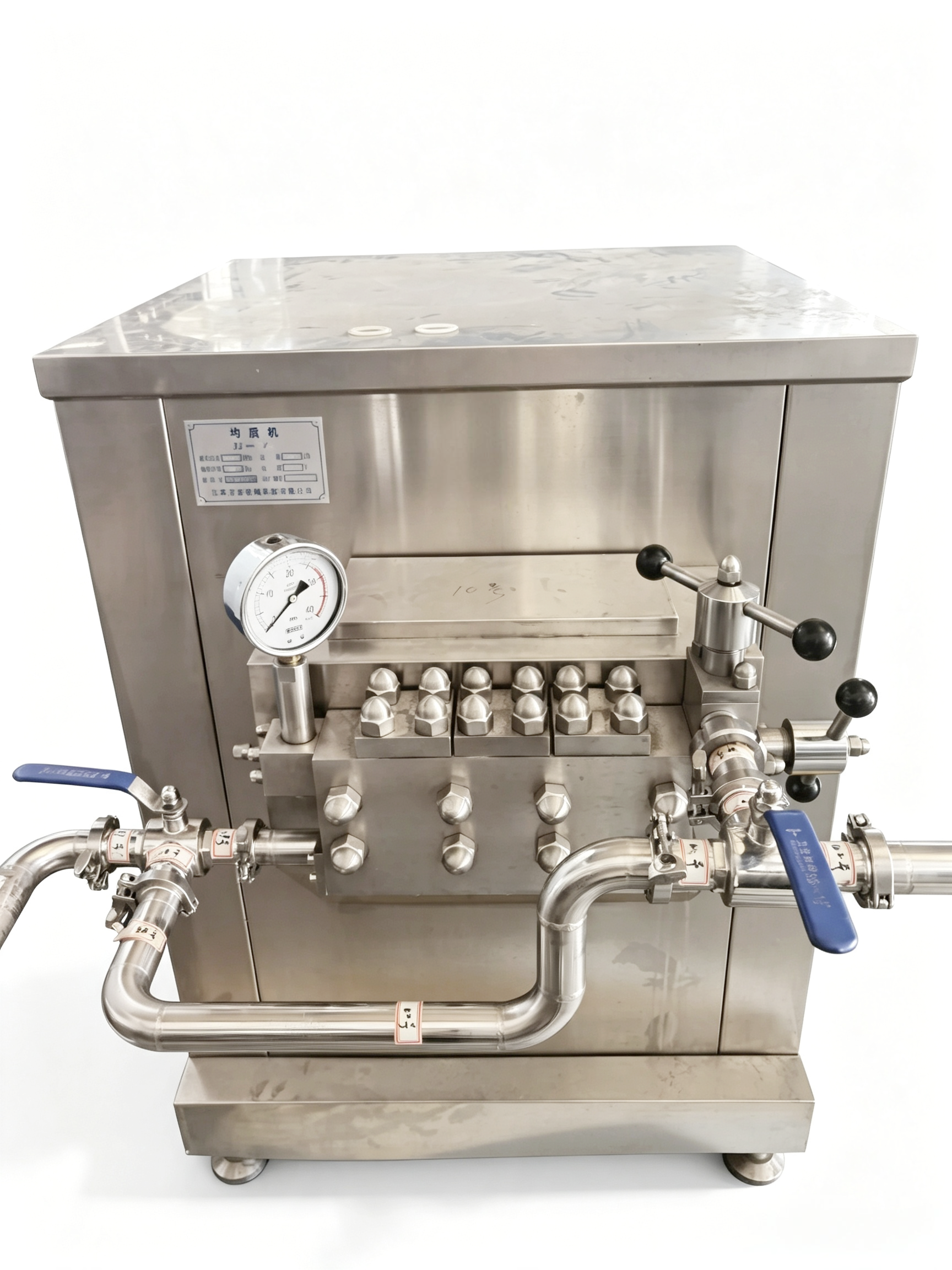
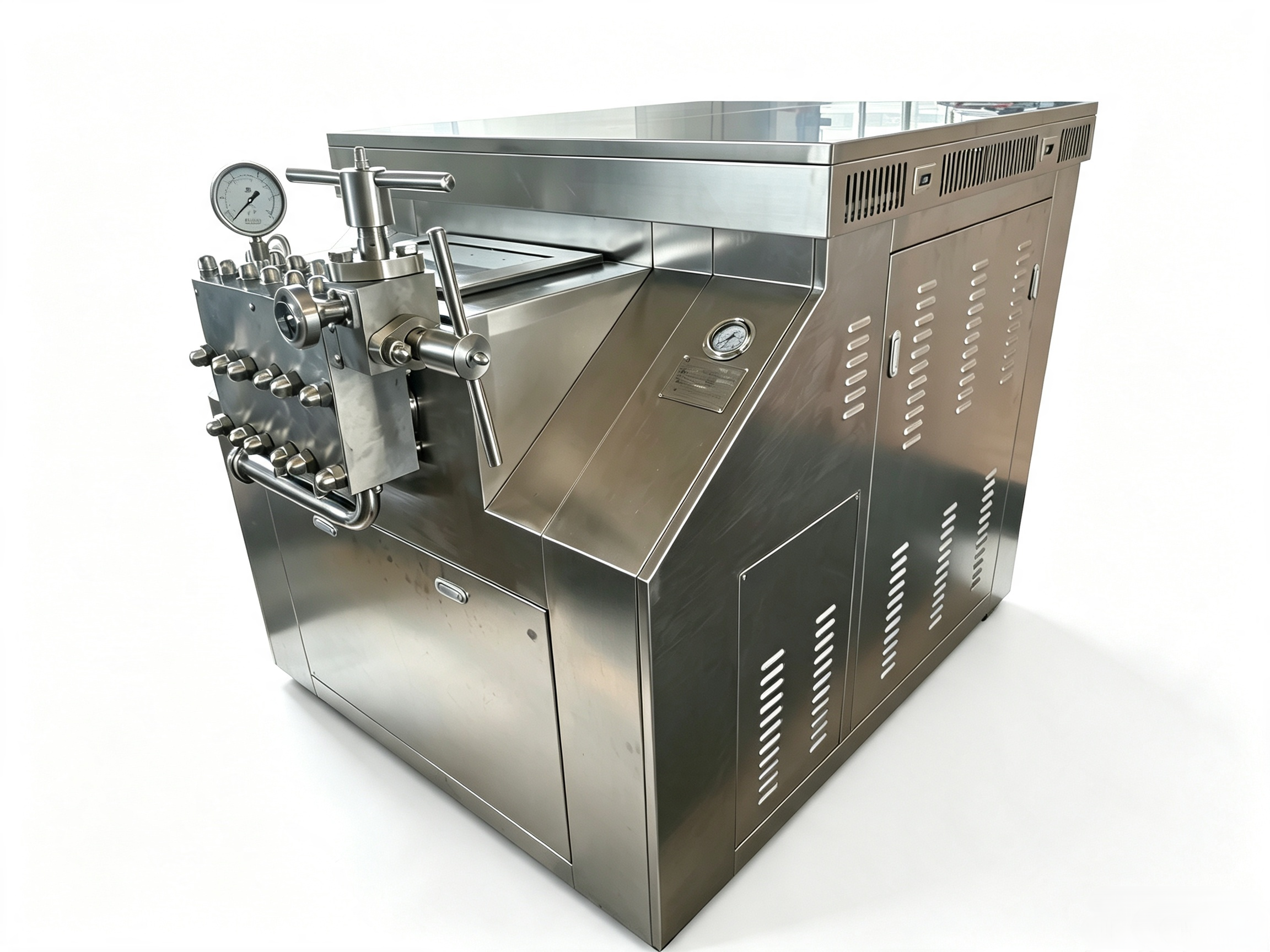
Sanitary-grade stainless steel equipment, including blending tanks, vacuum deaerators, high-pressure homogenizers, UHT sterilizers, aseptic filling machines, product piping, valves, and pump bodies.

Operating Conditions
Production of fruit juices, tea beverages, dairy-based drinks, plant-based protein drinks, and other food and beverage products; requires frequent product batch and flavor changes.
Working Principle
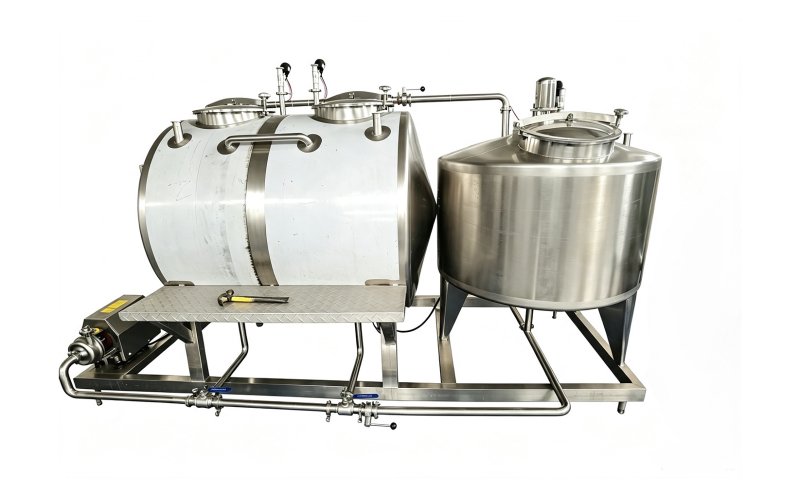
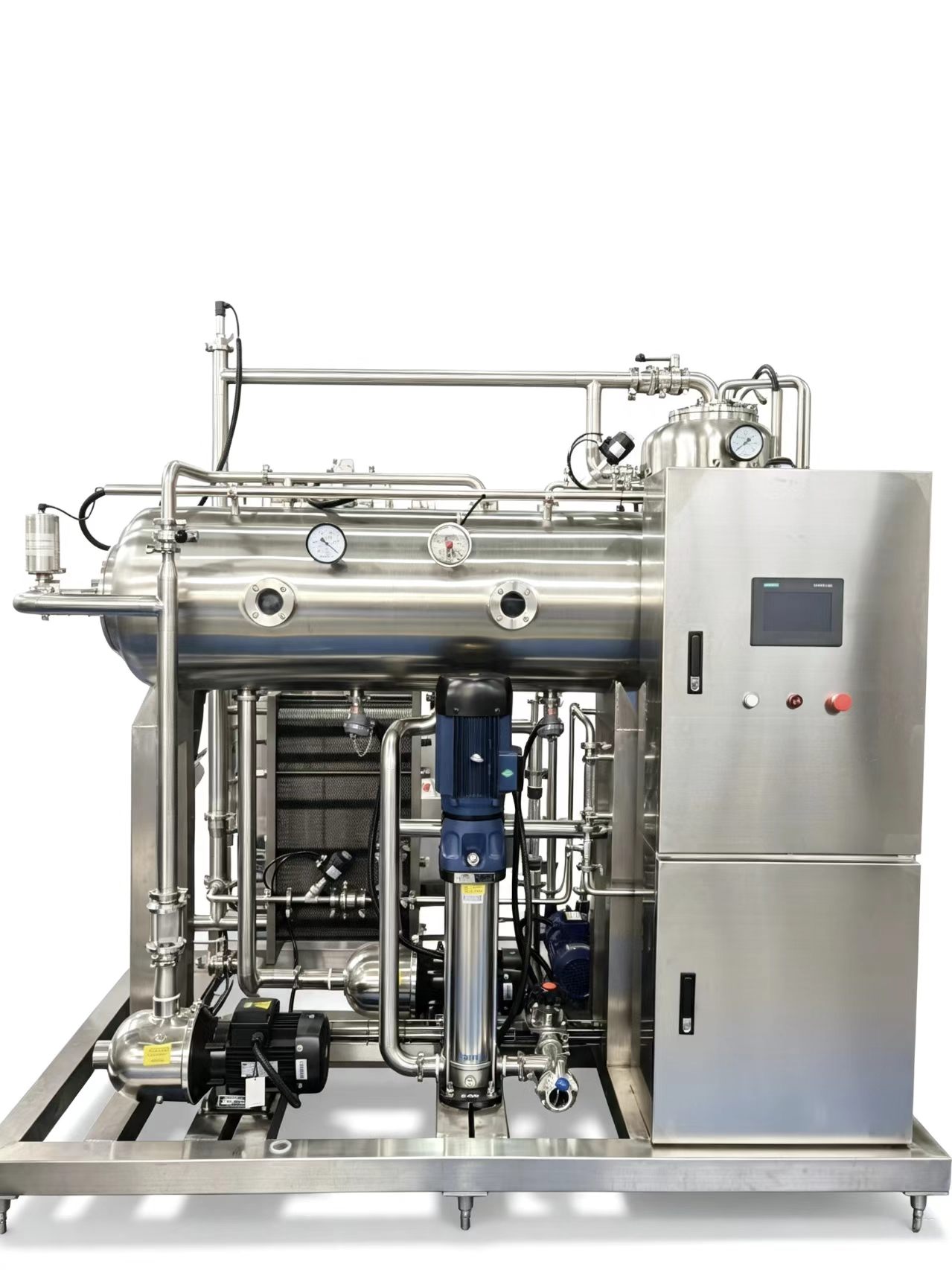
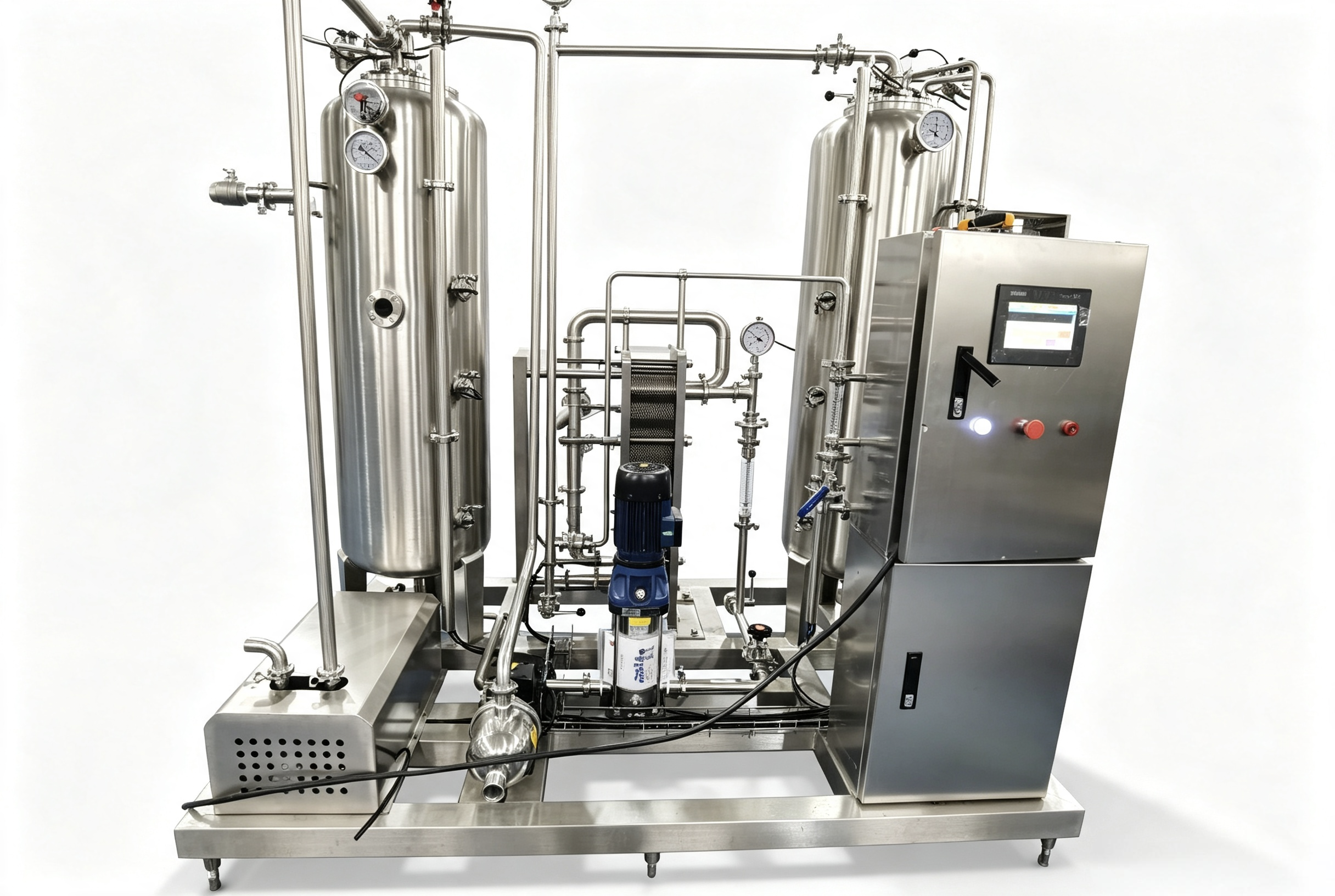
The CIP station prepares alkaline solution, acid solution, hot water, and purified water, controlling concentration, temperature, and flow rate according to a programmed sequence. It circulates these fluids through the interior of the enclosed equipment and piping to perform a cleaning cycle—comprising pre-rinse, caustic wash, intermediate rinse, acid wash, and final rinse—thereby cleaning the inner surfaces.
Core components
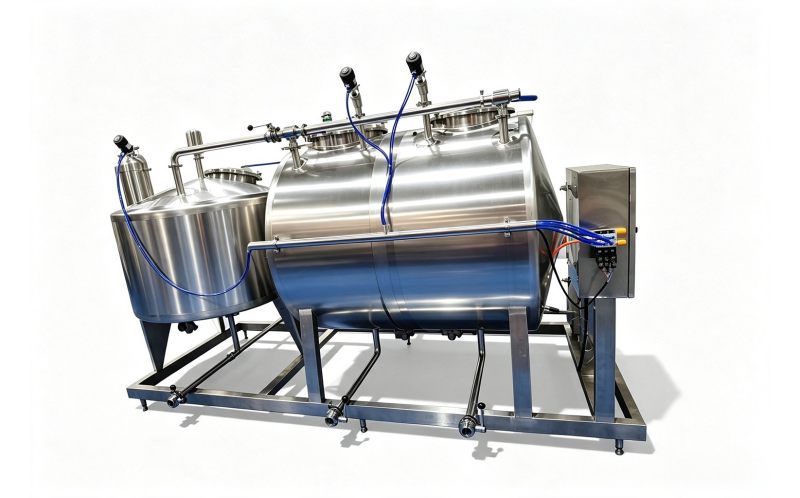
CIP Tank Group
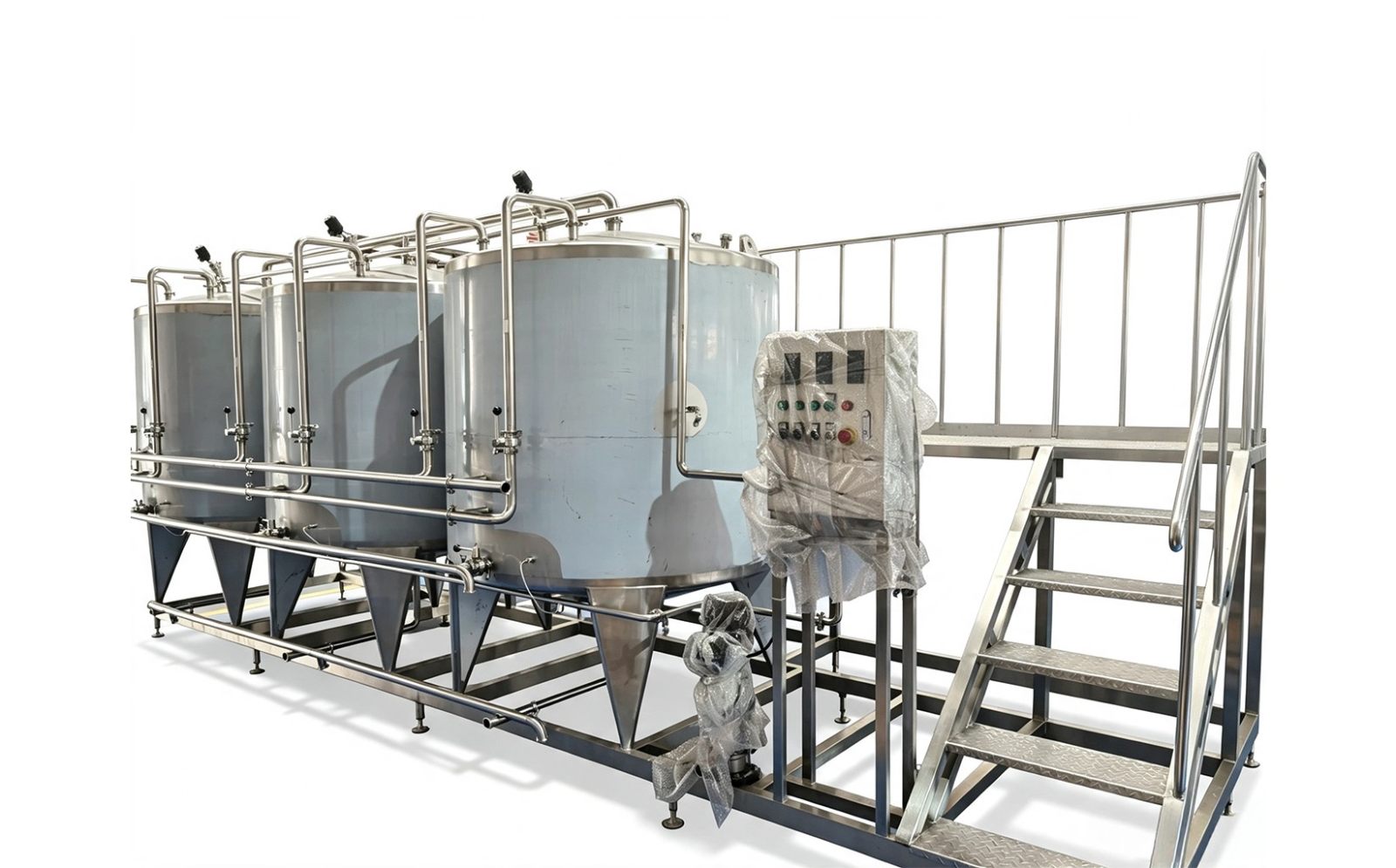
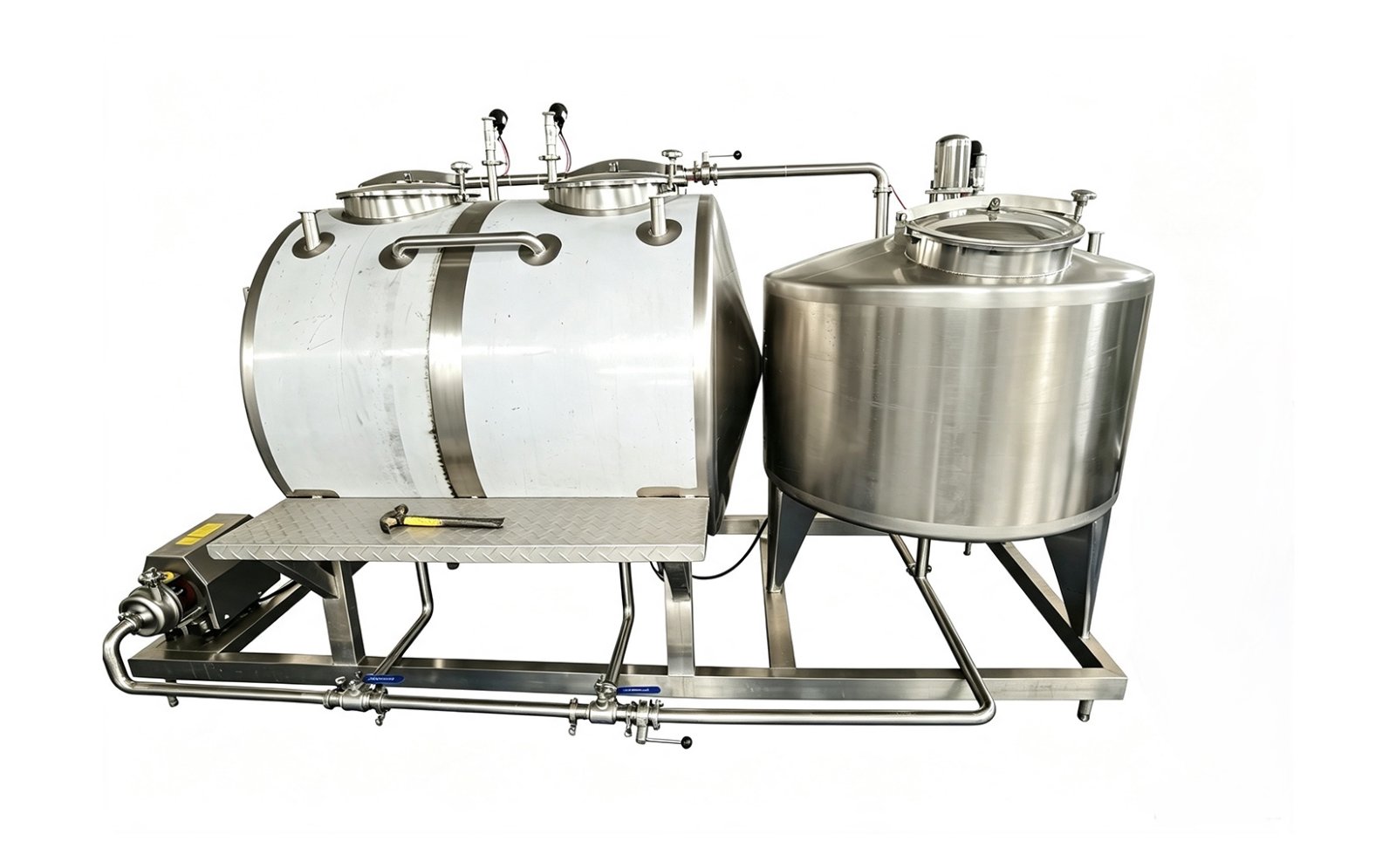
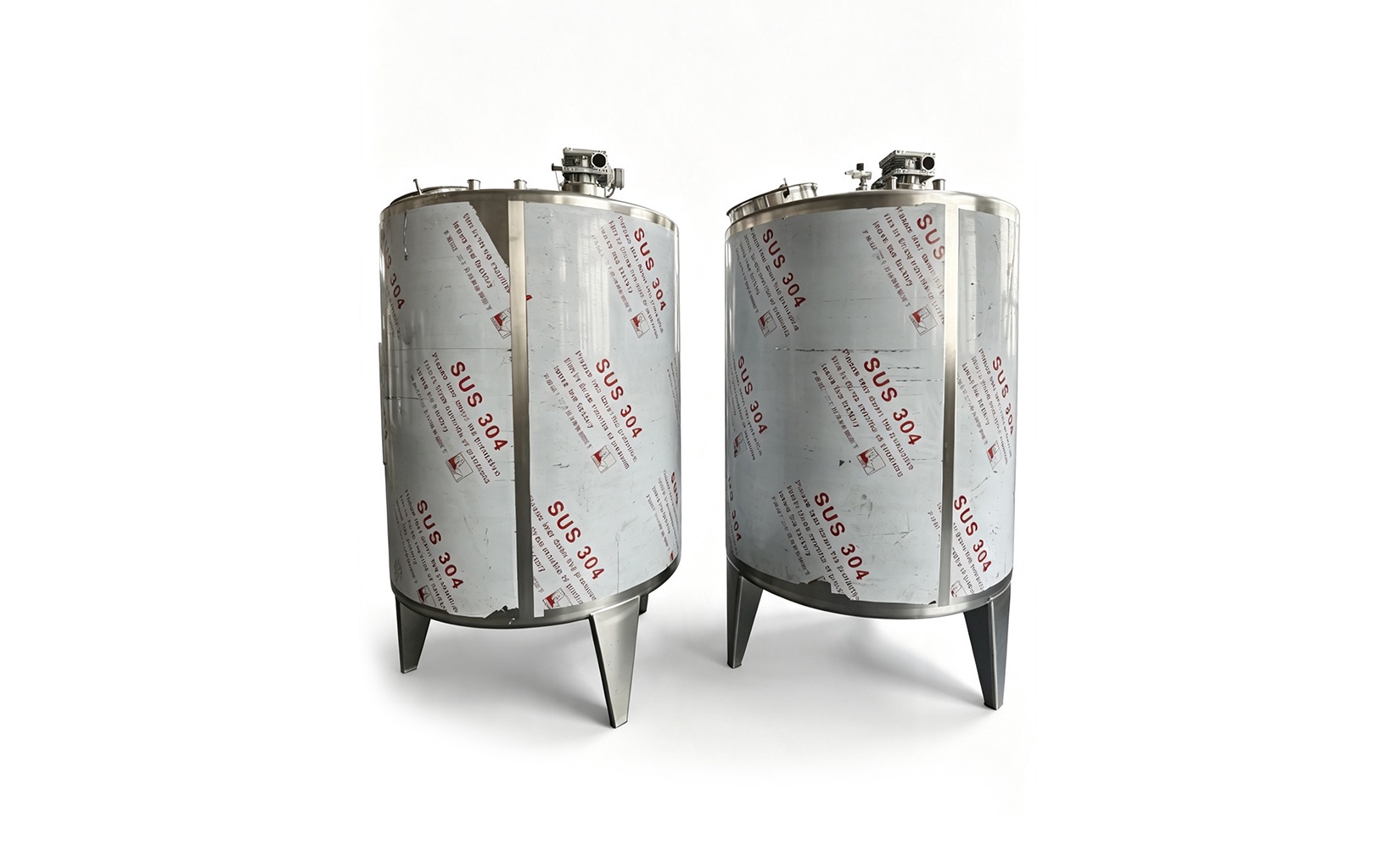
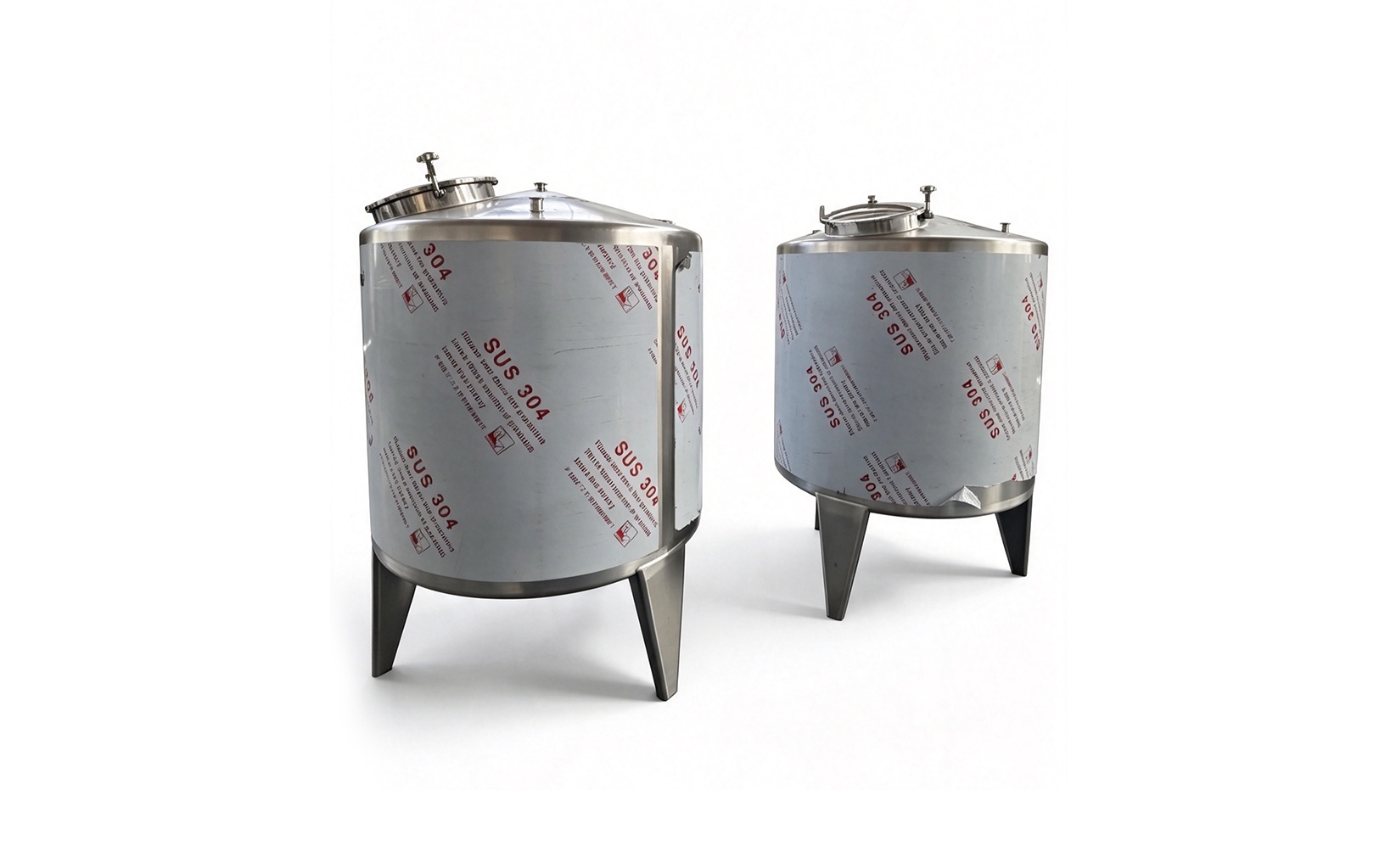
Alkali tank, acid tank, hot water tank, and recovery tank (304/316L stainless steel)
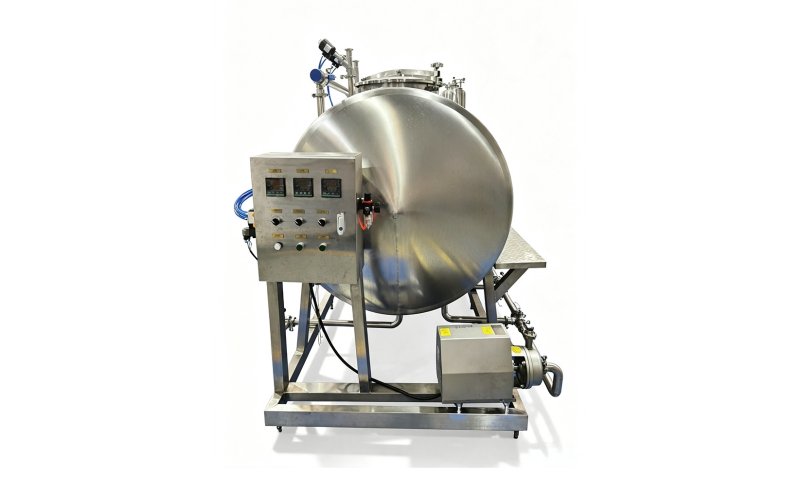
CIP Supply Pump
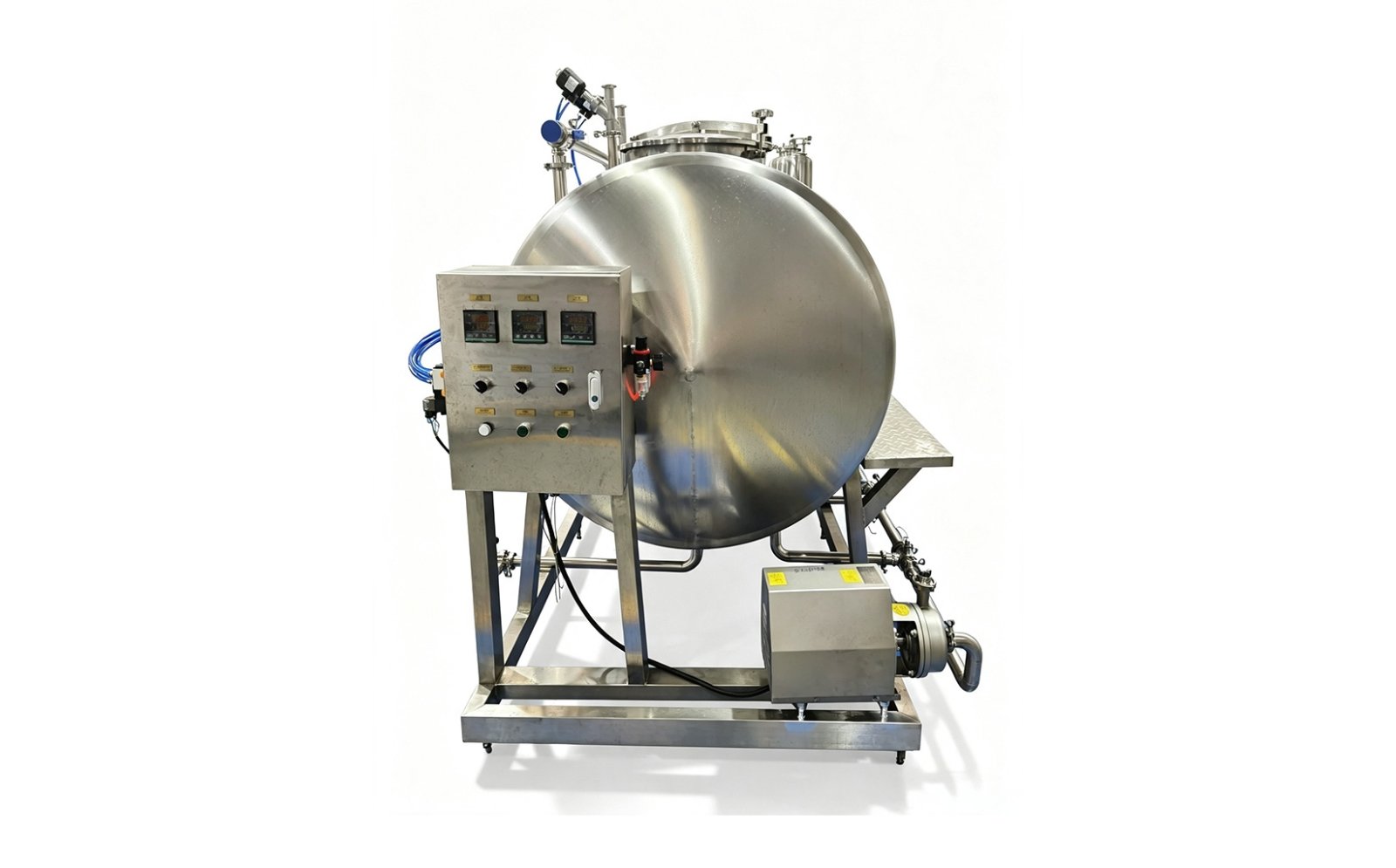
High-flow sanitary centrifugal pump to provide circulation pressure
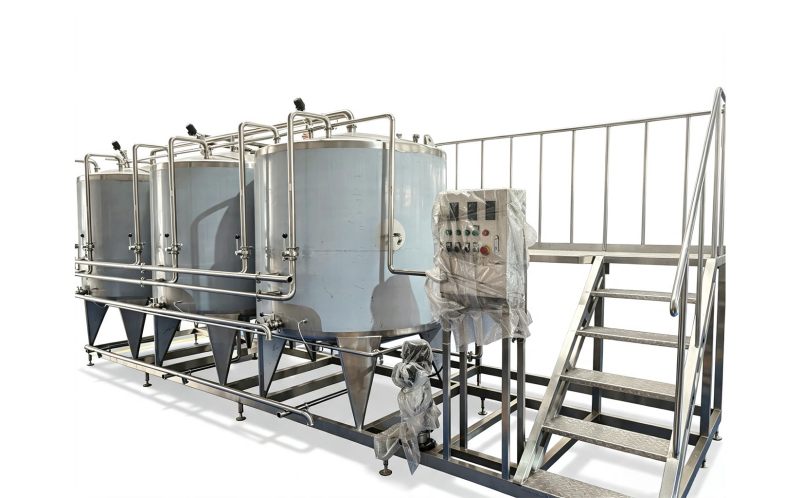
Dosing Unit
Automatic metering pumps for acid and alkali dosing
Heat Exchanger
Heats the cleaning solution and controls the cleaning temperature
Optional
01
Automatic cleaning agent recovery system to conserve chemicals
02
Online pH monitoring for precise tracking of acid and alkali residues
03
Integrated skid-mounted unit with factory-preinstalled piping and valves, minimizing on-site installation work
04
MES data integration and cleaning log storage/export capabilities for customer audits
Changeover/Cleaning/Maintenance
Cleaning
CIP station tanks require periodic manual removal of sediment from the bottom; acid and alkali tanks must not store liquids for extended periods and should be drained regularly.
Do not use high-pressure water to spray electrical control cabinets or sensors directly.
Periodically inspect the spray balls inside the equipment to prevent clogging; spray failure can result in cleaning "dead zones."
Maintenance
Daily checks: Check for abnormal noise during pump operation; monitor temperature and conductivity readings; verify valve operation and liquid levels.
Weekly checks: Clean filters; inspect piping and valves for leaks; check metering/dosing pumps.
Monthly checks: Calibrate conductivity, pH, and temperature sensors; inspect seals/O-rings; check spray ball spray patterns.
Stocked spare parts: Mechanical seals, seals/O-rings, filter cartridges, sensor probes.
Can all equipment utilize CIP?
Equipment must be designed with spray balls and closed-loop circulation connections; older equipment lacking spray balls creates cleaning dead zones, making effective CIP impossible.
What media are required for CIP?
Process water/purified water, caustic soda (NaOH), nitric acid (HNO₃), and steam (for heating the cleaning solutions).
Can a single CIP station serve multiple pieces of equipment?
Yes; by using valve manifolds to switch circuits, a single station can sequentially clean the mixing tank, homogenizer, UHT unit, and filling machine. In fact, the vast majority of beverage plants use a single CIP system to service an entire production line.
Contact Us
Complete 2 easy steps below to get your factory matrix and a complimentary factory layout design within 24 hours.
Request Factory Price & Factory Layout Within 24h
Request Factory Price & Factory Layout Within 24h