



Depalletizer

Product Value
01
Replaces strenuous manual depalletizing, reduces the risk of workplace injuries, ensures a continuous and stable supply of bottles, and solves labor shortages associated with empty bottle/can infeeding.
02
Compatible with high-speed main filling lines; offers a standard capacity of 200–800 bottles per minute, ensuring continuous upstream supply and minimizing main line downtime.
03
Can be directly integrated with bottle washing and main filling units to achieve unmanned upstream infeeding—from empty pallet stacks to the filling process.
04
Ensures neat stack formation and low toppling rates; equipped with bottle-clamping and centering/alignment mechanisms to minimize breakage and jams, making it suitable for high-risk containers such as glass bottles.
Applicability boundaries

Products
mpty PET bottles, glass bottles, and aluminum/tinplate cans stacked on wooden pallets; neatly arranged stacks with separator sheets.

Application
Continuous upstream feeding for filling lines at large-scale beverage, canning, and dairy plants.

Stacking Configuration
Standard pallets, regular matrix stacking, with corrugated separator sheets between layers.
Working Principle
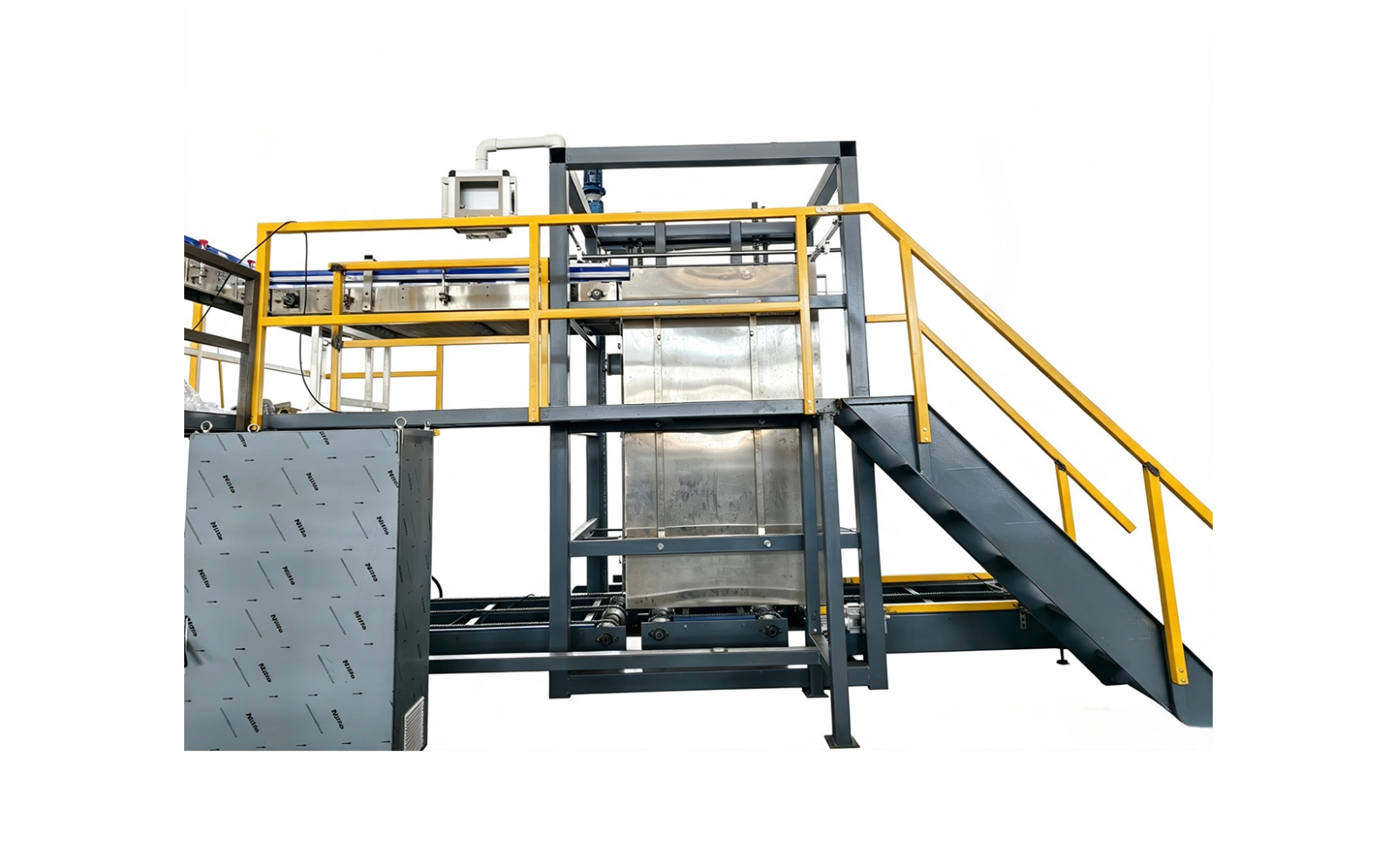
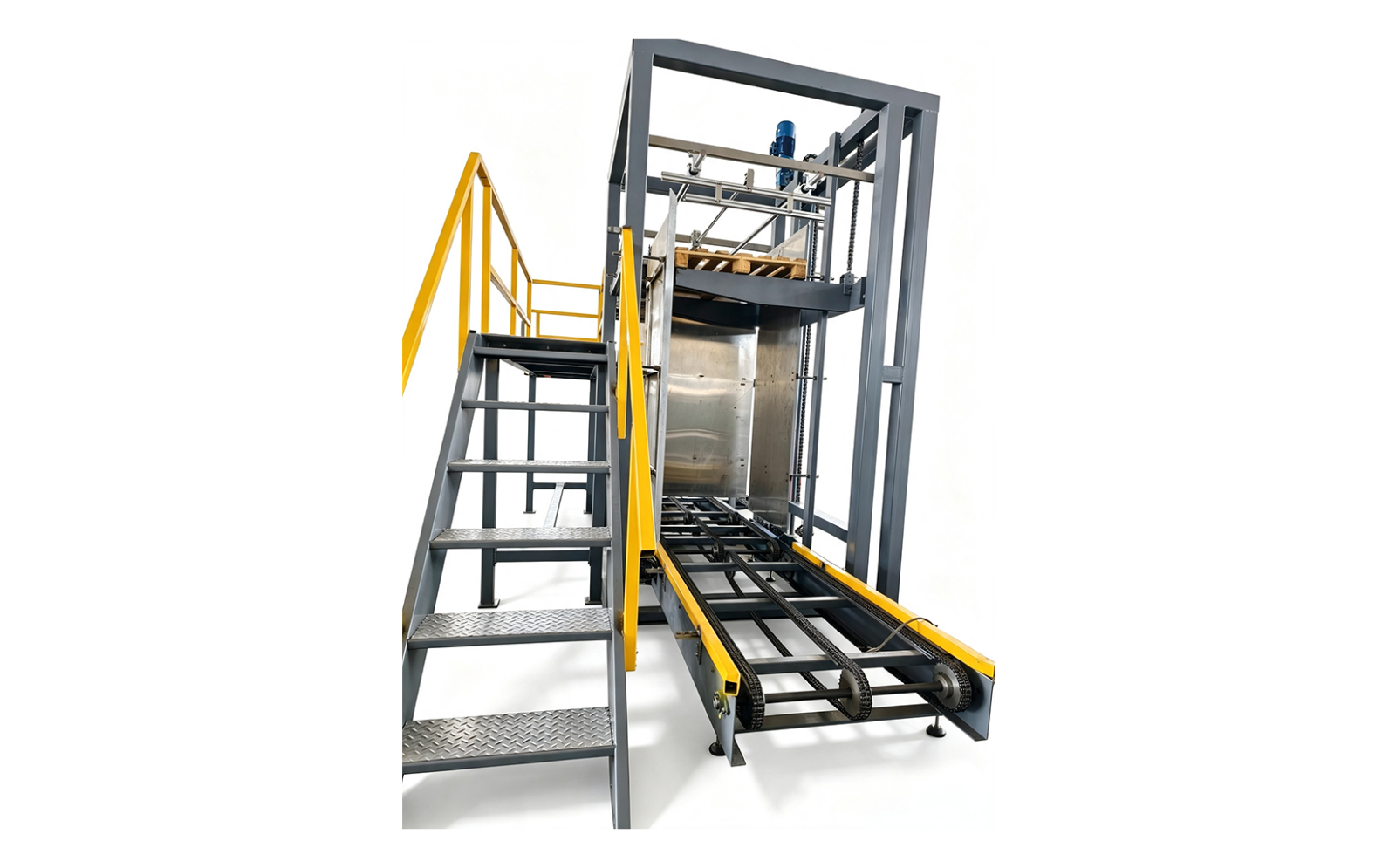
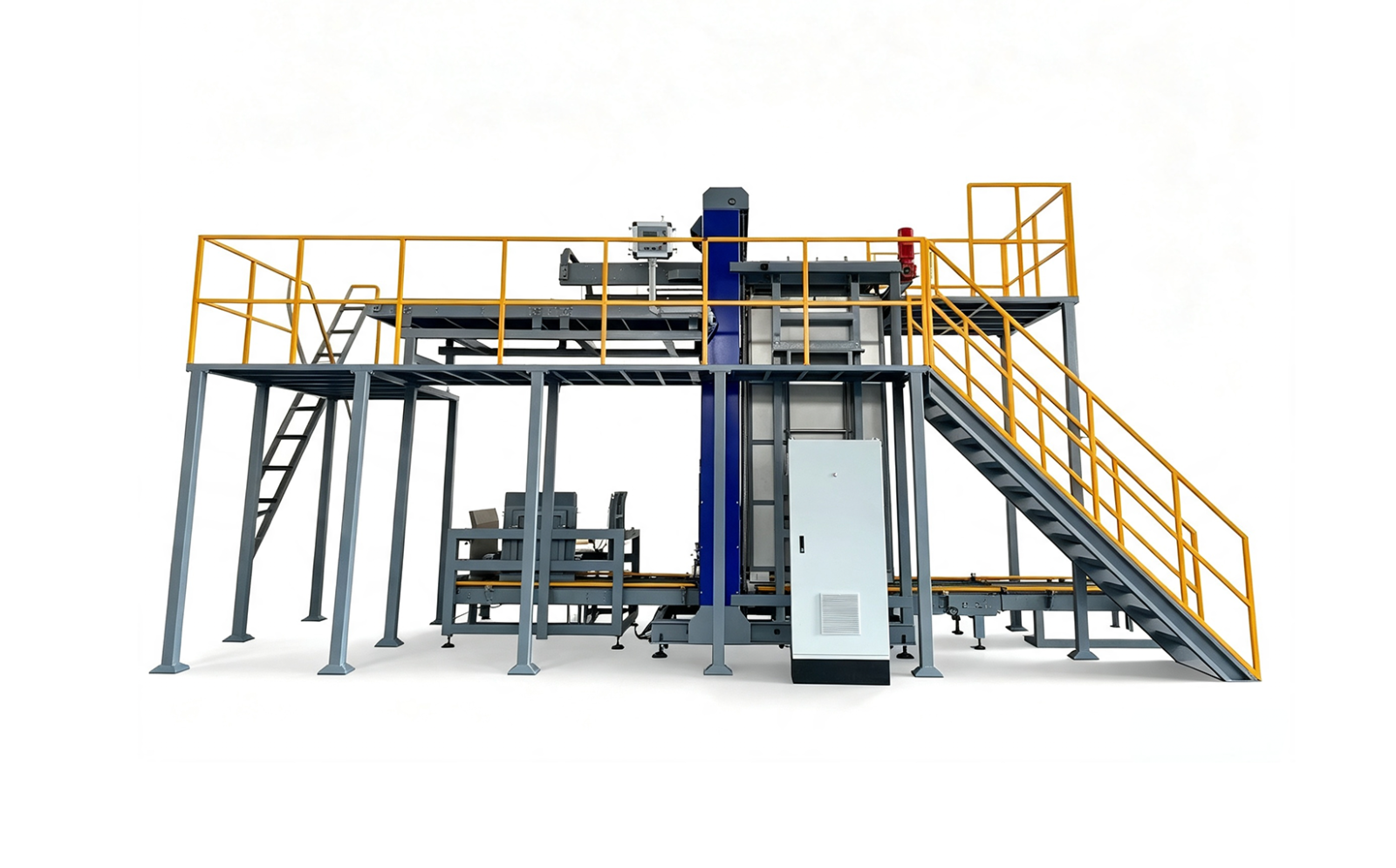
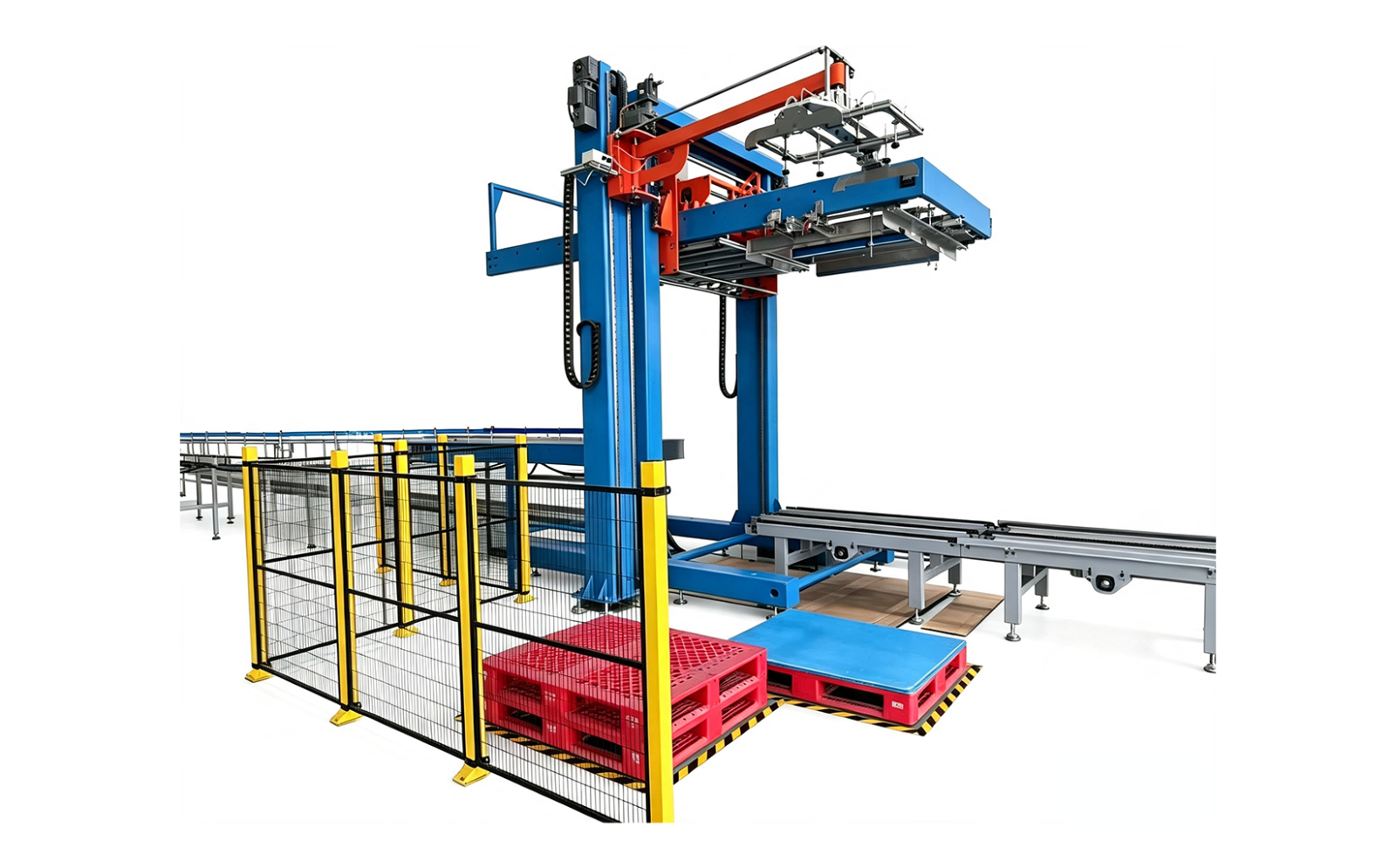
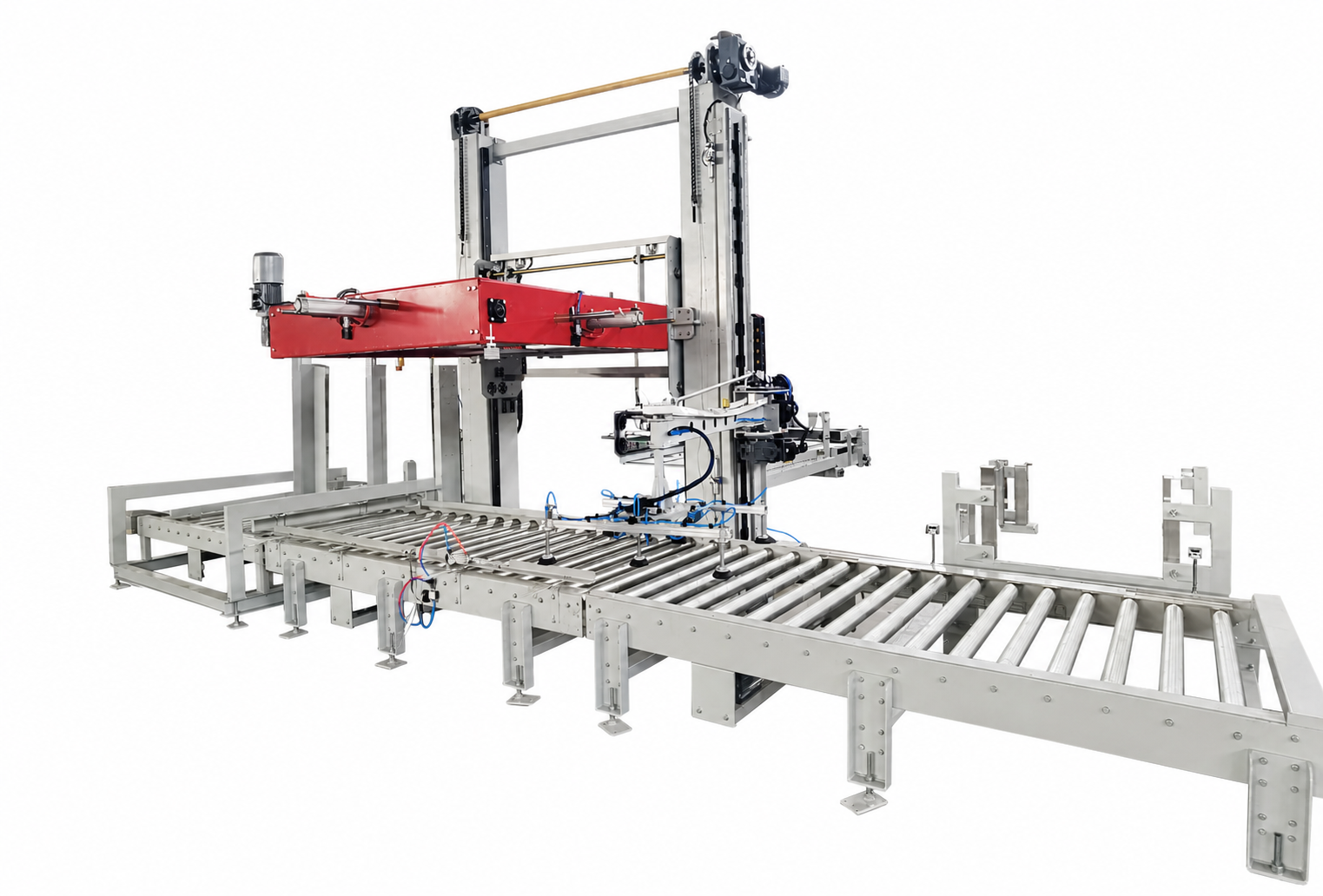
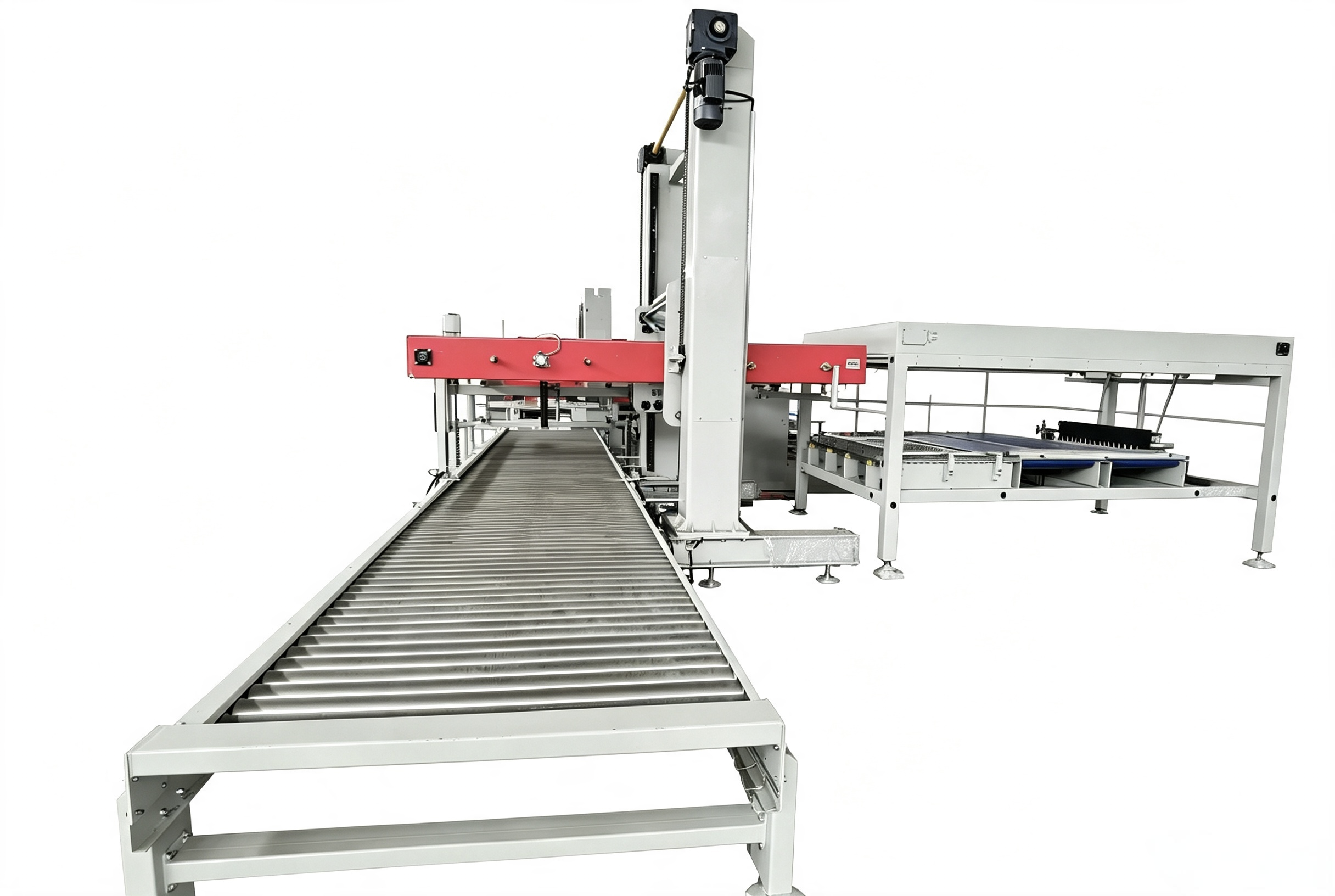
Forklift delivers full pallet stack → Pallet conveyed to de-palletizing station → Lifting platform raises layer by layer; suction cups remove separator sheets → Bottle-gripping mechanism positions and pushes the entire layer onto the discharge conveyor → Full stack de-palletized in a continuous cycle; empty pallets automatically discharged and stacked.
Core components
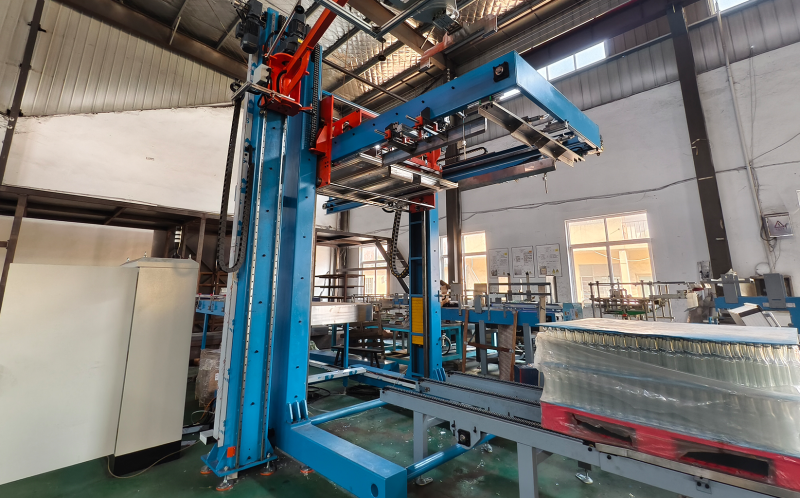
Full-stack conveyor chain & lifting platform
Supports and incrementally lifts the bottle stack.
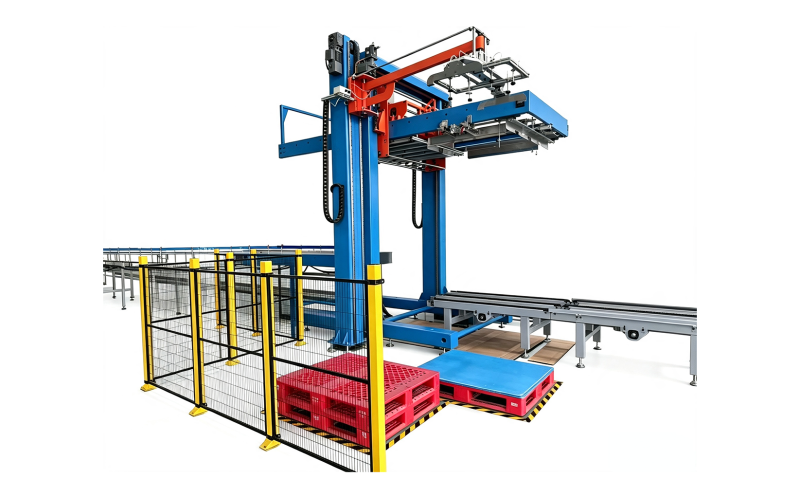
Vacuum suction assembly for layer pads
Picks up and transfers corrugated layer pads.
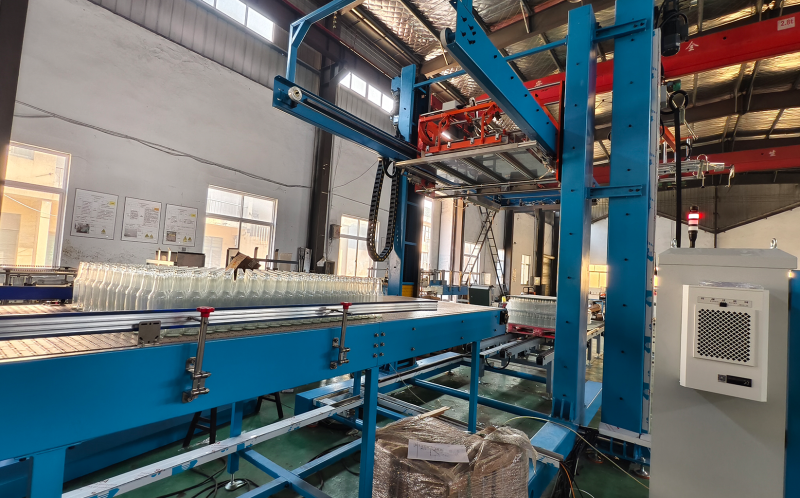
Bottle-clamping centering mechanism & full-layer pusher module
Prevents bottle tipping and executes layer-by-layer unloading (core actuating components).
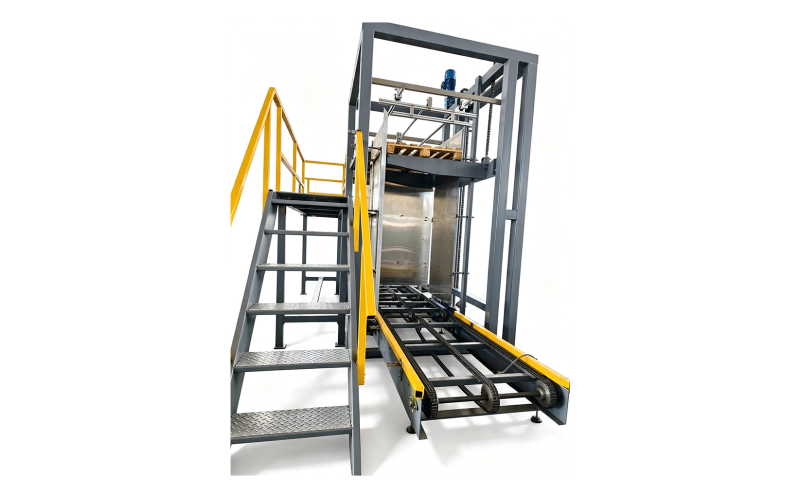
Outfeed buffer conveyor (chain or mesh belt)
Smoothly feeds bottles to downstream washing and filling lines.
Optional
01
Robotic depalletizing unit (flexible handling of multiple bottle types; compatible with mixed-product pallets)
02
Automatic layer pad conveying/recovery and strapping system
03
Pallet pre-shaping and side-compression mechanism for bottle stability (ideal for glass bottles)
Changeover/Cleaning/Maintenance
Changeover
Ensure safety via lockout/tagout; adjust bottle-gripping clamps, pusher plate stroke, and pallet pattern limiters; load recipes via HMI and configure layer counts, lifting heights, suction cup timing, and pusher speeds; perform test runs to calibrate alignment and check for bottle tipping; save pallet pattern parameters.
Maintenance
Daily: Check vacuum pressure, suction cups, safety light curtains, and chain tension. Weekly: Lubricate lifting guide rails, pusher plate slide rails, and conveyor chains; inspect suction cups for wear. Monthly: Tighten drive components, clean dust from electrical controls, and verify lifting positioning accuracy. Stock spare parts such as vacuum suction cups, seals, and photoelectric sensors.
Does the depalletizer handle empty bottles or full ones?
In standard beverage lines, depalletizers are primarily used for the upstream feeding of empty PET bottles, glass bottles, or cans; robotic solutions are generally preferred for depalletizing finished, full-bottle pallets.
How long does it take to switch pallet patterns or bottle specifications?
Adjusting pallet parameters only (for the same bottle diameter): 10–20 minutes; switching bottle types (including changing the gripper tooling and recalibration): 25–40 minutes.
Can it handle glass bottles?
Yes; however, we recommend adding a pre-shaping gripper mechanism and a buffered discharge conveyor to minimize the risk of tipping or breakage.
Can it operate without layer pads?
Standard push-type models rely on layer pads to separate layers; for tightly stacked loads without pads, a robotic gripper system is the preferred choice.
Related Product Recommendations
Contact Us
Complete 2 easy steps below to get your factory matrix and a complimentary factory layout design within 24 hours.
Request Factory Price & Factory Layout Within 24h
Request Factory Price & Factory Layout Within 24h