



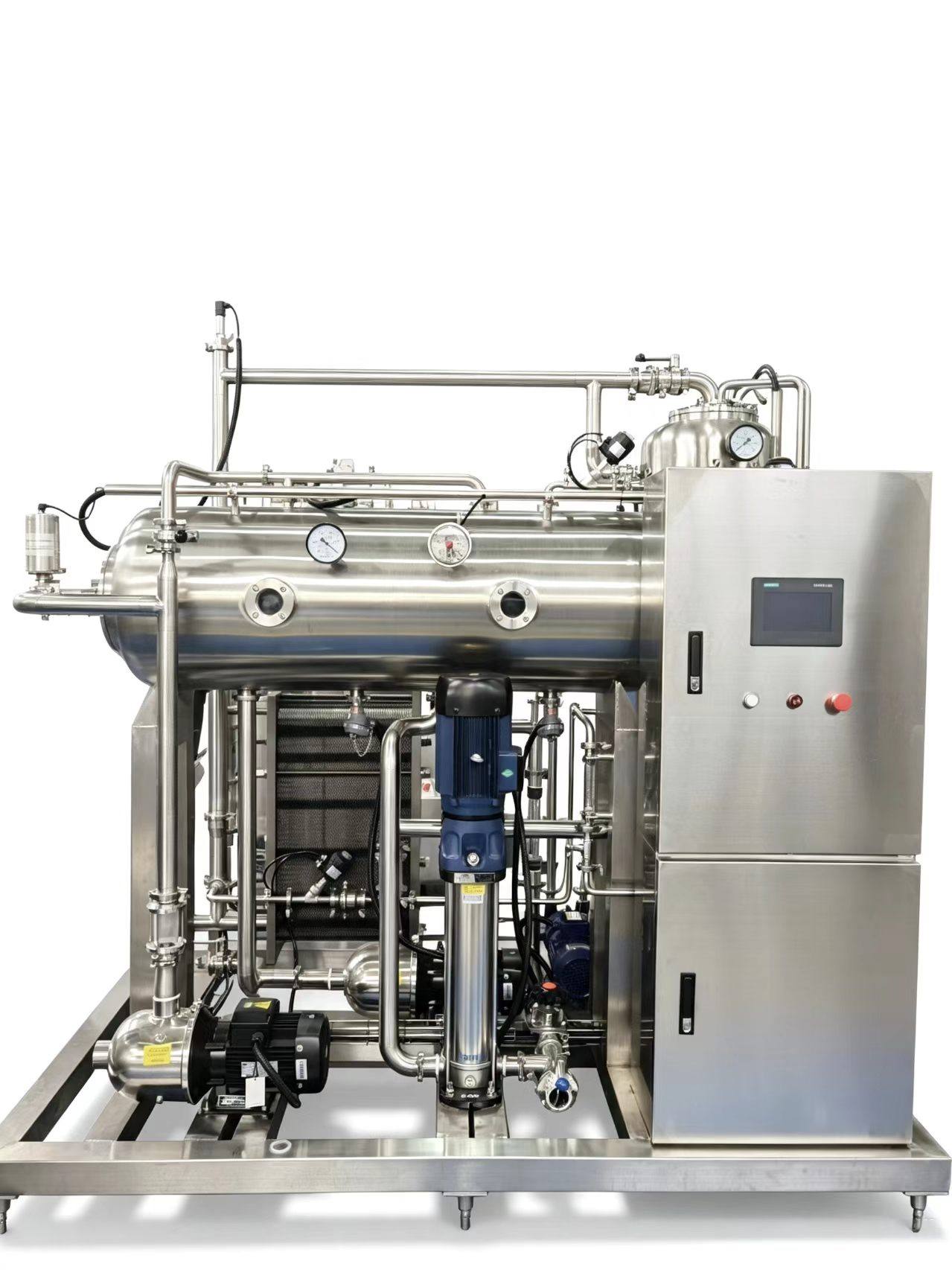
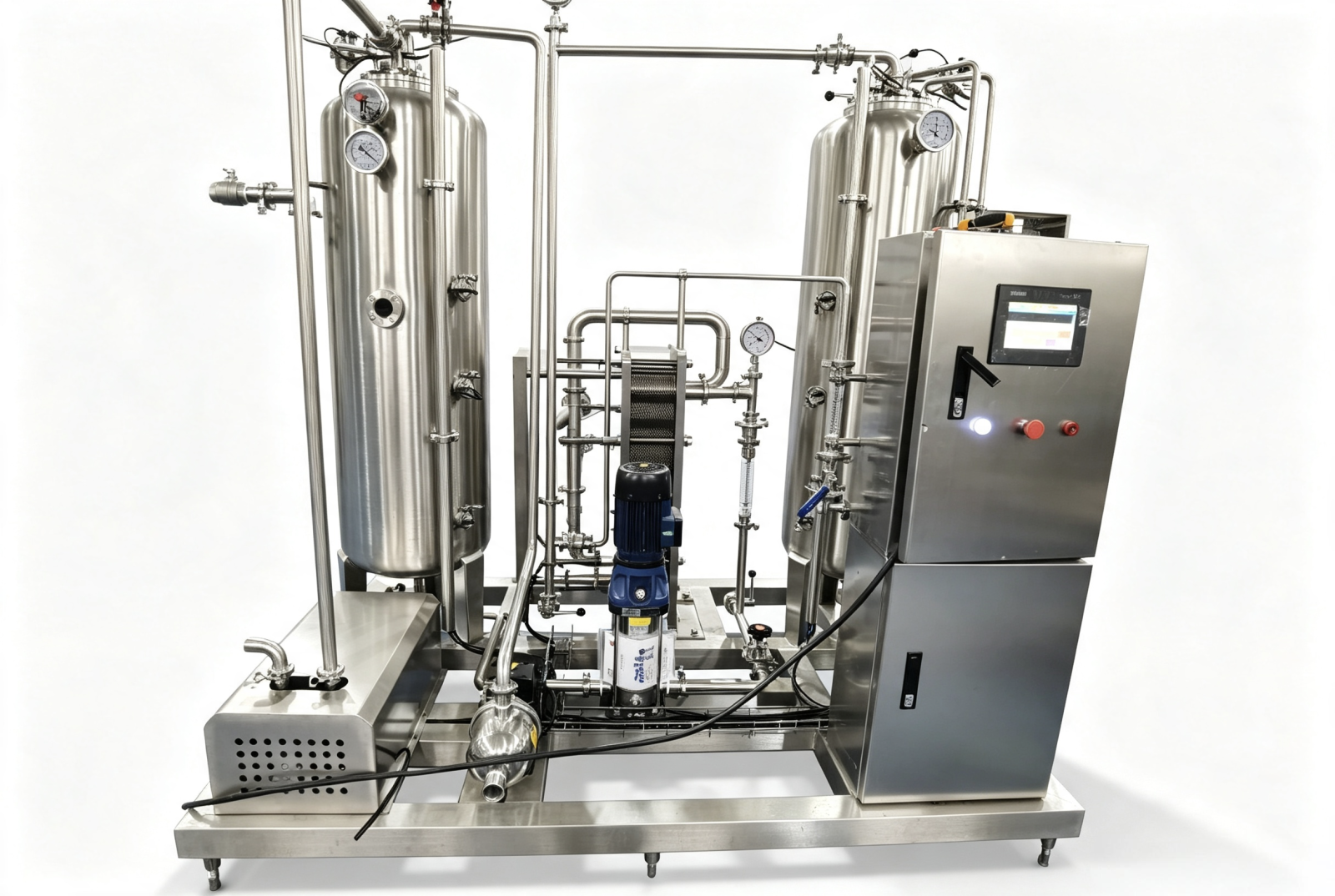
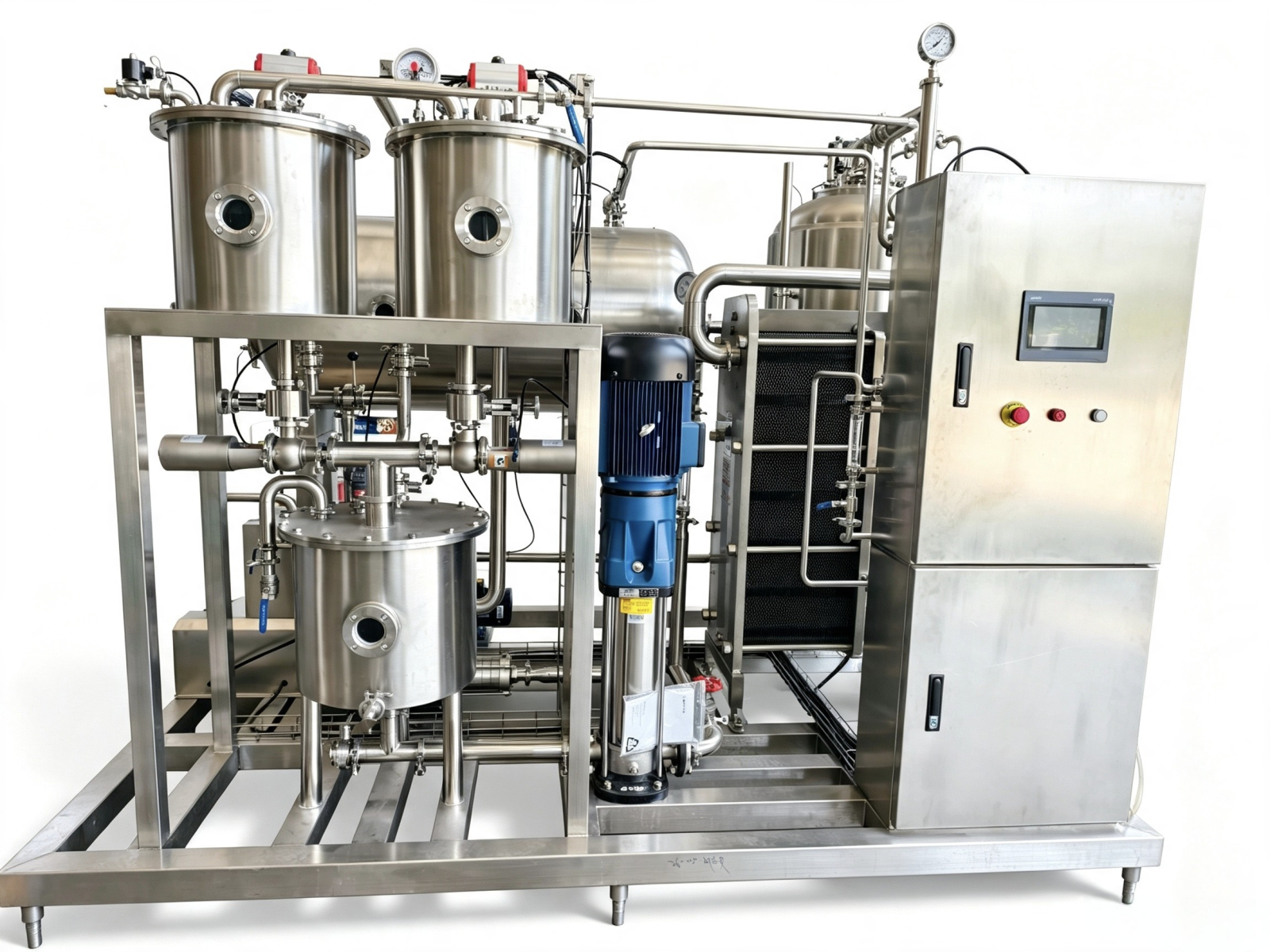
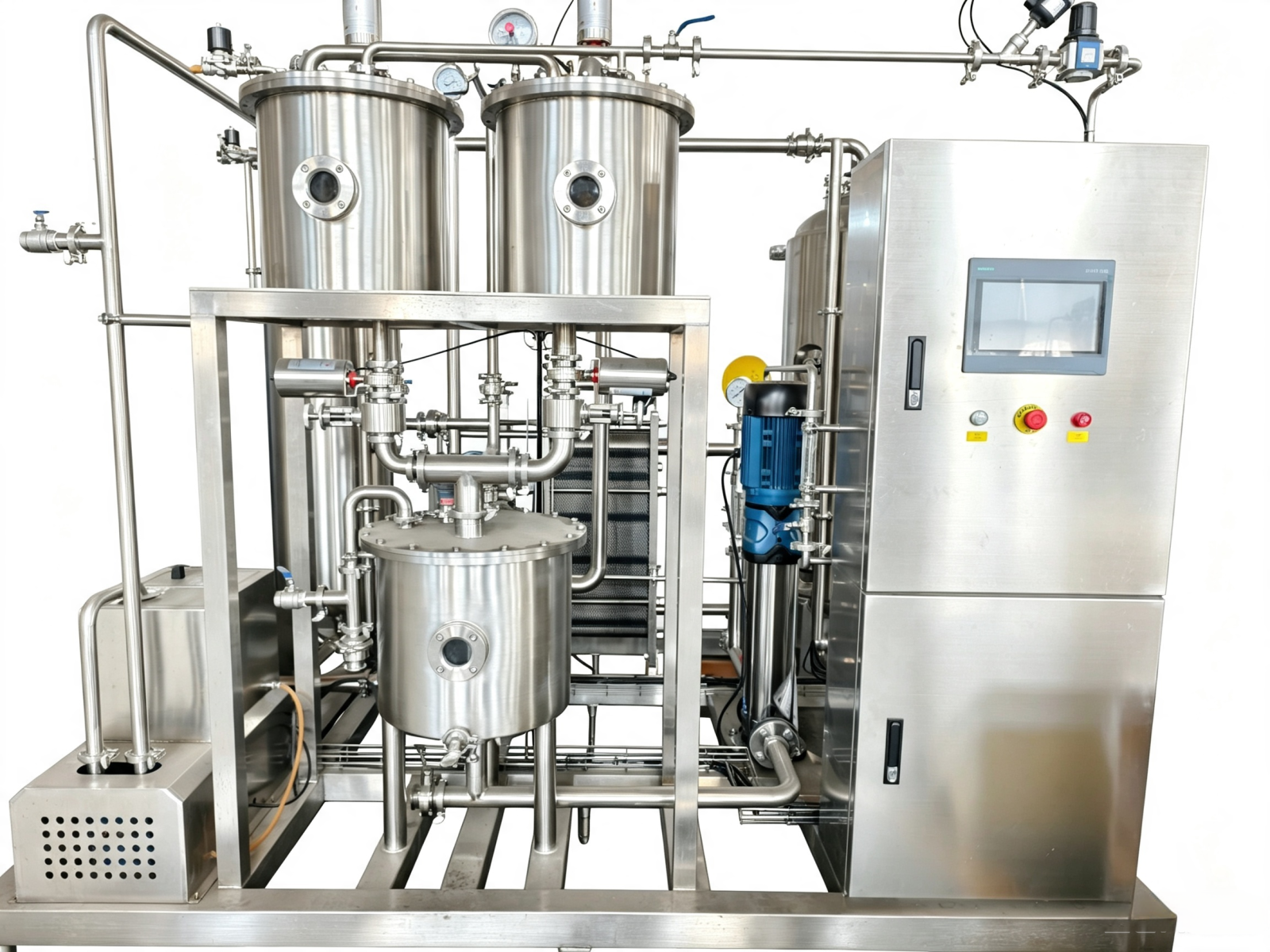
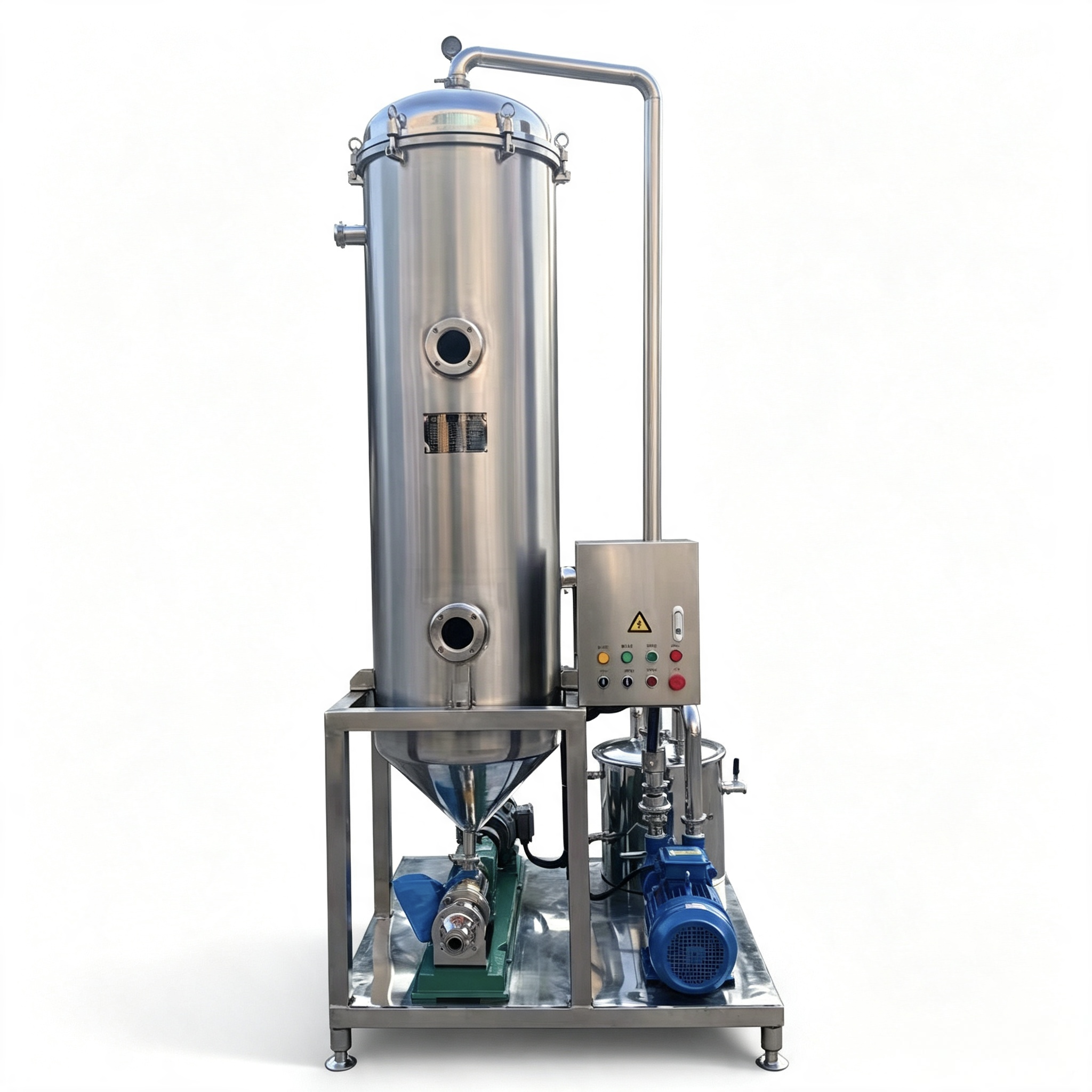
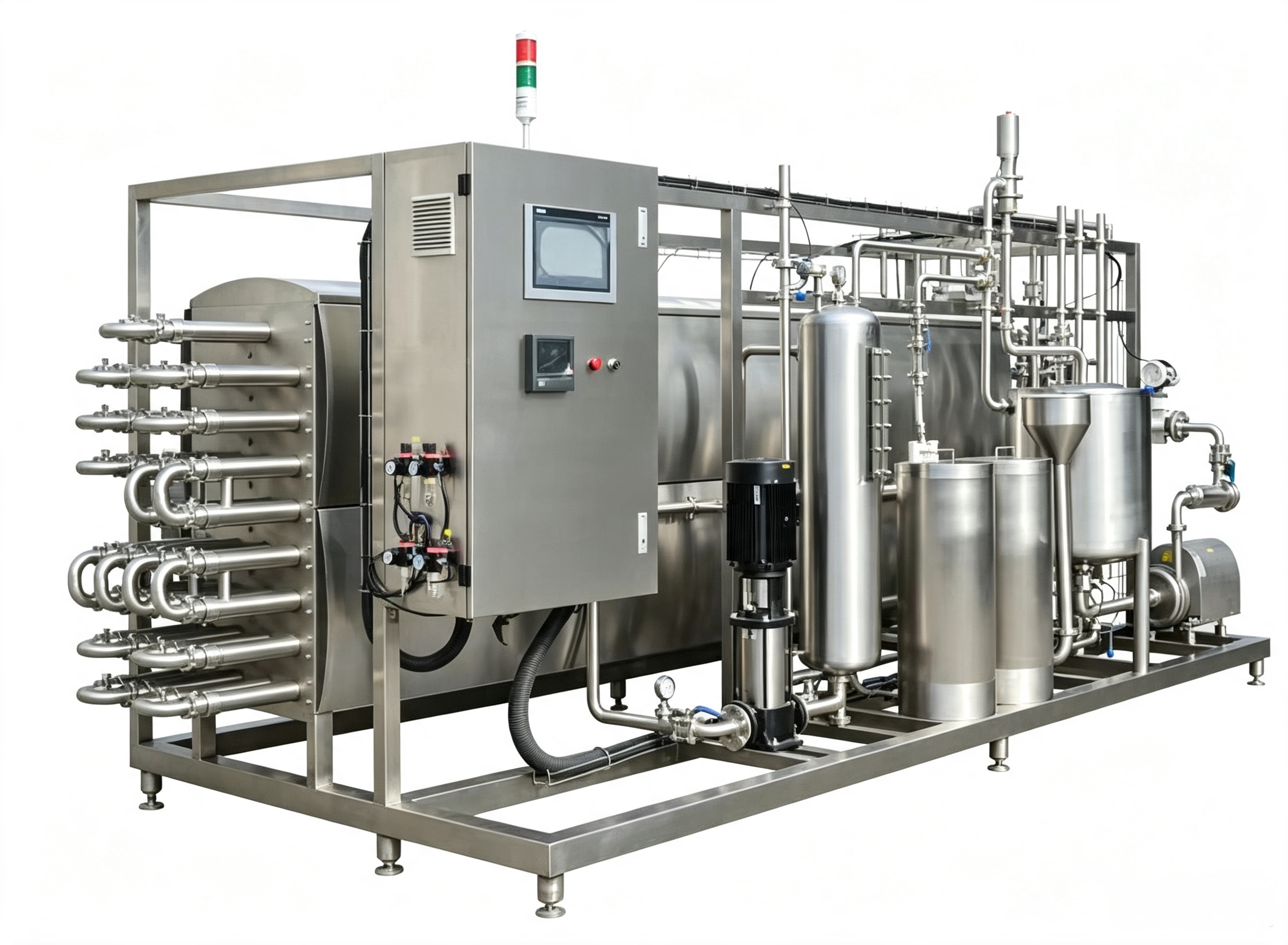
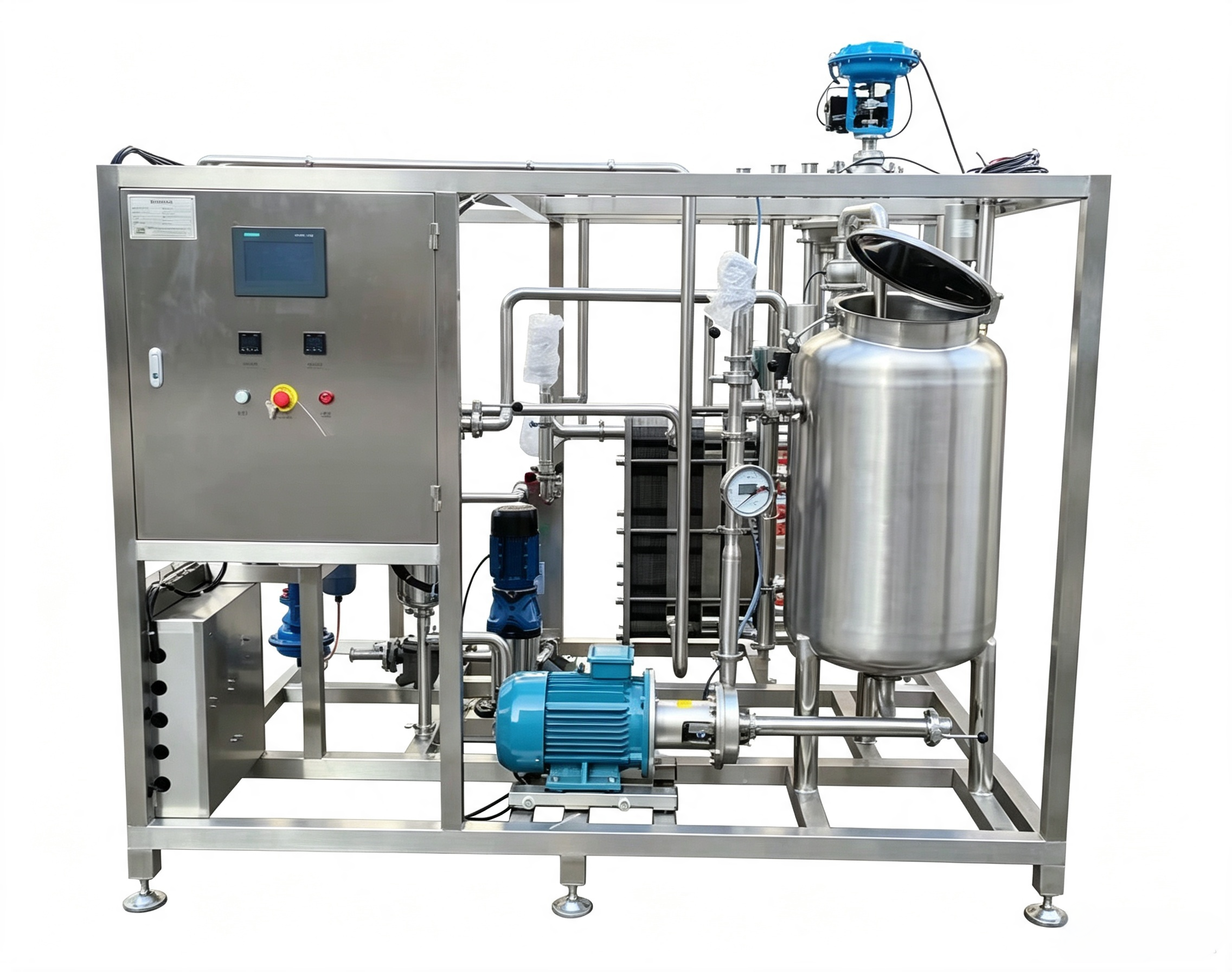
CO2 mixer

Product Value
01
Precisely controls gas content by uniformly dissolving food-grade CO₂ into the liquid under pressure and low-temperature conditions, creating fine, stable bubbles that ensure consistent taste and carbonation across every batch of beverage.
02
It integrates a syrup-to-water ratio control function, automatically mixing syrup and chilled water in precise proportions; this ensures high mixing accuracy, reduces manual labor, and maintains consistent sugar levels.
03
Pre-vacuum degassing removes dissolved oxygen from the water, increasing carbon dioxide solubility while reducing the risk of oxidation and extending the product's shelf life.
04
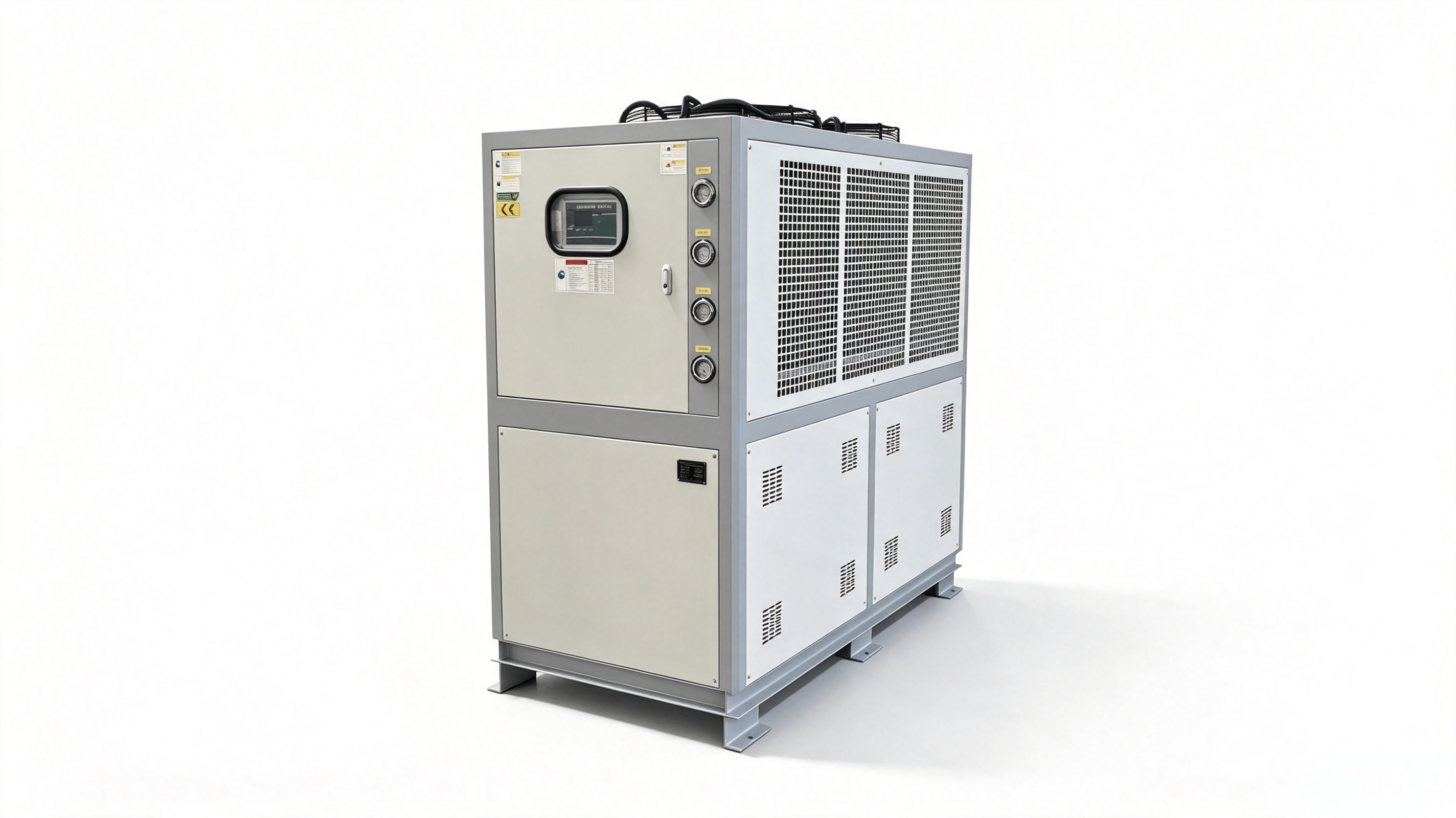
The integrated cooling module cools the feed liquid to a low temperature (1–4°C); this low temperature significantly enhances CO₂ dissolution efficiency and reduces gas loss.
Applicability boundaries

Materials
Carbonated soft drinks, cola-style carbonated drinks, sparkling fruit juices, sparkling water

Operating Conditions
Continuous production of carbonated beverages; requires stable sugar content and carbonation levels; interfaces with isobaric filling machines; supports CIP (Clean-in-Place) cleaning.
Working Principle
After undergoing vacuum degassing, the raw water is mixed with syrup according to the formulation ratio and cooled to a low temperature via a heat exchanger.
The cooled liquid feed is sprayed as a mist into a pressurized carbonation tank; the tank is maintained at a set pressure and charged with food-grade CO₂, ensuring thorough gas-liquid contact to achieve carbonation and dissolution.
The carbonated beverage is discharged and sent to the carbonated beverage filling machine.
Core components
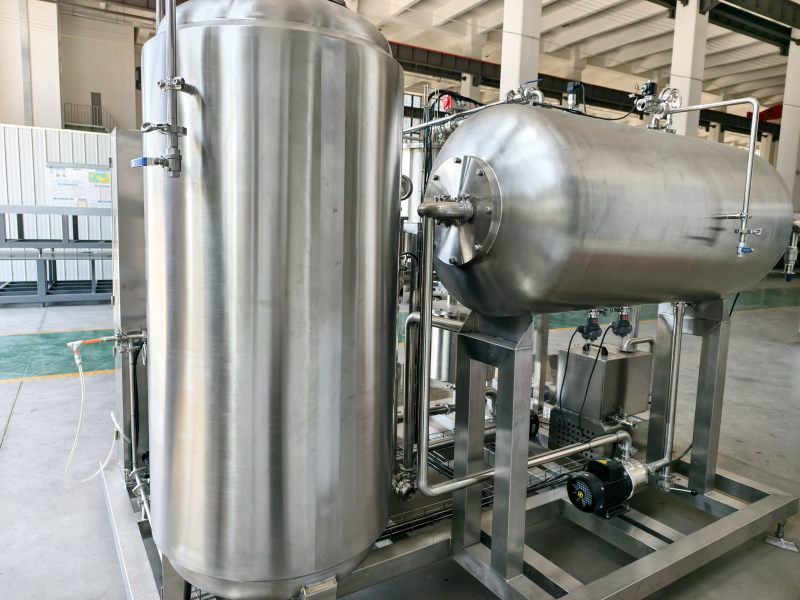
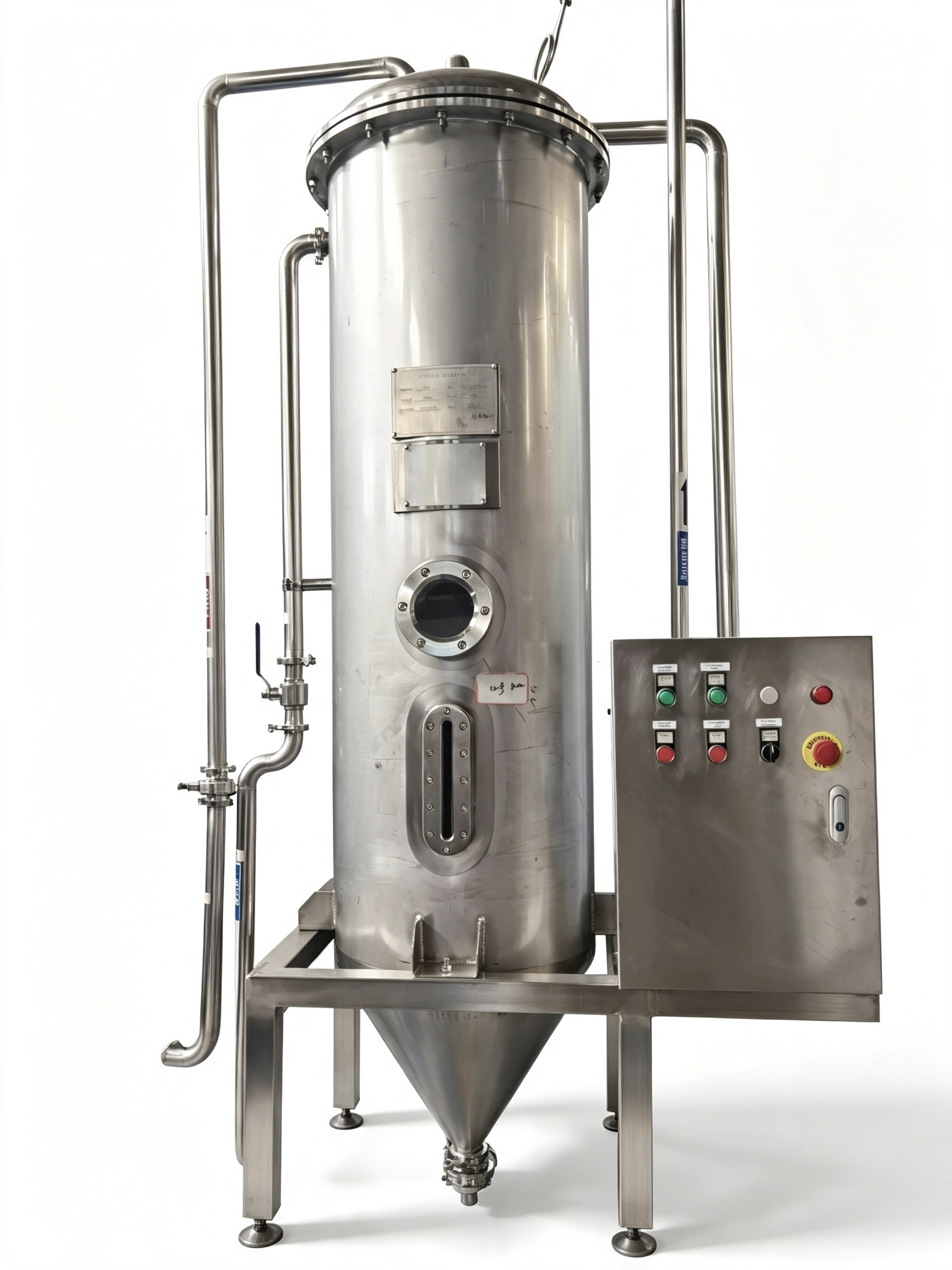
Vacuum degasser assembly
Spray nozzles and vacuum system for removing oxygen from the feed water.
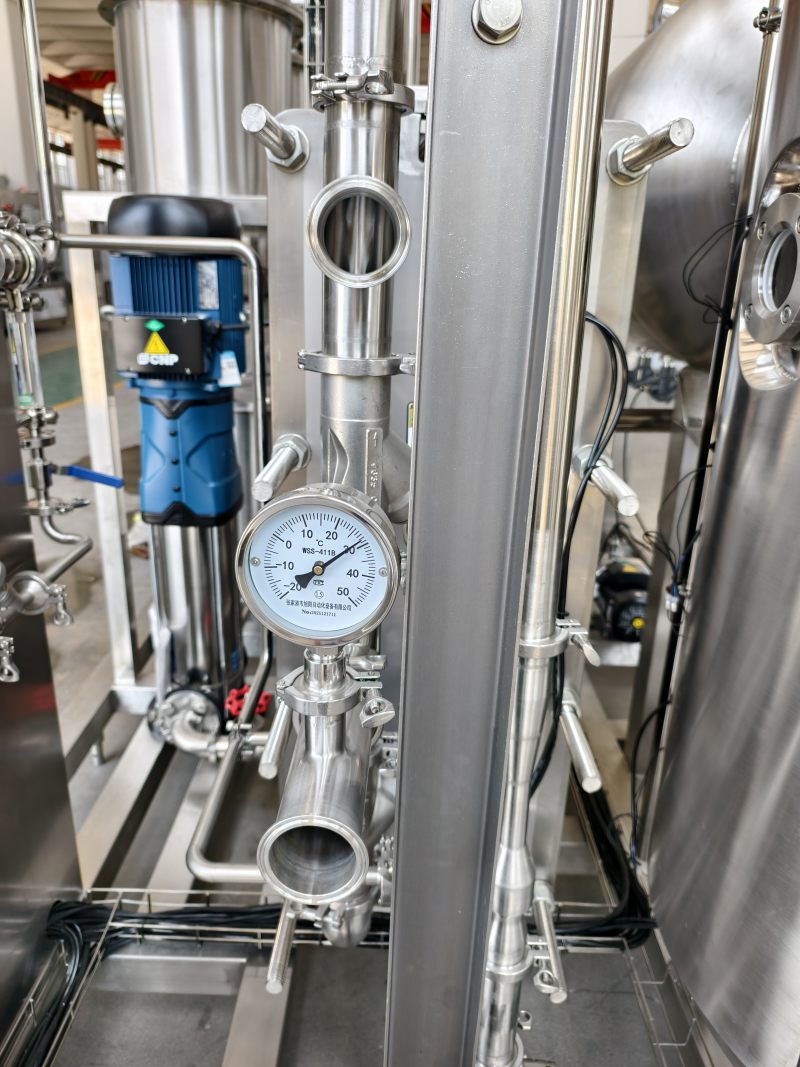
Syrup-to-water proportioning unit
Flow meters and control valves regulate the mixing ratio of sugar and water.
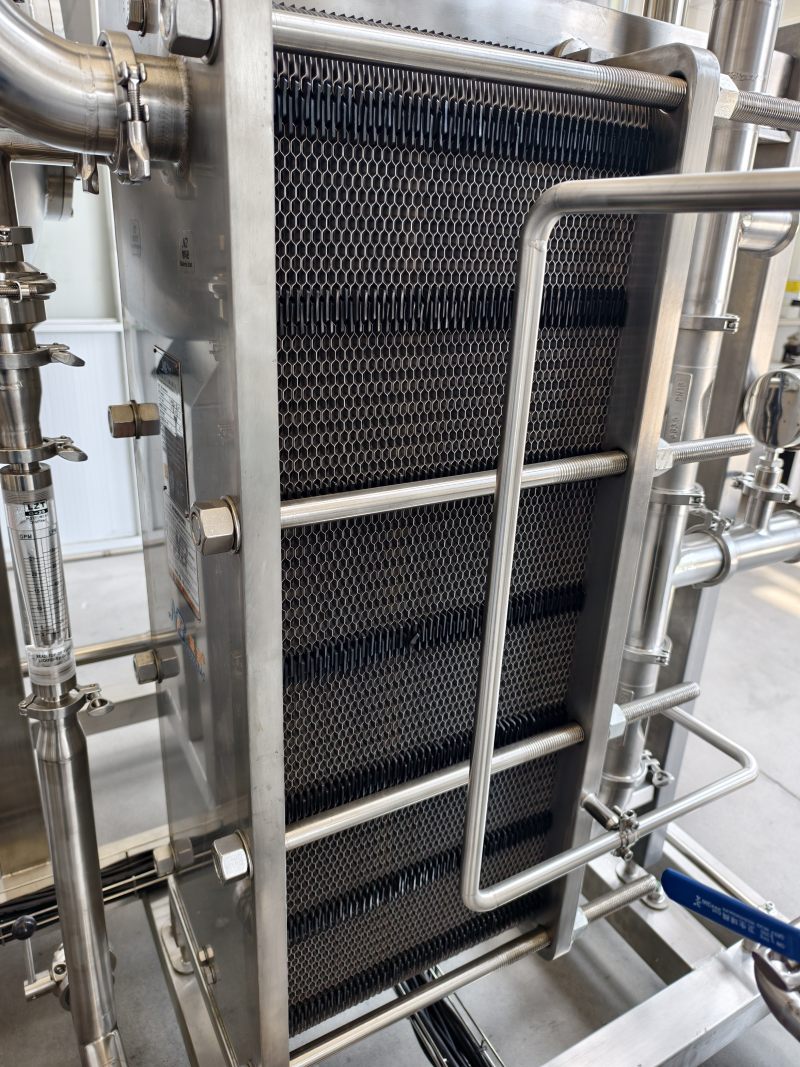
Plate heat exchanger
Cools the mixed feed solution to the optimal temperature for carbonization.
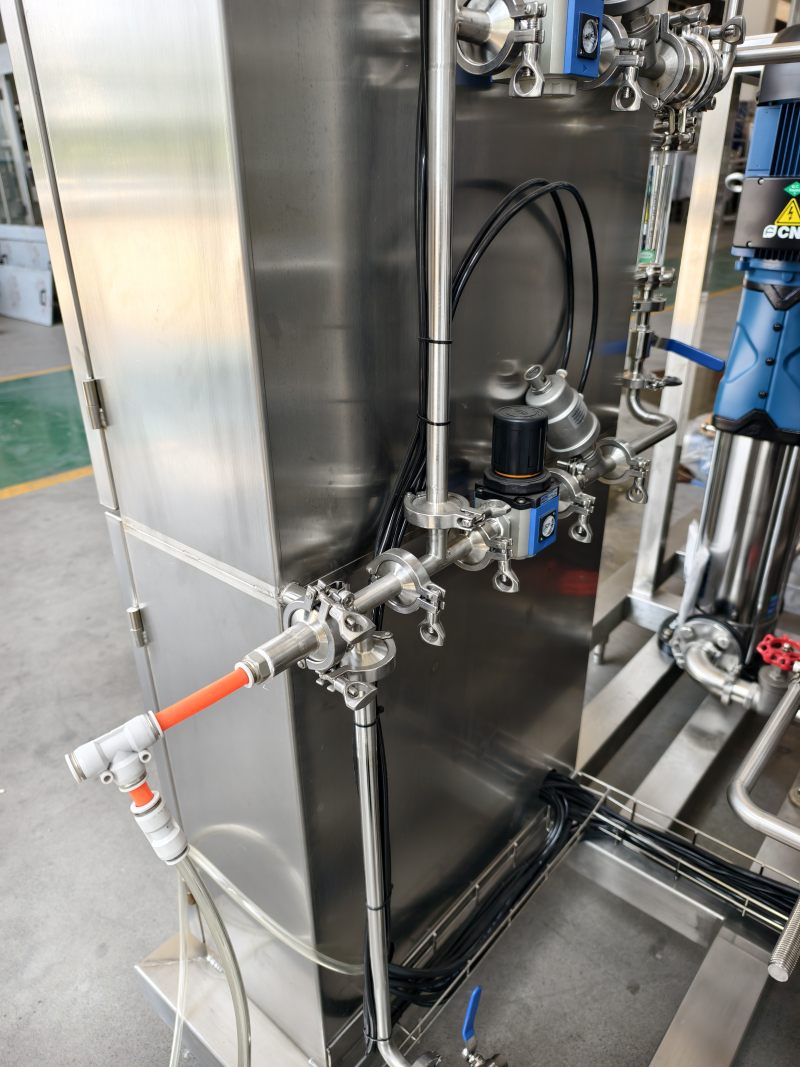
CO₂ gas supply and metering module
comprises a pressure reducing valve, a flow meter, and an injection mixer to control the CO₂ intake volume.
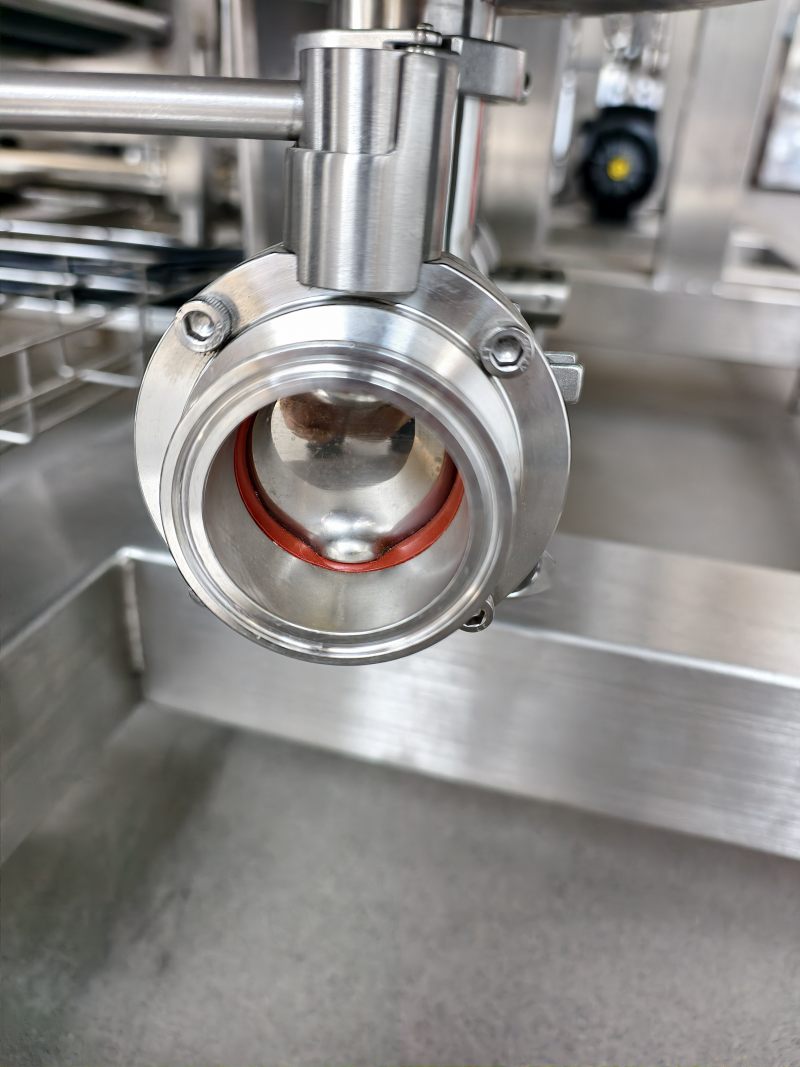
Pressure, liquid level, and temperature sensors
real-time monitoring of tank operating conditions; overpressure protection.
Optional
01
316L stainless steel material contact parts upgrade (acidic bubble juice).
02
High-precision CO₂ mass flow controller further improves the accuracy of gas content control.
03
Online sugar content and online gas content detection module to monitor finished product indicators in real time.
04
Explosion-proof electrical configuration, special workshop working conditions.
Changeover/Cleaning/Maintenance
Maintenance
Daily checks: Tank pressure, CO₂ supply pressure, liquid level, and temperature; inspect connections for gas leaks.
Weekly checks: Clean filters; inspect seals; check vacuum system operation.
Monthly checks: Calibrate pressure and flow sensors; inspect nozzles for clogs; check safety valves.
Stocked spare parts
Sealing rings, injector nozzles, filter elements, and sensors.
Cleaning
Perform a CIP (Clean-in-Place) cycle after each production batch; since syrup is prone to scaling, ensure proper cleaning temperature and duration.
Do not direct high-pressure water sprays at electrical control cabinets, sensors, or vacuum components.
Regularly inspect spray nozzles to prevent clogging by syrup residue; clogs directly impair degassing and carbonation performance.
Why is cooling necessary before carbonation?
Carbon dioxide dissolves more easily at lower temperatures; higher liquid temperatures reduce CO₂ solubility, leading to insufficient gas content and significant gas loss.
What are the common causes of unstable gas content?
① High liquid temperature; ② Fluctuations in CO₂ supply pressure; ③ Tank seal leakage; ④ Nozzle clogging, resulting in inadequate gas-liquid contact; ⑤ Drastic fluctuations in liquid level.
What is the achievable precision for syrup blending?
Standard models achieve a blending precision of ±2%; control precision can be further improved by opting for a high-precision flow meter.
What are the requirements for CO₂ gas?
Food-grade carbon dioxide with a purity of ≥99.9% must be used; a pressure-reducing valve and filter should be installed upstream to remove impurities and oil.
Contact Us
Complete 2 easy steps below to get your factory matrix and a complimentary factory layout design within 24 hours.
Request Factory Price & Factory Layout Within 24h
Request Factory Price & Factory Layout Within 24h