



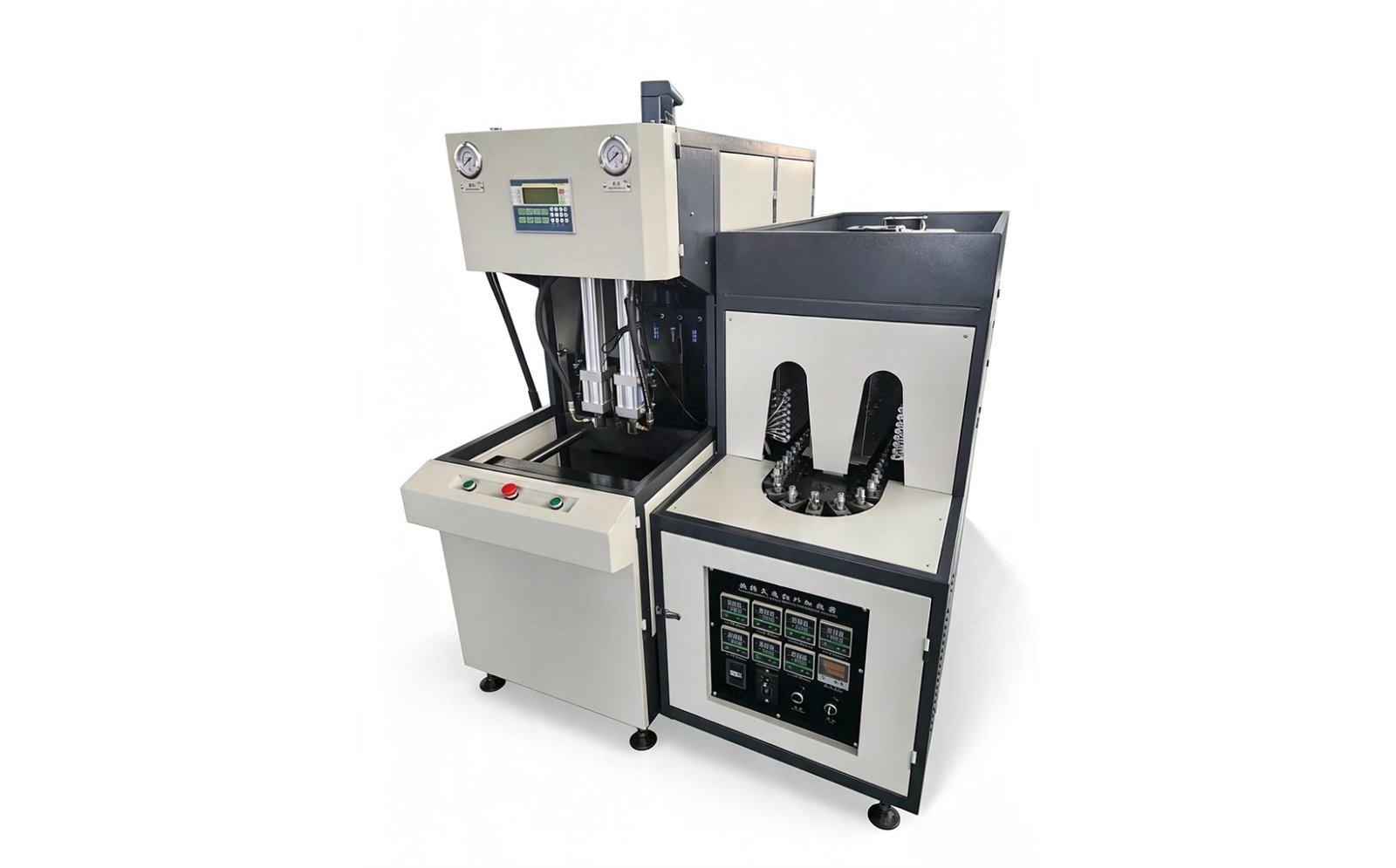
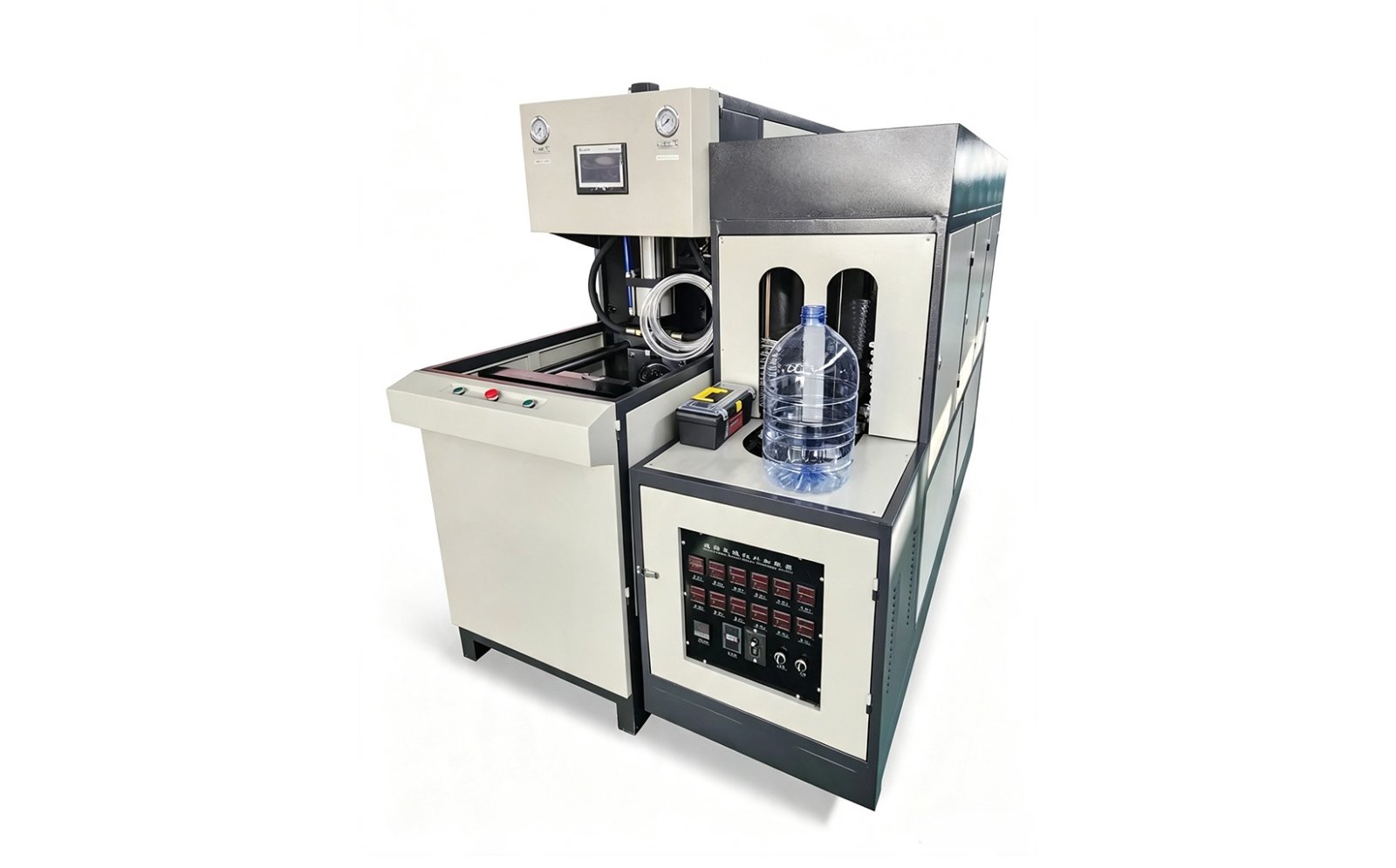
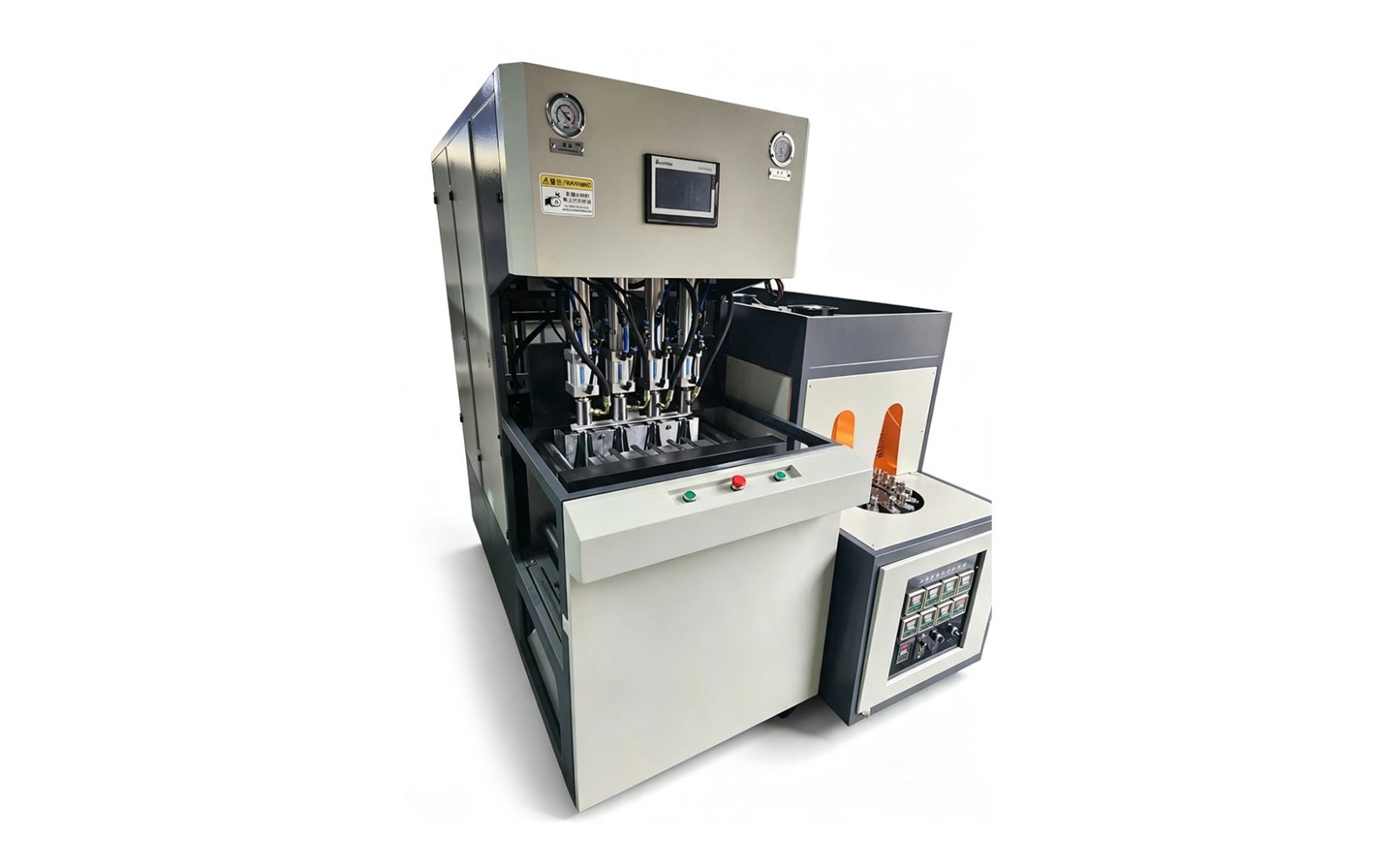
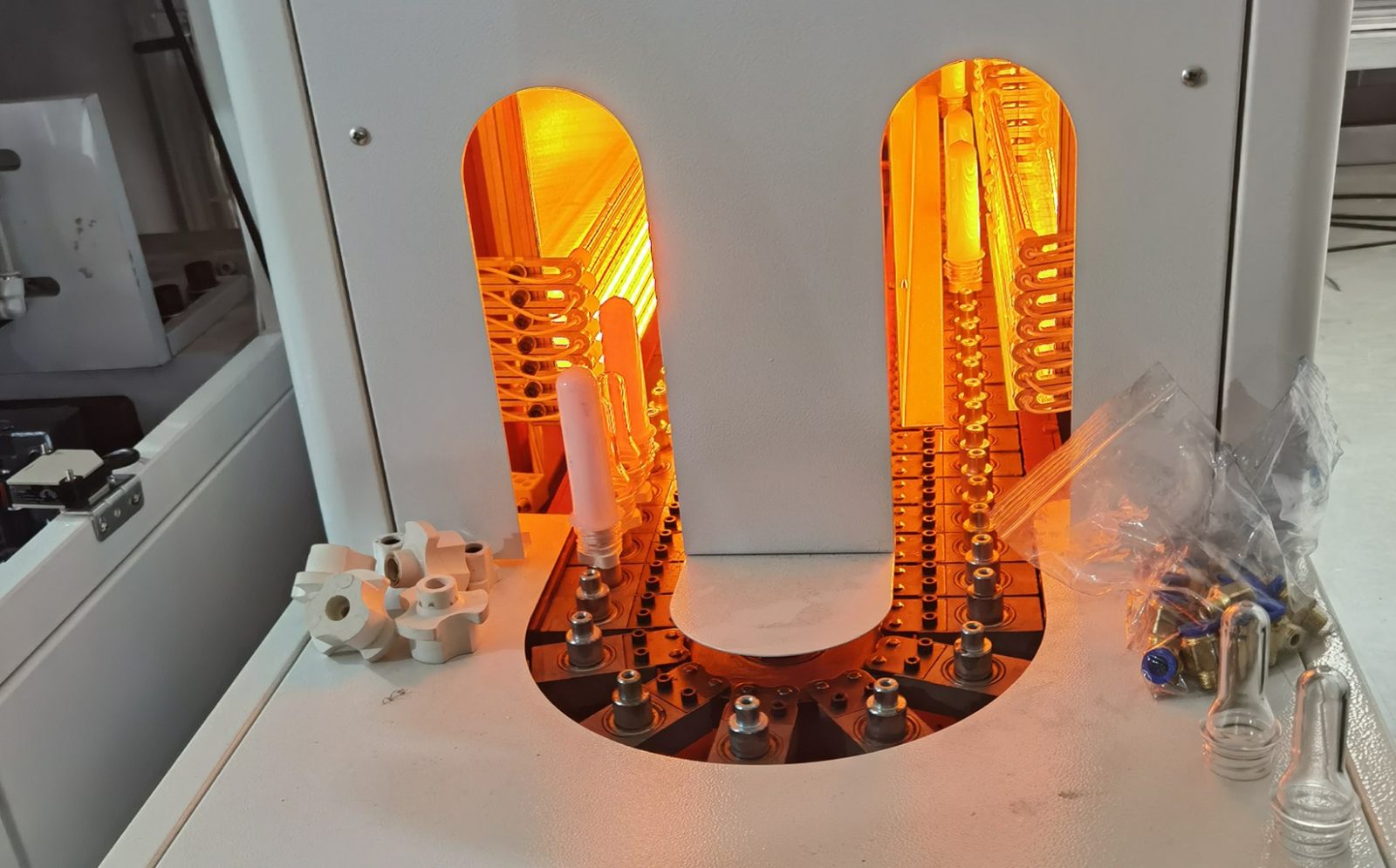
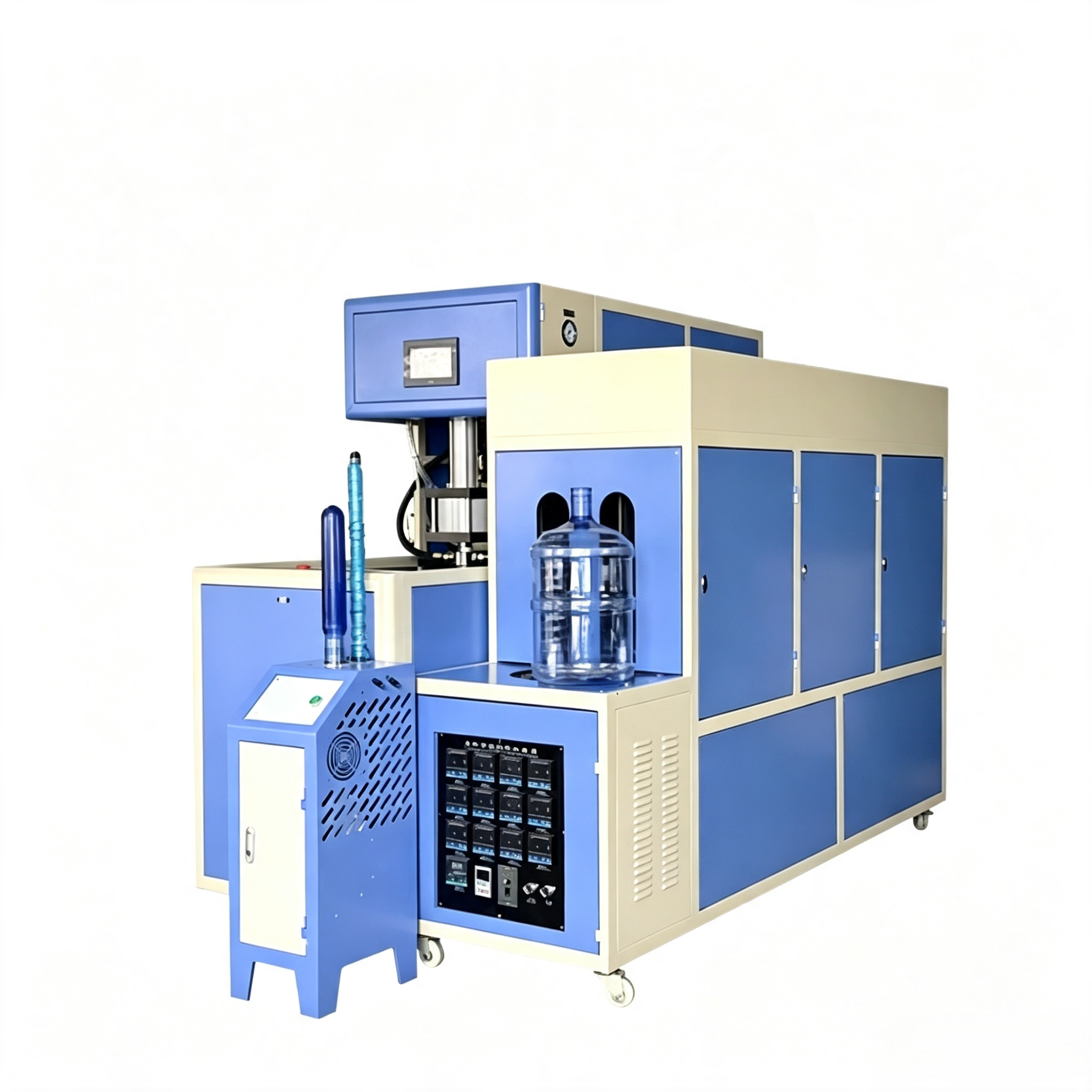
Semi-auto blowing machine

Product Value
01
Low investment; an ideal choice for startups or small-scale production lines
02
Flexible changeover; adaptable to various bottle types for versatile production
03
Low operational barrier; quick and easy to learn
04
Compact footprint; reduced energy and air consumption
05
Highly suitable for prototyping and new product development
Applicability boundaries

Applications
Small-to-medium capacity PET bottle production, flexible orders involving multiple bottle types, prototyping for new products, and auxiliary small-scale lines for water or juice plants; capable of blow-molding PET bottles for mineral water, carbonated drinks, edible oil, and sauces, accommodating containers ranging from 50ml to 20L.
Working Principle
The process utilizes the two-step PET stretch blow molding principle: preforms are first fed into an infrared oven, where they rotate for uniform heating (with the neck area kept at a lower temperature to prevent deformation); the preheated preform is manually placed into the mold, and the machine automatically executes axial stretching via a stretch rod, low-pressure pre-blowing, and high-pressure final blowing. High-pressure air forces the softened preform to conform evenly to the inner walls of the mold cavity; following a holding and cooling phase, the mold opens, and the finished bottle is manually removed, completing a single molding cycle.
Core components
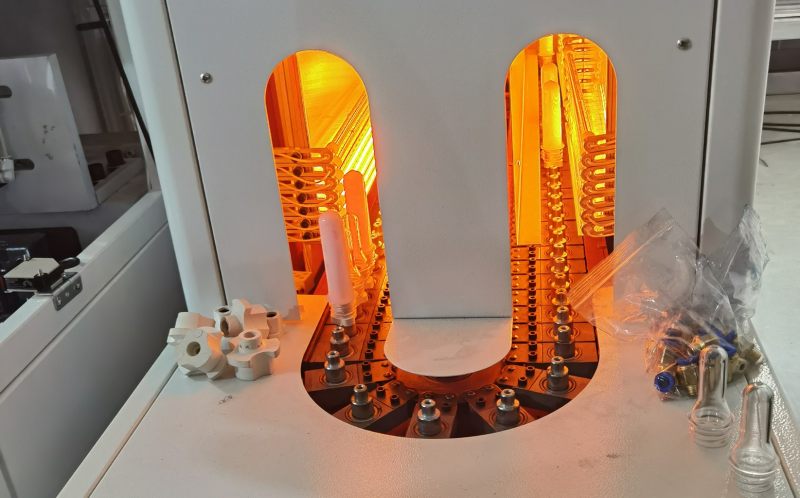
Infrared Rotary Heating Oven
Features quartz infrared lamps and independent temperature control modules; preforms rotate to ensure uniform heating.
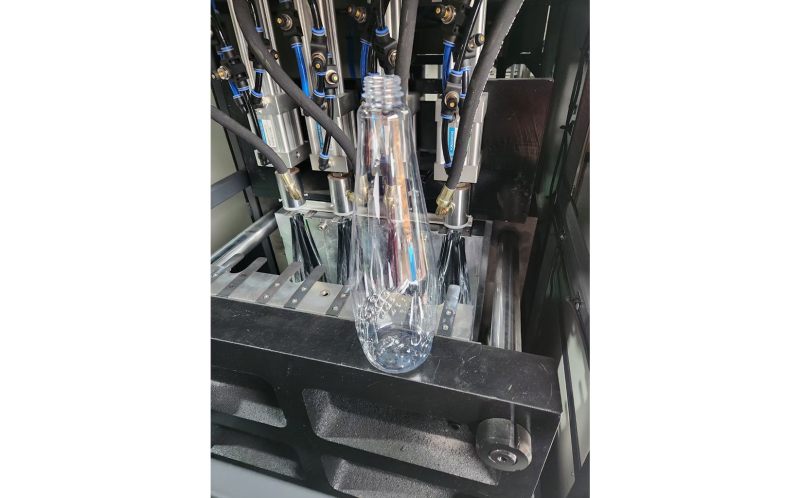
Mold Clamping Frame & Mechanism
Toggle-style clamping system withstands high-pressure blowing forces, preventing mold separation and flash.
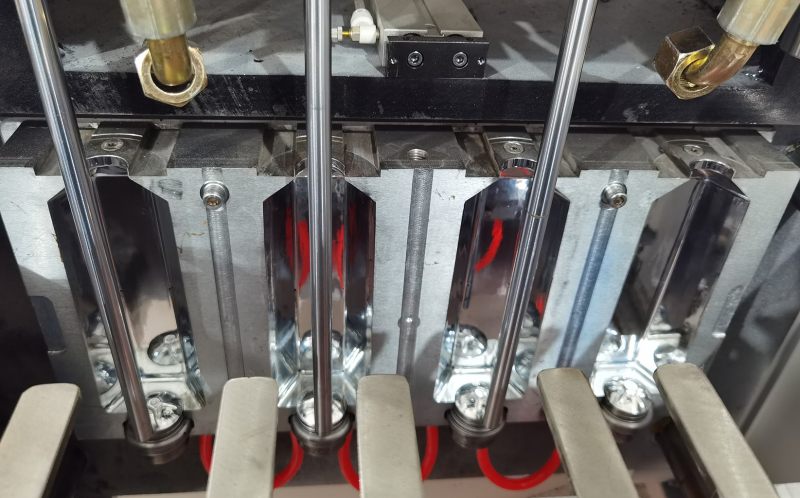
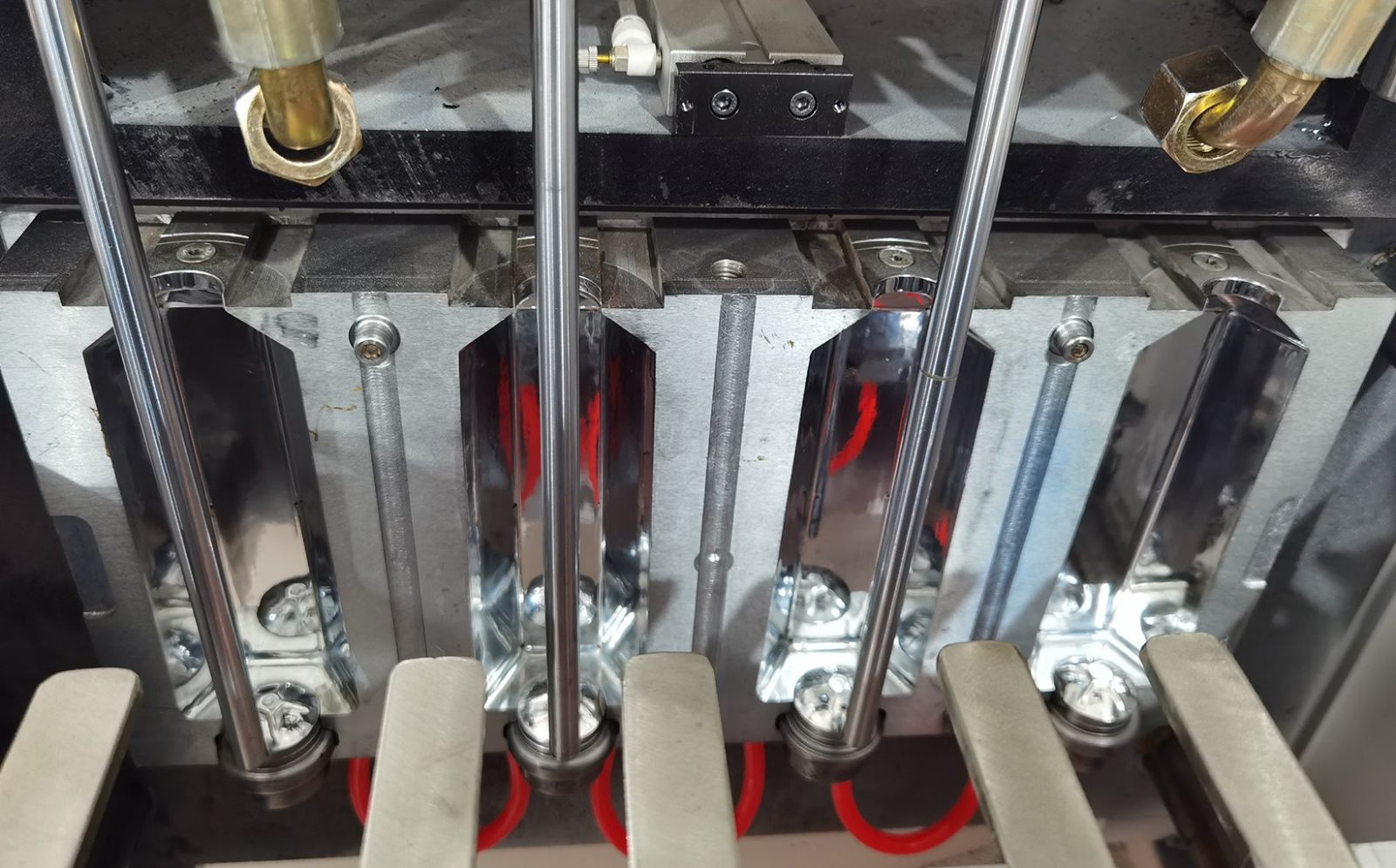
Stretching Cylinder & Rod
Axially stretches the preform to optimize wall thickness distribution.
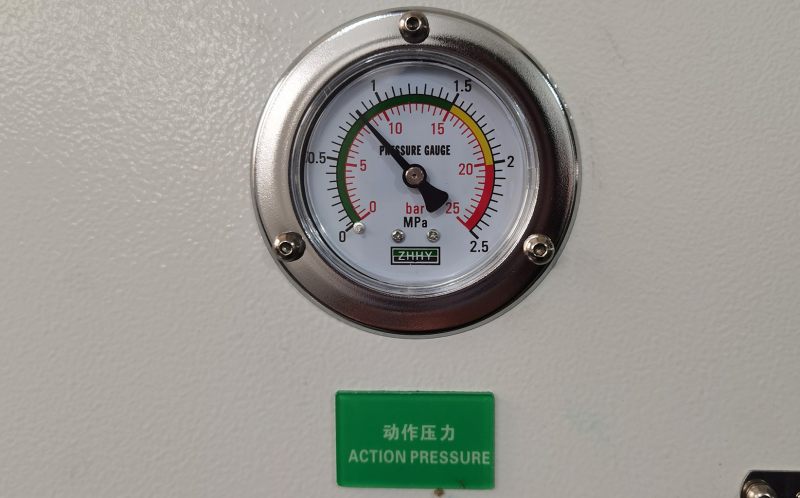
High-Pressure Air Valve Assembly & Air Reservoir
Manages staged pre-blowing and main blowing processes while ensuring stable air supply pressure.
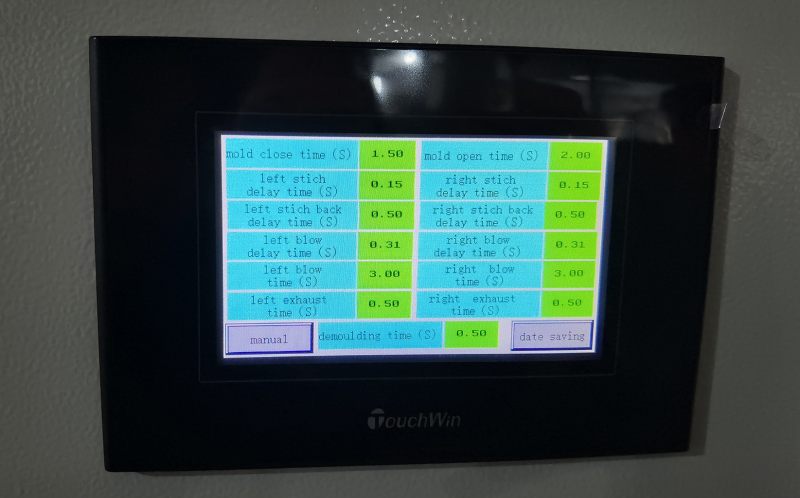
PLC Touch Control System
Configures timing sequences for heating, stretching, blowing, and pressure holding.
Optional
01
Multi-cavity mold for increased hourly output
02
High-temperature resistant configuration for hot-fill applications
03
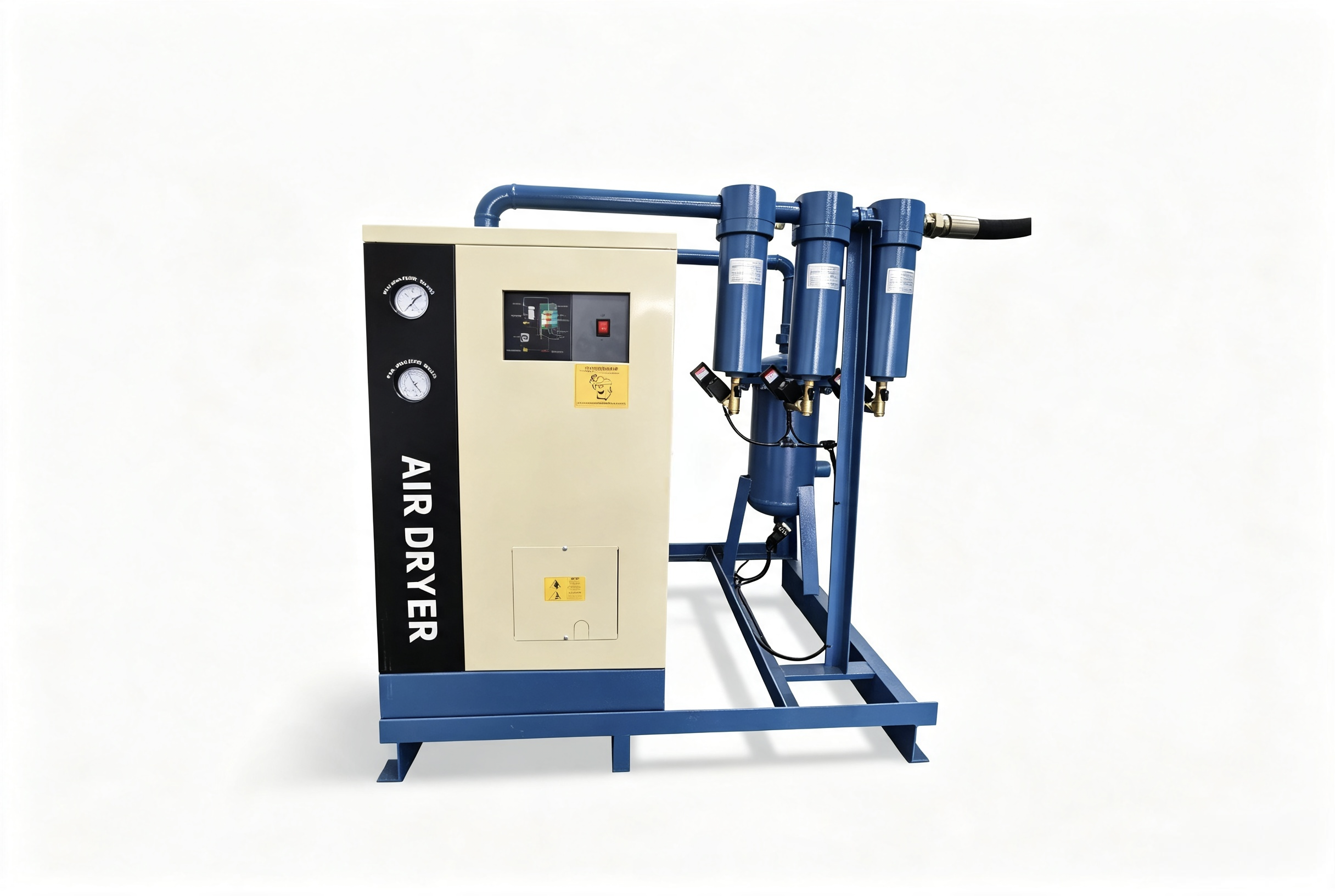
High-pressure air drying and filtration assembly
04
Specialized stretch-sealing assembly for wide-mouth jars
Changeover/Cleaning/Maintenance
Monthly Maintenance
Calibrate temperature control accuracy across zones, clean high-pressure filter elements, and inspect seals for signs of aging or air leaks.
Consumable Replacement
Promptly replace infrared heating lamps that have aged or dimmed; replace sealing rings and air hoses periodically based on their condition.
Model Switching & Upgrading
Switch bottle types simply by changing molds; upgrade directly to a fully automatic blow molding machine for future production expansion.
Bottle neck deformed or oval-shaped?
Causes include insufficient cooling of the neck area in the oven or impacts during preform loading/unloading. Solutions: Reduce heating power in the neck zone and standardize manual preform loading procedures.
How do I choose between semi-automatic and fully automatic blow molding machines?
Choose a semi-automatic machine for diverse bottle types, small production batches, or limited budgets. Opt for a fully automatic machine if you require sustained high production capacity or need to manage high labor costs.
Can it connect directly to a filling line?
Semi-automatic machines produce bottles that are collected manually, making them suitable for offline production followed by transport to the filling line. If an automated, inline bottle supply is required, a fully automatic model is recommended.
Contact Us
Complete 2 easy steps below to get your factory matrix and a complimentary factory layout design within 24 hours.
Request Factory Price & Factory Layout Within 24h
Request Factory Price & Factory Layout Within 24h