



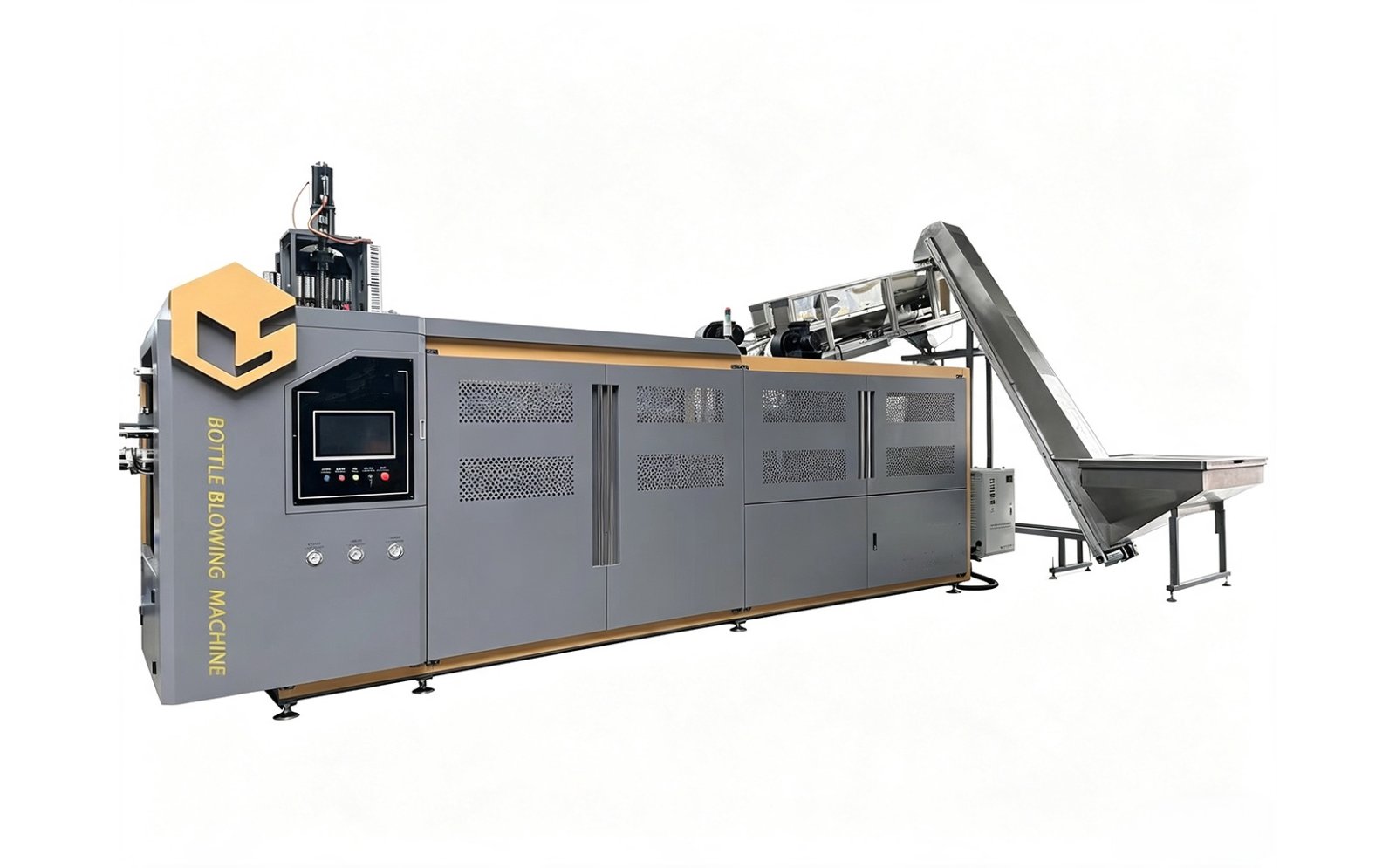
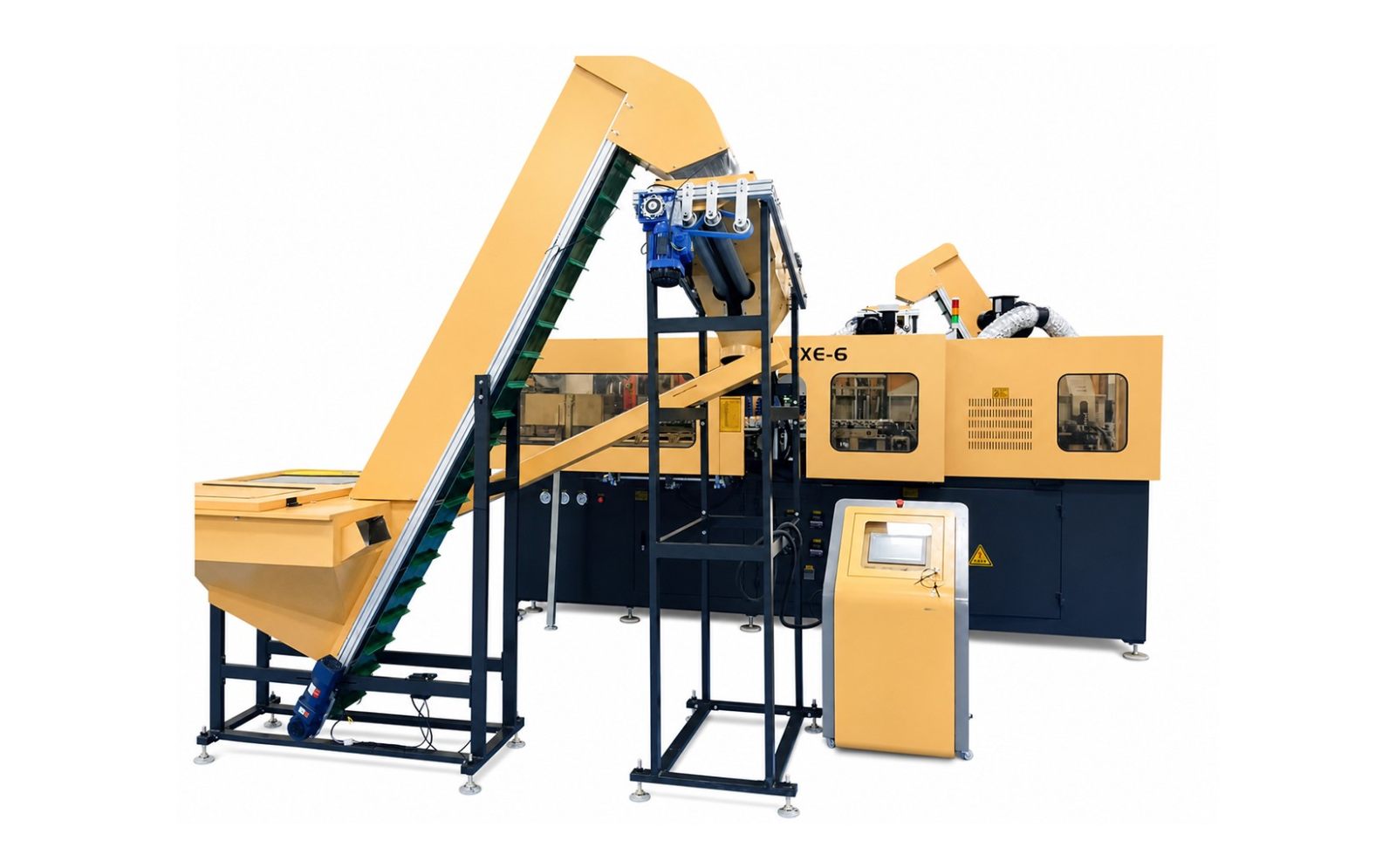
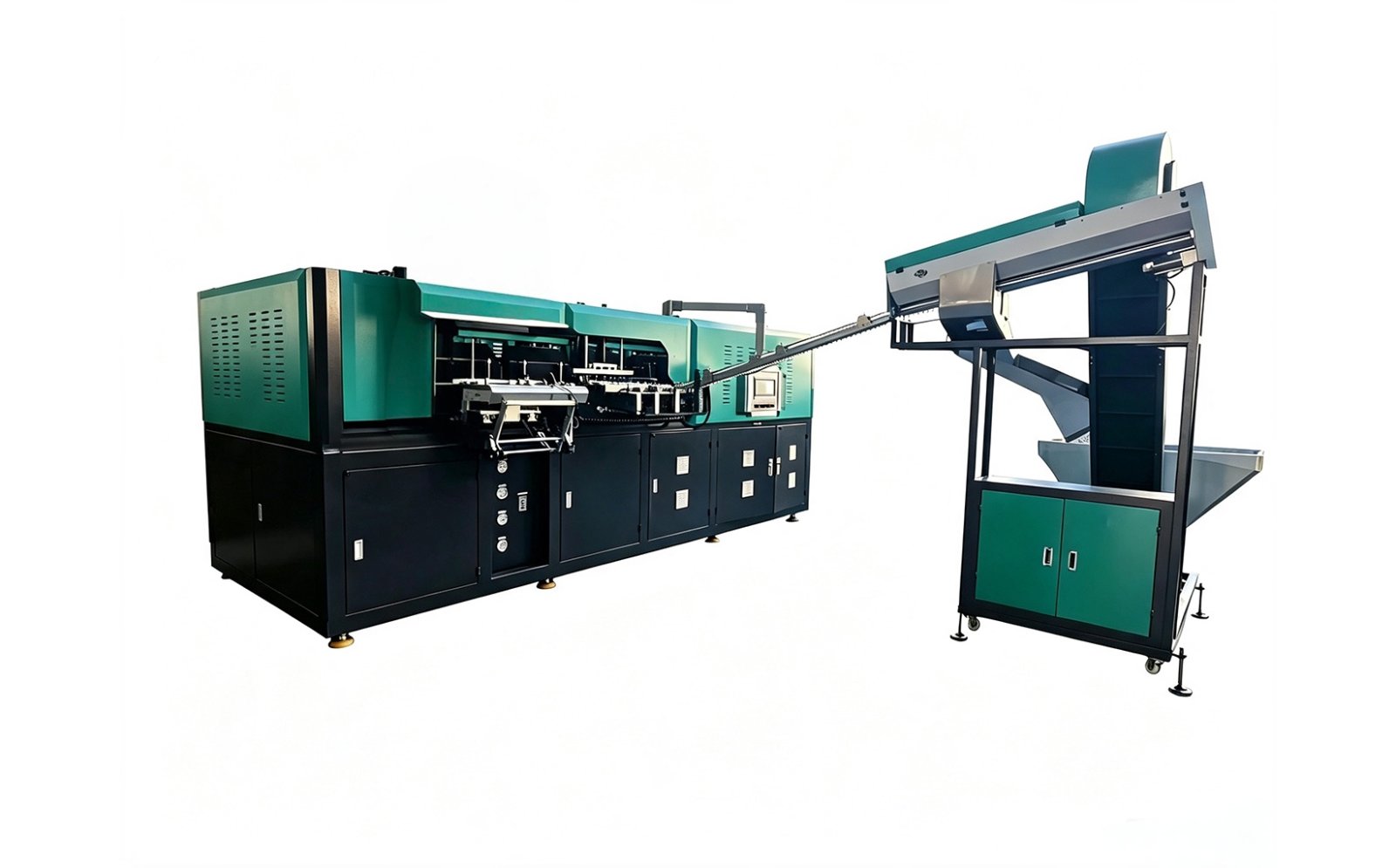
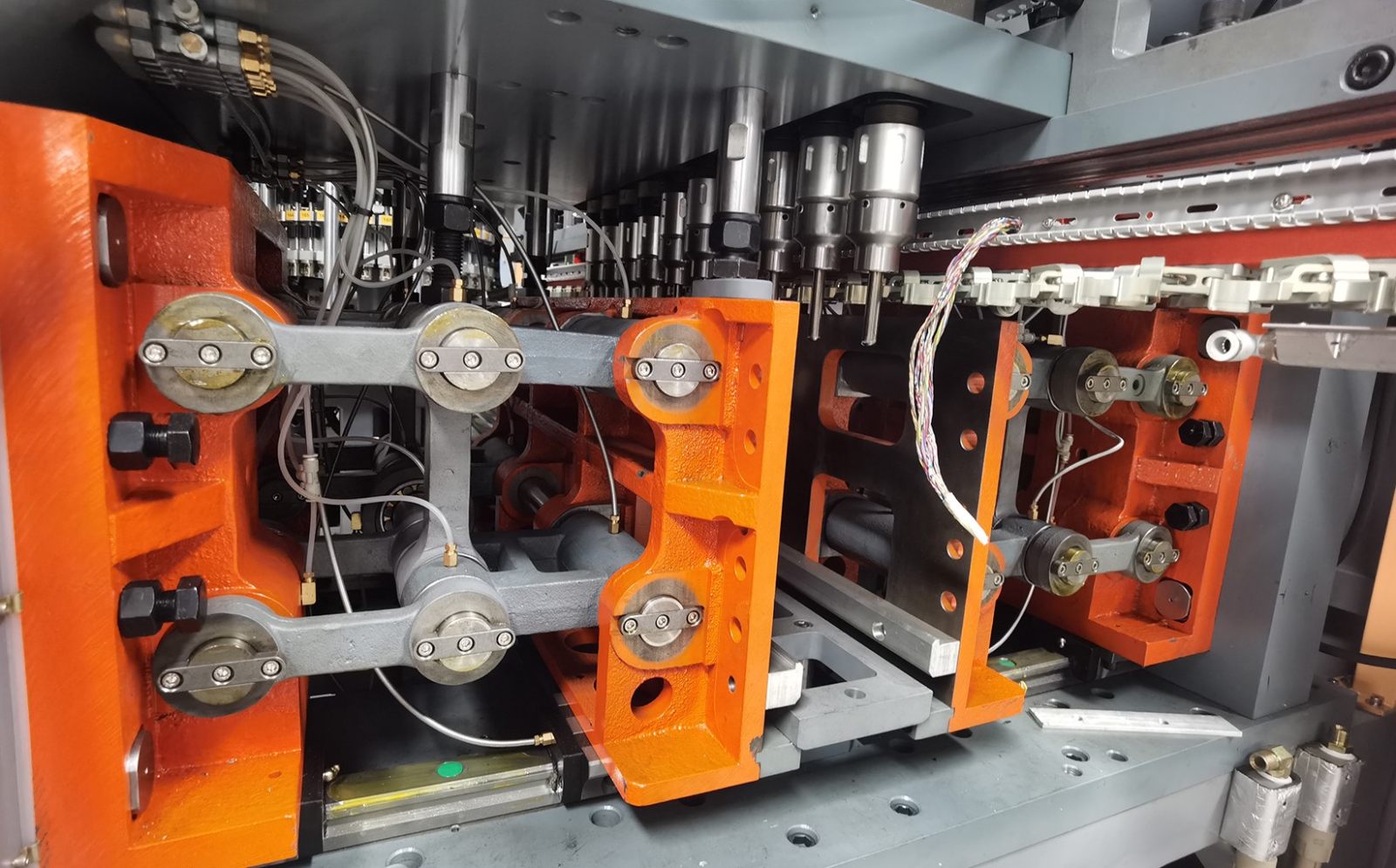
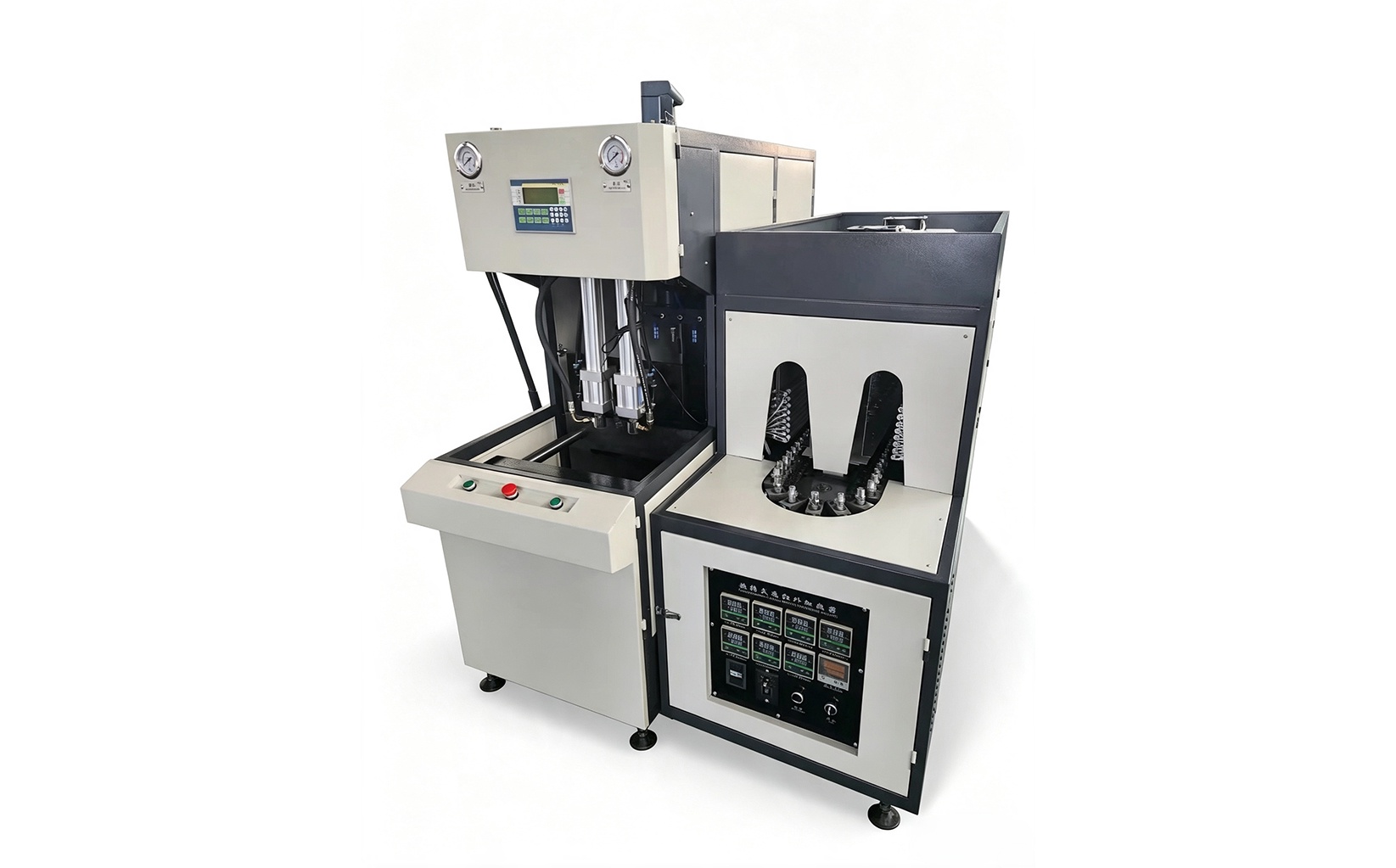
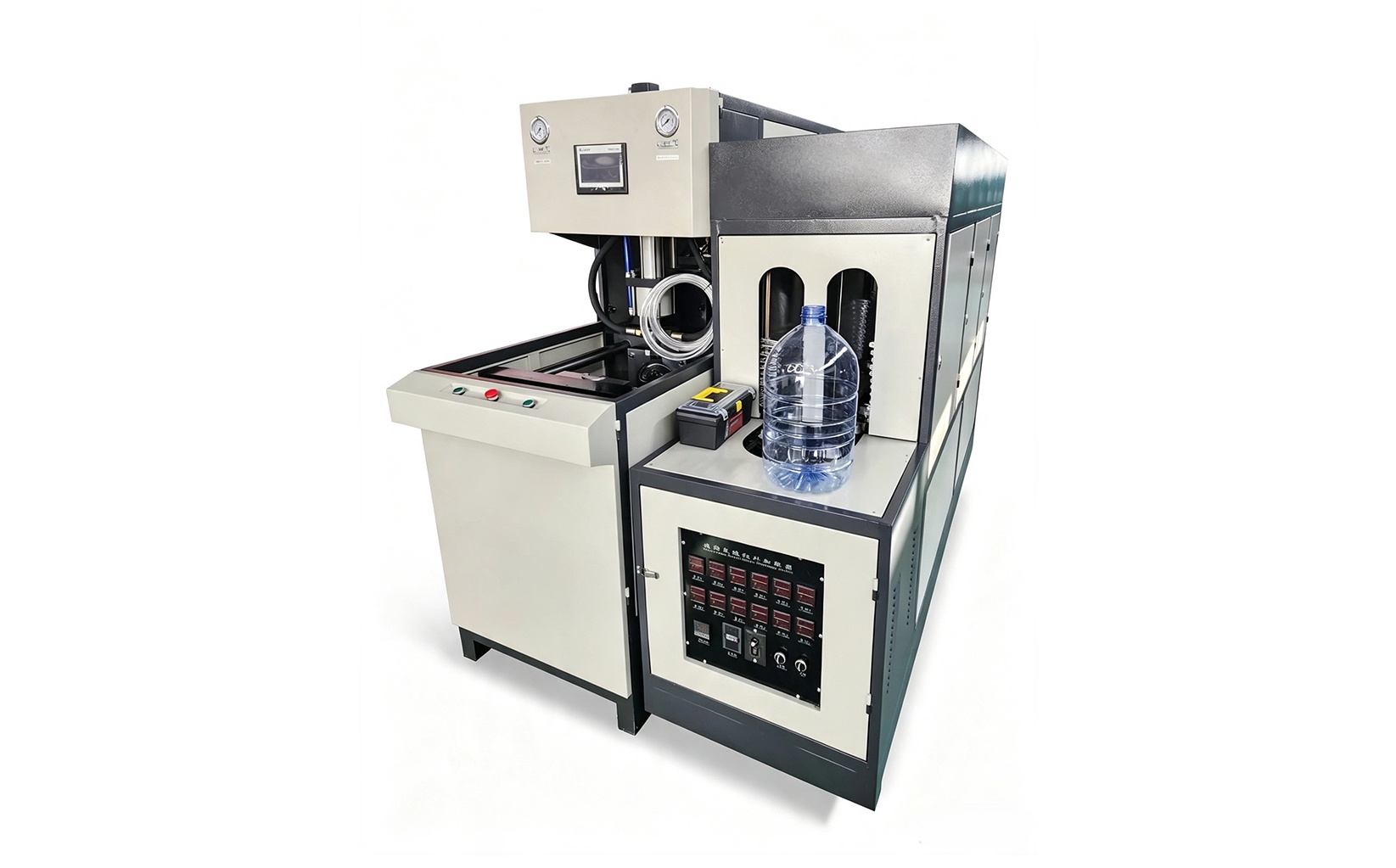
Full automatic blowing machine

Product Value
01
Fully automated end-to-end process, reducing labor costs
02
Stable, high-efficiency output suitable for mass production
03
High precision in bottle molding with consistent product quality
04
Integratable into complete production lines for unmanned workshop operations
05
Low energy consumption and material waste, ensuring cost-effective long-term operation and maintenance
Applicability boundaries

Suitable for
high-volume mass production at water, beverage, and food plants; year-round production of a primary bottle type; automated, unmanned production lines and aseptic filling lines; and standardized production of standard PET beverage bottles ranging from 50ml to 2L.
Working Principle
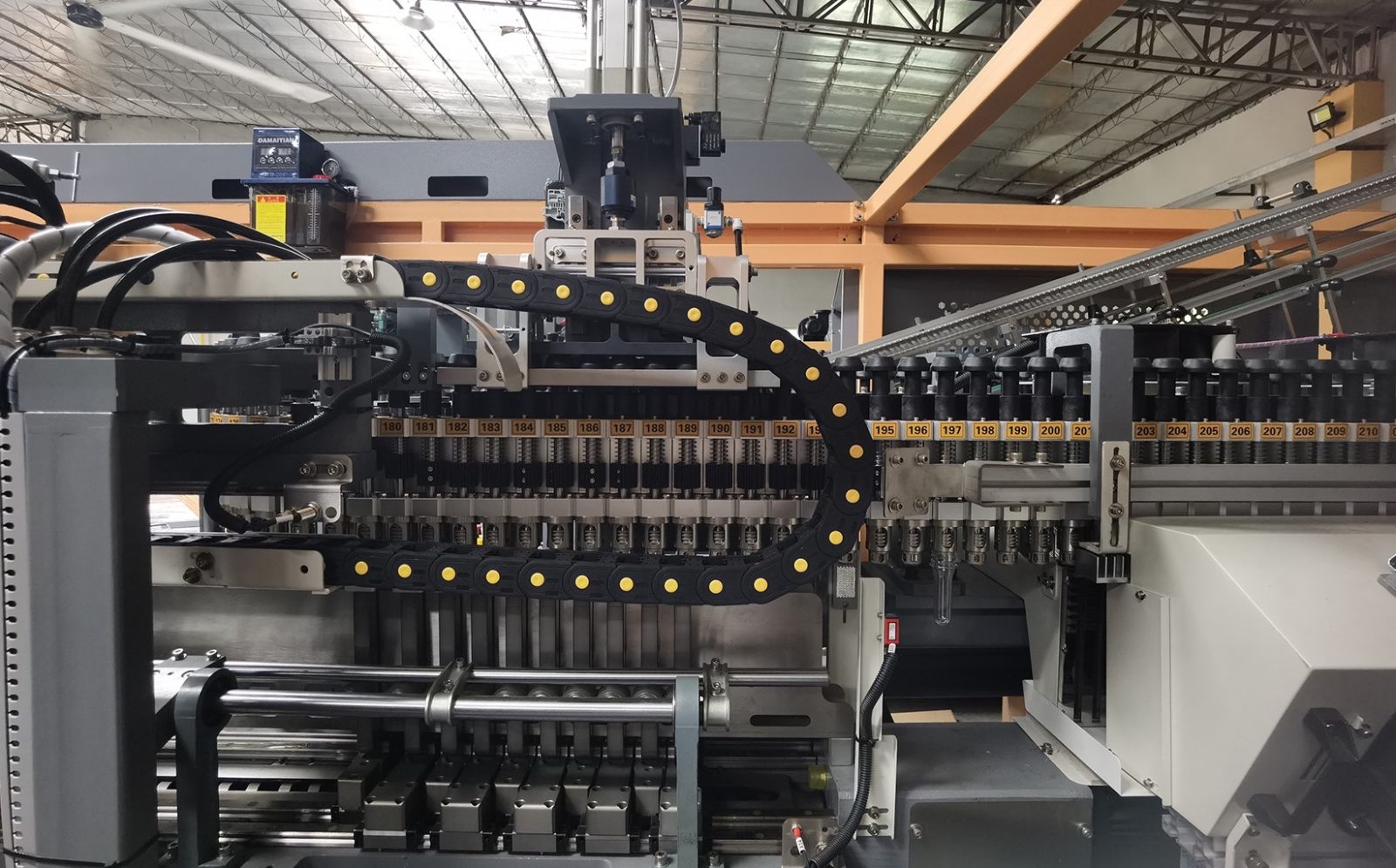
The system utilizes a fully automatic, two-stage servo stretch blow molding process. Preforms are automatically sorted, conveyed, and loaded into a tunnel-style oven featuring multi-zone, constant-temperature rotary heating; this allows for precise temperature differentiation between the neck and body to prevent neck softening or deformation. Properly heated preforms automatically enter the molding station, where the machine executes mold closing, servo stretching, low-pressure pre-blowing, high-pressure final blowing, and pressure-holding cooling. Finally, the mold opens automatically, and the finished PET bottles are removed—either mechanically or via gravity discharge—completing a continuous, closed-loop automated production cycle.
Core components
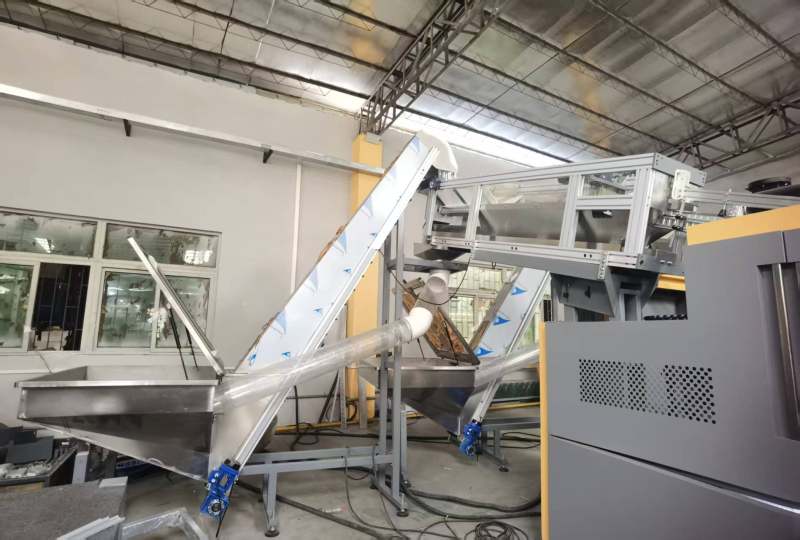
Fully automatic preform feeding system
eatures automatic sorting, loading, and rejection of defective preforms, enabling unmanned supply.
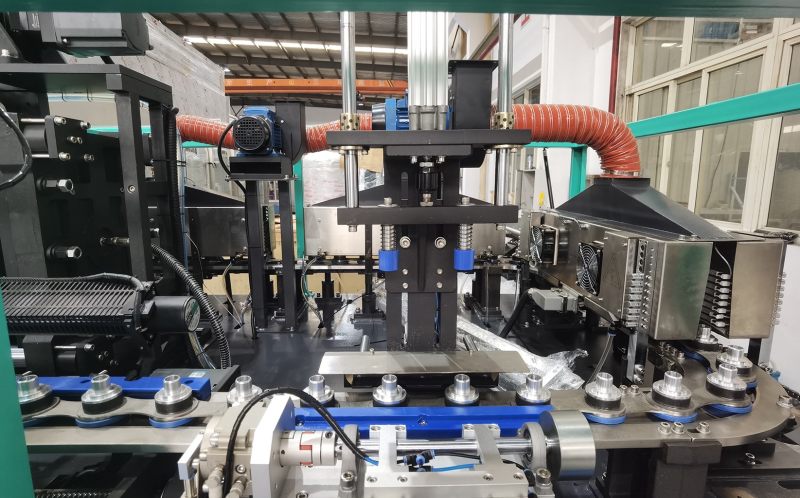
Tunnel-type constant-temperature oven
Independent multi-zone temperature control and uniform preform movement ensure consistent, even heating.
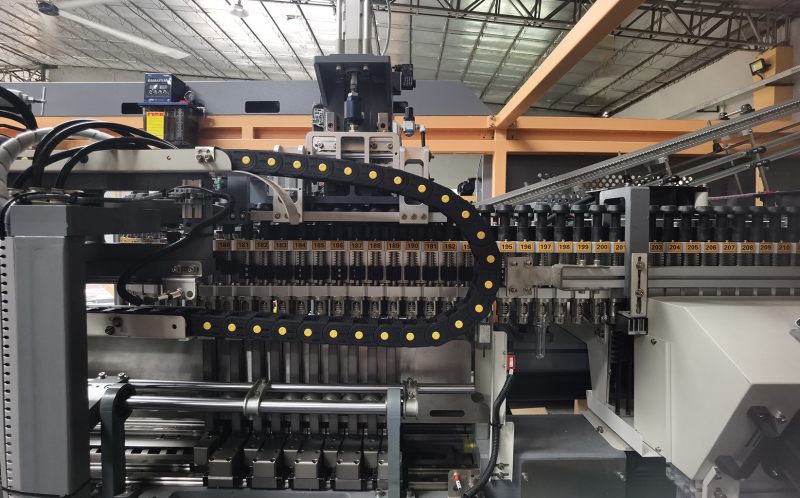
Servo stretching system
Precise axial stretching guarantees uniform bottle wall thickness.
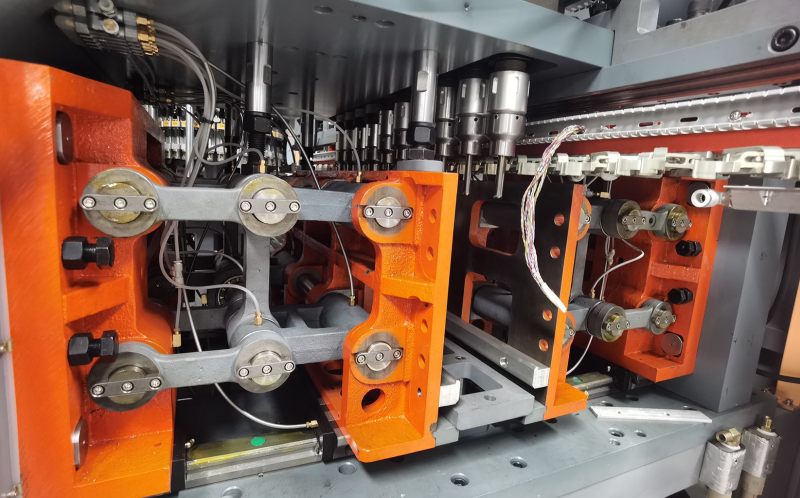
High-strength mold clamping mechanism
High-speed clamping and high-pressure resistance prevent mold opening or flashing.
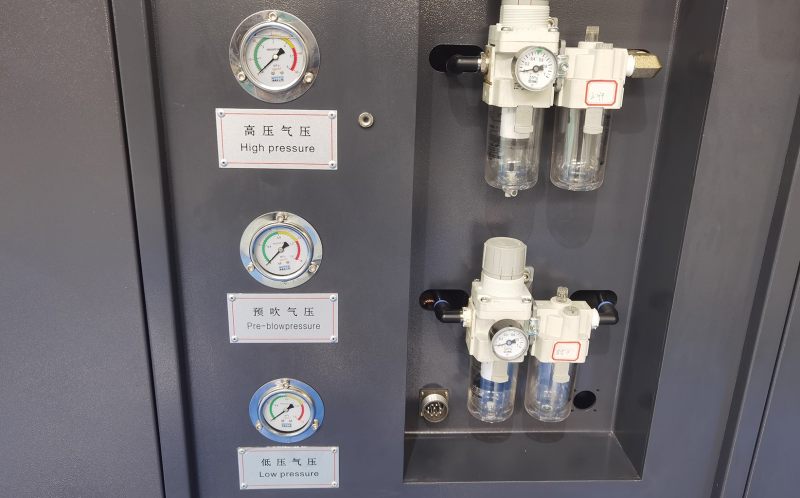
High-pressure constant-pressure air system
Staged pre-blowing and main blowing ensure constant air pressure and stable molding.
Optional
01
Upgraded multi-cavity mold configuration (1-out-of-8 or 1-out-of-10) significantly boosts hourly production capacity
02
Specialized configuration for hot filling (high-temperature resistance and dimensional stability; compatible with hot-fill processes for juices and teas)
03
Automatic inspection and rejection system for defective preforms improves the yield rate of finished products
04
Aseptic-grade clean configuration and dust-proof enclosed machine body; compatible with aseptic filling lines
05
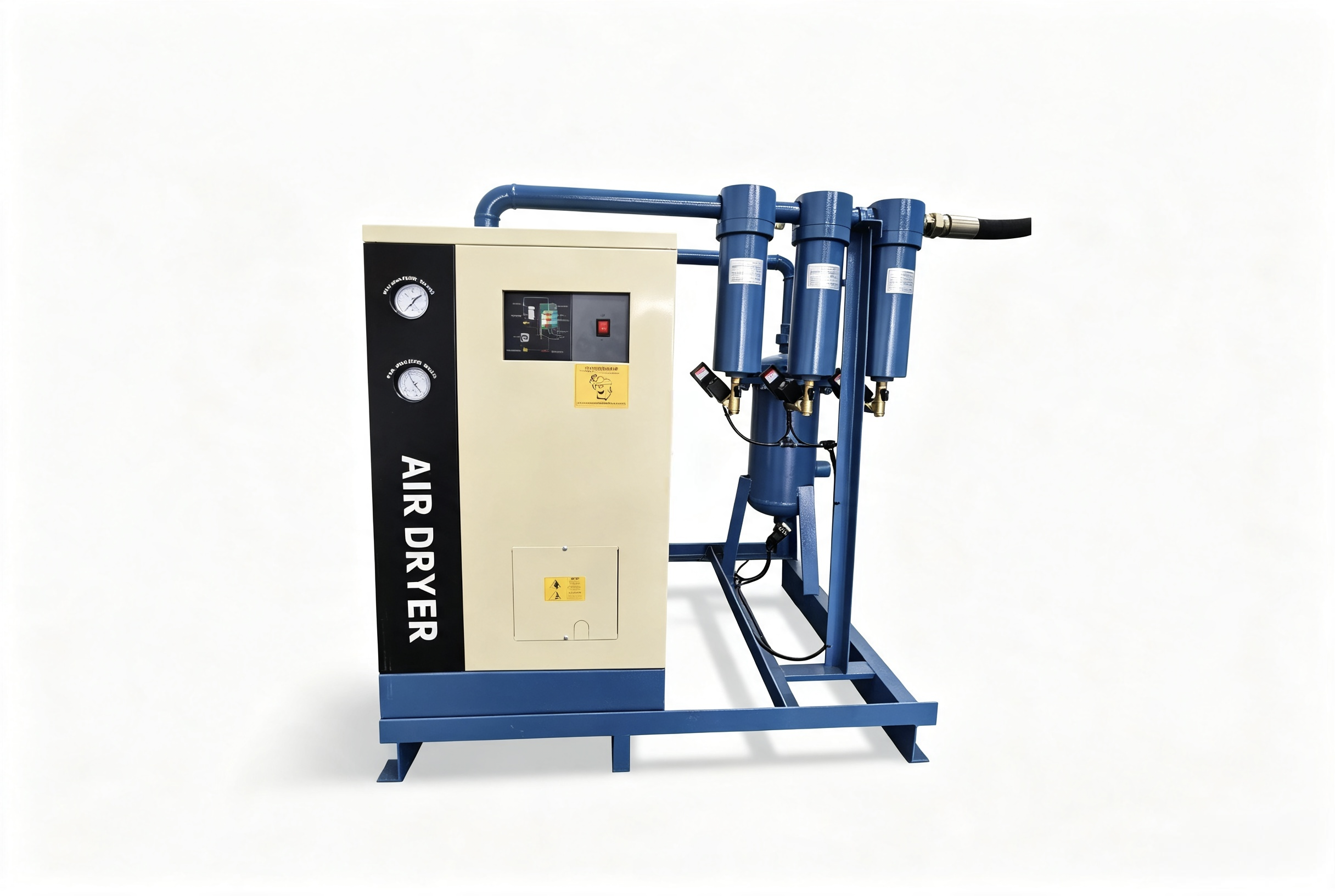
Variable-frequency energy-saving system and precision high-pressure air drying and filtration assembly
Changeover/Cleaning/Maintenance
Daily Inspections
Check equipment cycle times, air pressure, and oven temperatures; inspect finished products for molding quality—ensuring no whitening, uneven wall thickness, or flash defects; and check the machine body for air leaks or abnormal noises.
Consumable Replacement
Daily checks: Check for abnormal noise during pump operation; monitor temperature and conductivity readings; verify valve operation and liquid levels.
Model Changeover & Upgrades
Switch between bottle specifications of the same type by simply changing the dedicated molds; increase production capacity by upgrading to multi-cavity molds or high-performance servo systems.
What are the key advantages of fully automatic blow molding machines over semi-automatic ones?
They eliminate the need for manual loading and unloading, offer higher production capacity and better product consistency, support integration into complete production lines, and result in lower long-term labor costs. Ideal for high-volume, standardized mass production, they are the preferred choice for large-scale water and beverage plants.
Issues with uneven wall thickness or significant molding deviations in fully automatic production?
Causes include unbalanced heating zone temperatures, deviations in servo stretching parameters, unstable air pressure, or poor mold venting. Solutions involve recalibrating temperature control and timing parameters, cleaning mold air vents, and stabilizing the air supply.
Frequent preform jamming or dropping during high-speed operation?
Causes include misalignment of the preform feed track, preform specification deviations, or loose drive components. Solutions involve adjusting feed positioning, organizing preforms, and tightening drive parts.
Contact Us
Complete 2 easy steps below to get your factory matrix and a complimentary factory layout design within 24 hours.
Request Factory Price & Factory Layout Within 24h
Request Factory Price & Factory Layout Within 24h